Sossusvlei
Sossusvlei
Giant dunes, clay pans and endemic wildlife: complete guide to Sossusvlei, jewel of the Namib Desert accessible from Sesriem.
Sossusvlei refers to a collection of dunes and clay pans located in the southern Namib Desert, Namibia. The site is part of the Namib-Naukluft National Park and is accessed via the Sesriem entrance gate. Its name translates to "marsh without exit": vlei means marsh in Afrikaans, and sossus in Nama means "no return" or "dead end". A fitting name given the site's geography, where the rare watercourses evaporate before reaching the ocean.
Why visit Sossusvlei
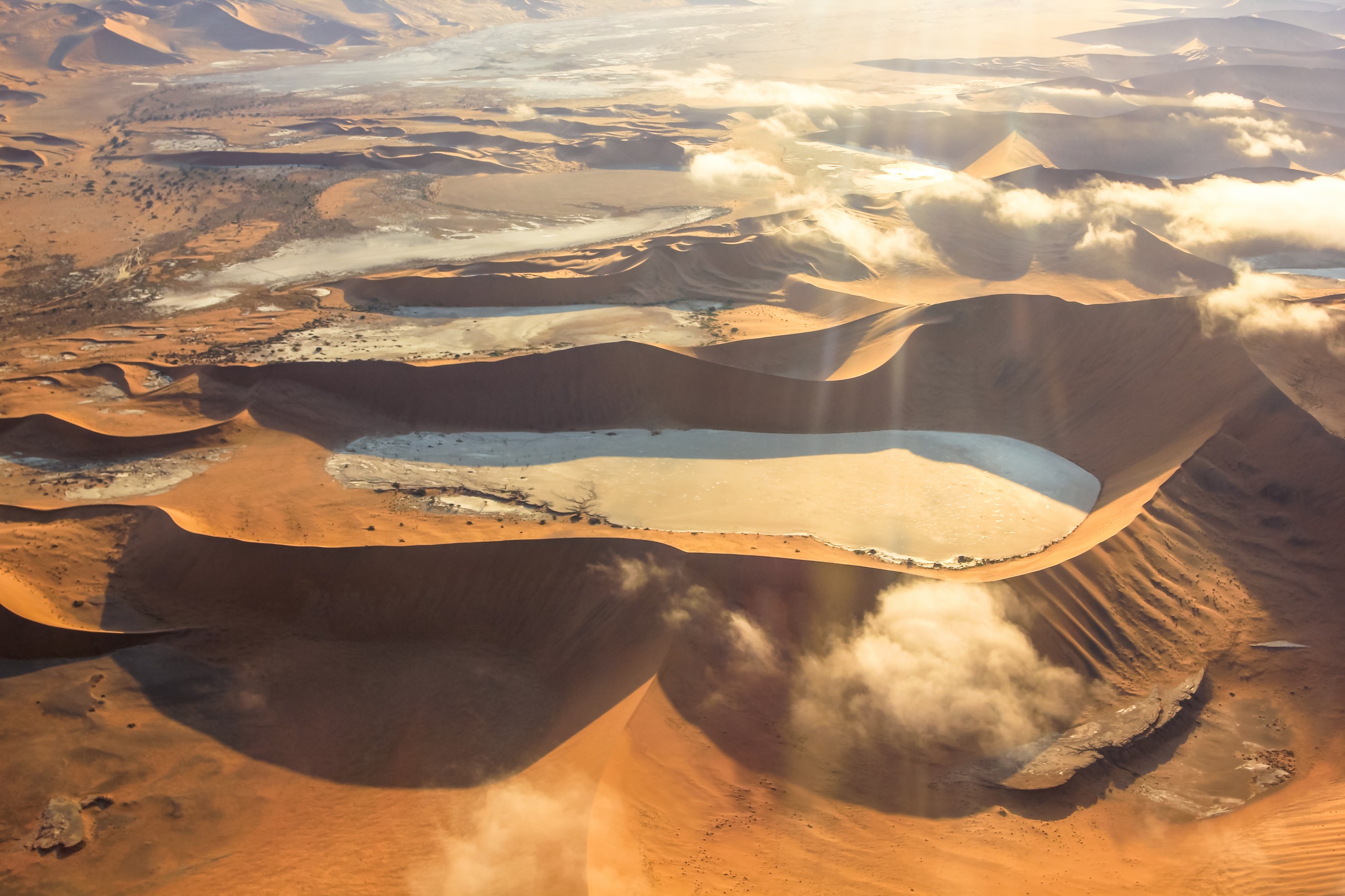
Sossusvlei is home to some of the world's highest dunes, their burnt orange hues contrasting starkly with the cracked white clay pans of the vleis. The site offers multiple layers of interest: geological, with sand born from the ancestral erosion of the Kalahari; biological, with fauna endemic to the desert; and photographic, thanks to the low-angle light at sunrise and sunset. Plan for at least a full day from Sesriem, ideally two to combine Sossusvlei, Deadvlei and the nearby canyon.
History and geology of the site
The dunes of Sossusvlei are the product of a long mineral journey. The sand comes from the ancestral erosion of Kalahari sandstone, carried by prevailing winds across hundreds of kilometres before accumulating in the Namib basin. Some dunes exceed 300 m in height, placing the site among the world's highest ergs. The characteristic red colour comes from the oxidation of iron in the sand grains: the older the dune, the deeper its red hue.
The vleis are ancient beds of the Tsauchab River, dried up for several centuries after shifting dunes cut off downstream flow. Deadvlei is the most famous example, with dead acacias dated to approximately 700 to 900 years ago.
What to see and do
Climbing the dunes
Several dunes offer opportunities for hiking. The most accessible is Dune 45, located 45 km from the Sesriem gate, standing about 170 m high: the climb takes less than an hour and offers a prime vantage point at sunrise. Big Daddy, further into the park, rises to around 325 m and ranks among the site's highest climbable dunes. The ascent requires about 1.5 hours of effort through the sand, followed by an optional vertical descent directly towards Deadvlei. Big Mama, on the opposite flank, also overlooks the pan.
Closer to camp, Elim Dune lies 5 km from Sesriem and can be reached in about thirty minutes of walking. It's a good option if you have limited time or arrive late in the day for sunset.
Deadvlei
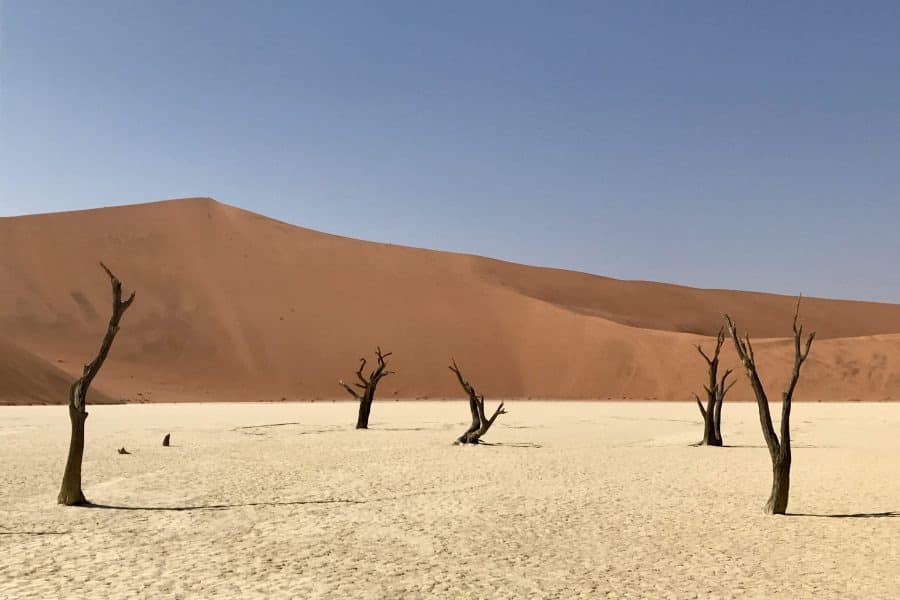
Deadvlei is a white clay pan surrounded by burnt orange dunes, dotted with petrified dead trees. Access is on foot from the 4x4 car park, via three trails of varying difficulty through the sand. The striking colour contrast between the white ground, black tree trunks, red sand and blue sky makes it one of Namibia's most photographed sites.
Sesriem Canyon
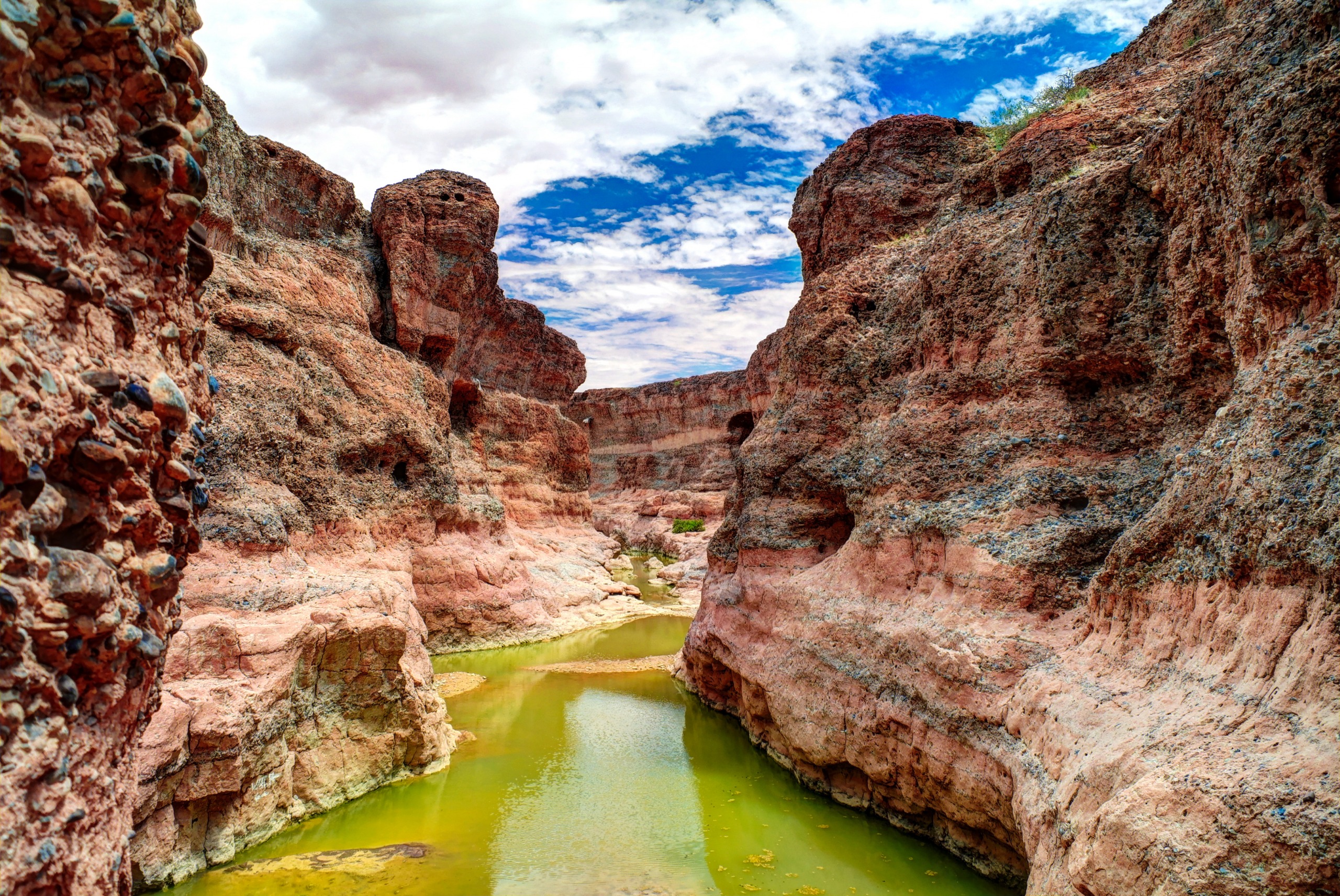
Just steps from the park gate, Sesriem Canyon is a gorge about 30 m deep carved by the river of the same name. A 5 km trail loops around it. The canyon is typically dry but can fill with water after rain descending from the Naukluft mountains. Prefer late afternoon, as shade is scarce and midday heat is intense.
Hot air balloon, plane and helicopter flights
A sunrise hot air balloon flight lasts around 1 hour and concludes with brunch in the desert. The slow pace of the balloon and its rotation make it ideal for photography. Light aircraft and helicopters cover a wider area, extending to the Skeleton Coast depending on the package chosen. Flight conditions and schedules vary by operator and should be confirmed on arrival.
Fauna and flora of the desert
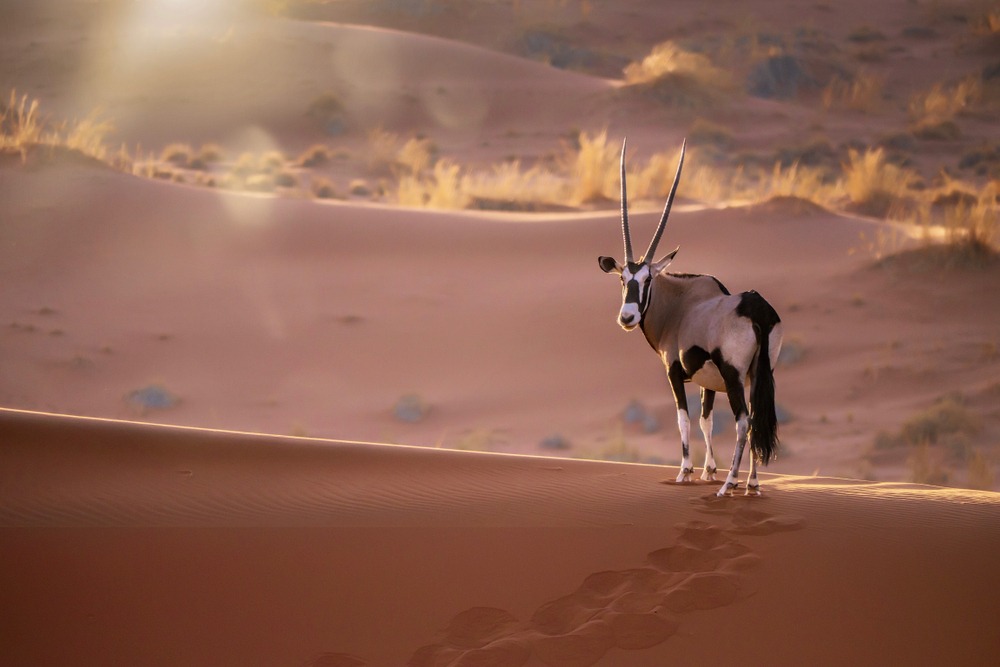
The region is home to fauna adapted to extreme aridity: jackals, small rodents, antelope, springbok, oryx and ostriches are among the most visible species. During occasional flooding periods, migratory birds can be seen along temporary marshes. The Namib desert beetle exemplifies nature's ingenuity: it collects moisture from morning fog thanks to bumps on its back, which channel droplets towards its mouth. This adaptation is the subject of biomimicry research.
When to visit
Sossusvlei lies in an arid desert climate. Average October temperature hovers around 17.9°C and annual rainfall averages just 73 mm. The best periods to visit extend from January to May and October to December, with bearable temperatures and favourable light. Avoid the hottest midday hours and systematically prioritize morning visits.
Practical information
- Park entrance: Sesriem gate, where permits for Namib-Naukluft National Park are purchased.
- Hours: opening at sunrise and closing at sunset; residents of internal camps gain earlier access.
- Equipment: plenty of water (2 to 3 litres per person), hat, sunscreen, closed-toe shoes for sand walking.
- Driving on sandy tracks: deflate your tyres at a service station before tackling the final kilometres, maintain a speed of 20 to 30 km/h and avoid hard braking. A 4x4 is essential to reach the Deadvlei car park; otherwise, shuttles operate from the 2WD car park.
How to get there
Sossusvlei lies about 350 km south-west of Windhoek, a 5 to 6 hour drive depending on track conditions. The most common route takes the B1 then C26 via Spreetshoogte Pass, or the C24 via Rehoboth and Solitaire. Most visitors stay in Sesriem or nearby lodges the night before their visit, allowing them to enter the park at opening. An air option is available from Windhoek to Sesriem airstrip, typically combined with an organised tour.
Nearby
- Sesriem Canyon: just kilometres from the entrance gate, a natural complement to your dune visit.
- Fish River Canyon: further south, the world's second largest canyon.
- Damaraland: region of volcanic landscapes and rock engravings to the north-west.
- Etosha National Park: classic safari in the north of the country.
Frequently asked questions
Frequently asked questions
No. They are two distinct dunes. Dune 45 measures about 170 m and is located 45 km from the Sesriem gate. Big Daddy, the nickname for the site's highest climbable dune, rises to around 325 m and sits on the edge of Deadvlei.
A full day allows you to see the main dunes and Deadvlei. Two days are recommended to add Sesriem Canyon, a flight tour and a second outing at sunrise or sunset.
A paved track leads to the 2WD car park 5 km from Sossusvlei. The final 5 kilometres through the sand require a 4x4, or you can use the shuttles available on site.
January to May and October to December, with milder temperatures and light ideal for photography. Visits are best made early morning or late afternoon.
Approximately 350 km, or 5 to 6 hours of driving depending on route and track conditions. Most travellers plan an overnight stay in Sesriem before their visit.
Planning your trip
Sossusvlei fits naturally into a broader tour across Namibia, from Damaraland to Etosha Park. To build a coherent itinerary, consult our selection of Namibia tours.
Interested in this visit?
We can include it in your personalised itinerary.