Namib National Park
Namib National Park
Africa's largest park, Namib-Naukluft encompasses the dunes of Sossusvlei, the pan of Deadvlei, the lagoon of Sandwich Harbour and the Naukluft mountains across 49,760 km².
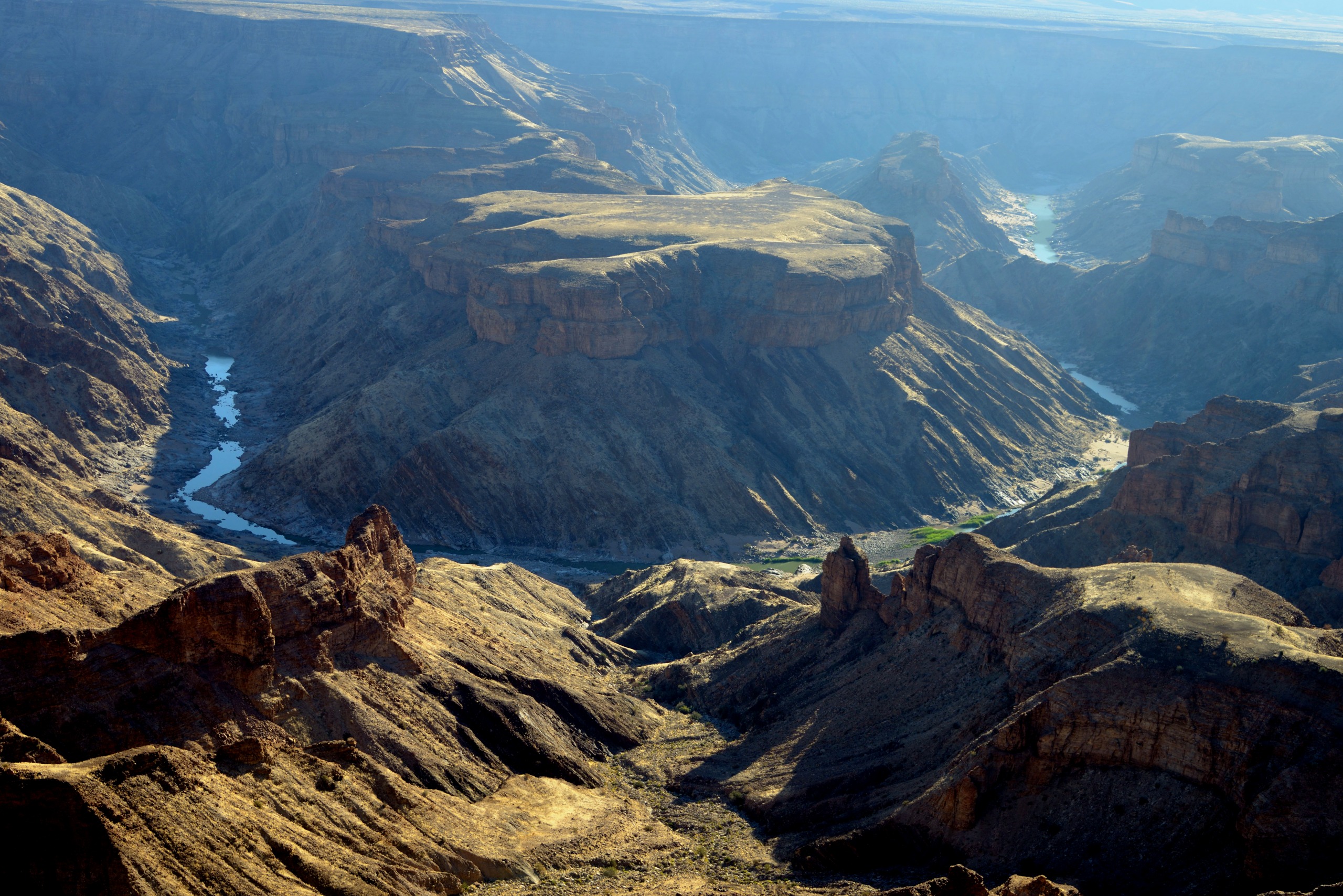
Namib-Naukluft National Park stretches across more than 49,760 km² in south-western Namibia, between the Namib Desert and the Naukluft mountains. It is Africa's largest park and one of the world's most extensive protected areas. Its territory encompasses Sossusvlei, Deadvlei, Sesriem Canyon, the Naukluft mountain range and Sandwich Harbour lagoon. The landscape alternates between isolated mountains, kopjes and inselbergs of red granite and sandstone, with a high central plateau where the Tsams, Tsauchab and Tsondab rivers originate.
Why visit Namib-Naukluft
The park concentrates several of Namibia's emblematic landscapes in a single territory: ochre dunes reaching nearly 400 m, white clay pans dotted with dead trees, granite gorges of the Naukluft and a coastal lagoon battered by the Atlantic. This geological diversity stems from the antiquity of the desert, one of the oldest in the world, and the park's dramatic change in altitude, from sea level to nearly 2,000 m.
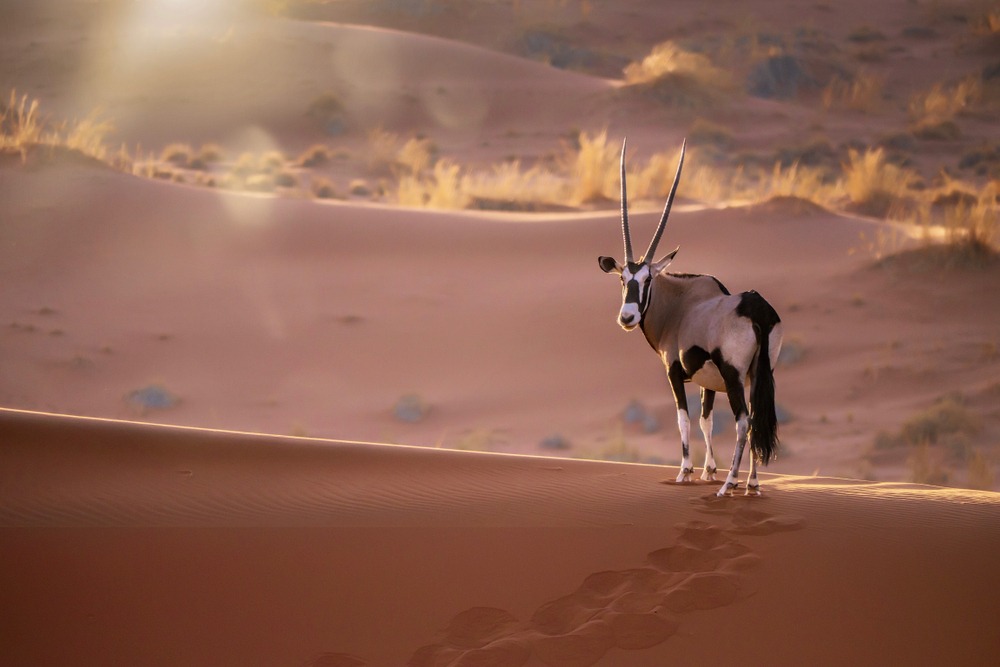
As for wildlife, the park is home to species adapted to aridity: endemic snakes, geckos, hyenas, gemsboks, jackals, mountain zebras, baboons, kudus and, with luck, leopards. Along the coastal fringe, pink flamingos, cormorants, oryx and springboks frequent the Sandwich Harbour area.
History of the park
The Namib Desert has existed in an arid form for more than 43 million years, and its current configuration stabilised around 2 million years ago. The first protected area was established in 1907 by the German colonial administration, between the Swakop and Kuiseb rivers.
Seventy-one years later, the current boundaries were defined by the merger of the Namib Desert park and the Naukluft mountain park, with the gradual integration of other natural areas including the Sperrgebiet. In 1962, the Gobabeb training and research centre was opened on the park's border; it remains a reference for the study of desert ecosystems.
What to see in the park
Sossusvlei and the sea of dunes
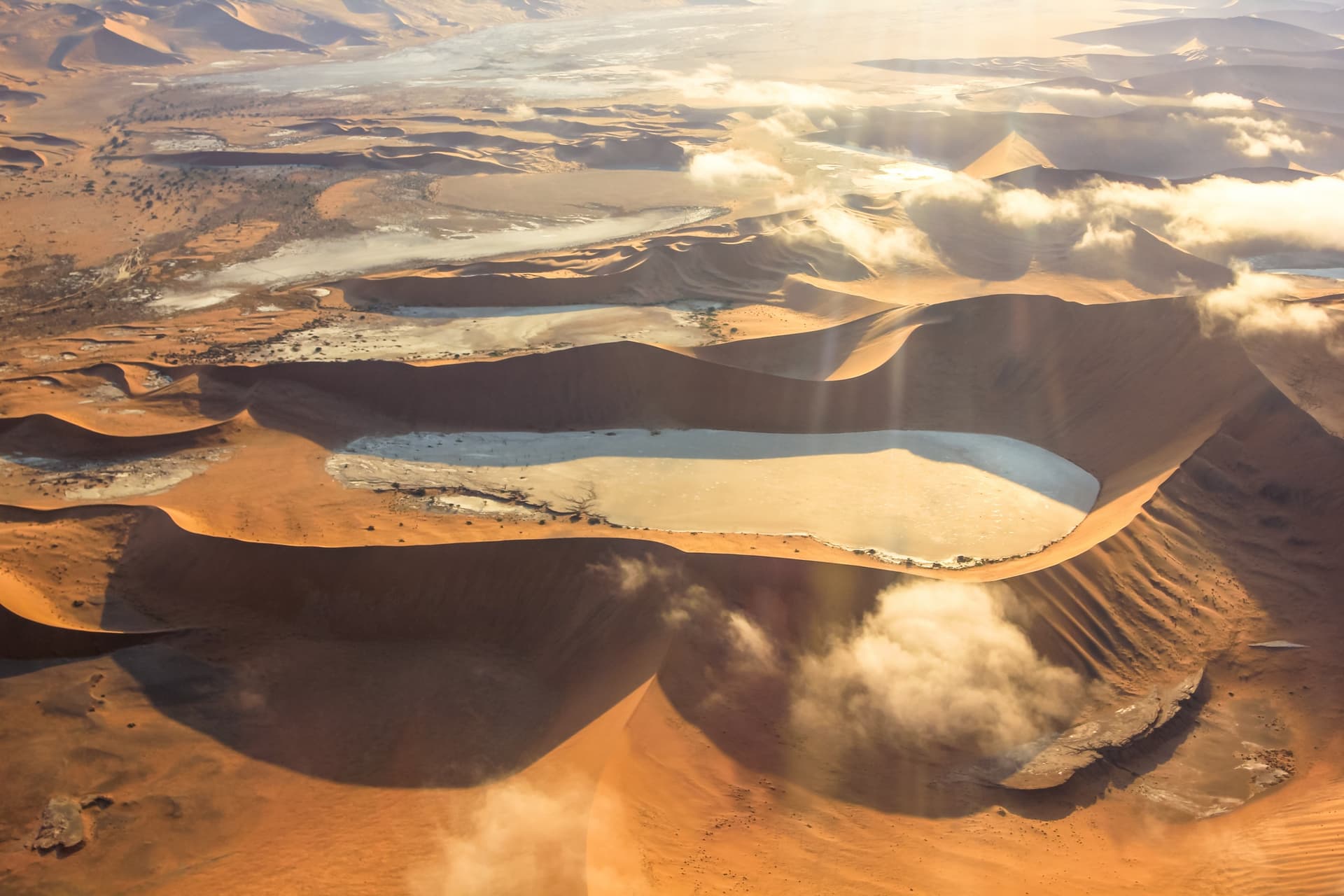
Sossusvlei is Namibia's most visited site. From Sesriem, a road winds up the Tsauchab valley towards the Atlantic Ocean, lined by dunes rising to nearly 400 m. Dune 45, along the road, is one of the most photographed and is best climbed early in the morning. Near Deadvlei, Big Daddy and Big Mama rank among the sector's highest dunes and offer sweeping views over the white pan.
Deadvlei
Deadvlei is an ancient dried-out lake, its white clay soil contrasting starkly with the deep orange of the surrounding dunes. Dead acacia trees, blackened by the sun and still standing after centuries, form a unique mineral landscape. Three routes allow access, with varying levels of difficulty. The final track is sandy and demanding.
Sesriem Canyon
Carved by the Tsauchab River through conglomerate rocks, this narrow canyon, some thirty metres deep, marks the park's main entrance. It can be explored on foot in a short loop.
Sandwich Harbour
About 80 km south of Walvis Bay, Sandwich Harbour is a coastal lagoon where dunes plunge directly into the Atlantic. The site is accessible only by 4x4, most often with a local guide due to the tides. The lagoon is an important stopover site for waterfowl, including pink flamingos.
The Naukluft mountains
To the east of the park, the Naukluft massif rises between 1,250 m and 1,965 m. It takes the form of a broad plateau cut through by gorges where small permanent streams flow. Several hiking trails cross the area, including a multi-day circuit known for its demanding terrain. Wildlife includes mountain zebras, baboons, kudus and leopards.
When to go
Average rainfall is around 106 mm per year, concentrated during the austral summer. The months of February, March and April bring humidity from Atlantic fogs, which creep inland and sustain animal and plant life.
The dry season, from May to October, remains the most comfortable for visiting: sunny days, clear skies for photography, cool nights at altitude. The months of June to August can be very cold at sunrise, particularly on the Naukluft plateau.
Practical information
- Entry permits: mandatory, available at the Sesriem entrance or from the park authorities.
- Accommodation: campsites and lodges around Sesriem, at Solitaire and near Walvis Bay. Spaces are limited in high season.
- Water and fuel: fill up at Sesriem, Solitaire or Walvis Bay, as distances between stations are long.
- Sand driving: before heading onto sandy tracks (notably the final access to Deadvlei and Sandwich Harbour), reduce tyre pressure at a station, maintain a speed of 20 to 30 km/h and avoid any sudden braking.
- Equipment: plenty of water, sun protection, warm clothing for nights, closed-toe shoes for tracks and dunes.
How to get there
Access is mainly by 4x4 from Windhoek (approximately 5 hours' drive to Sesriem) or from Swakopmund and Walvis Bay on the coast. The most commonly used entrance is Sesriem, which opens onto Sossusvlei and Deadvlei. For Sandwich Harbour, departure is from Walvis Bay, exclusively by 4x4 and ideally with a local operator. The Naukluft can be reached via the C14 and D854 from Solitaire.
Nearby
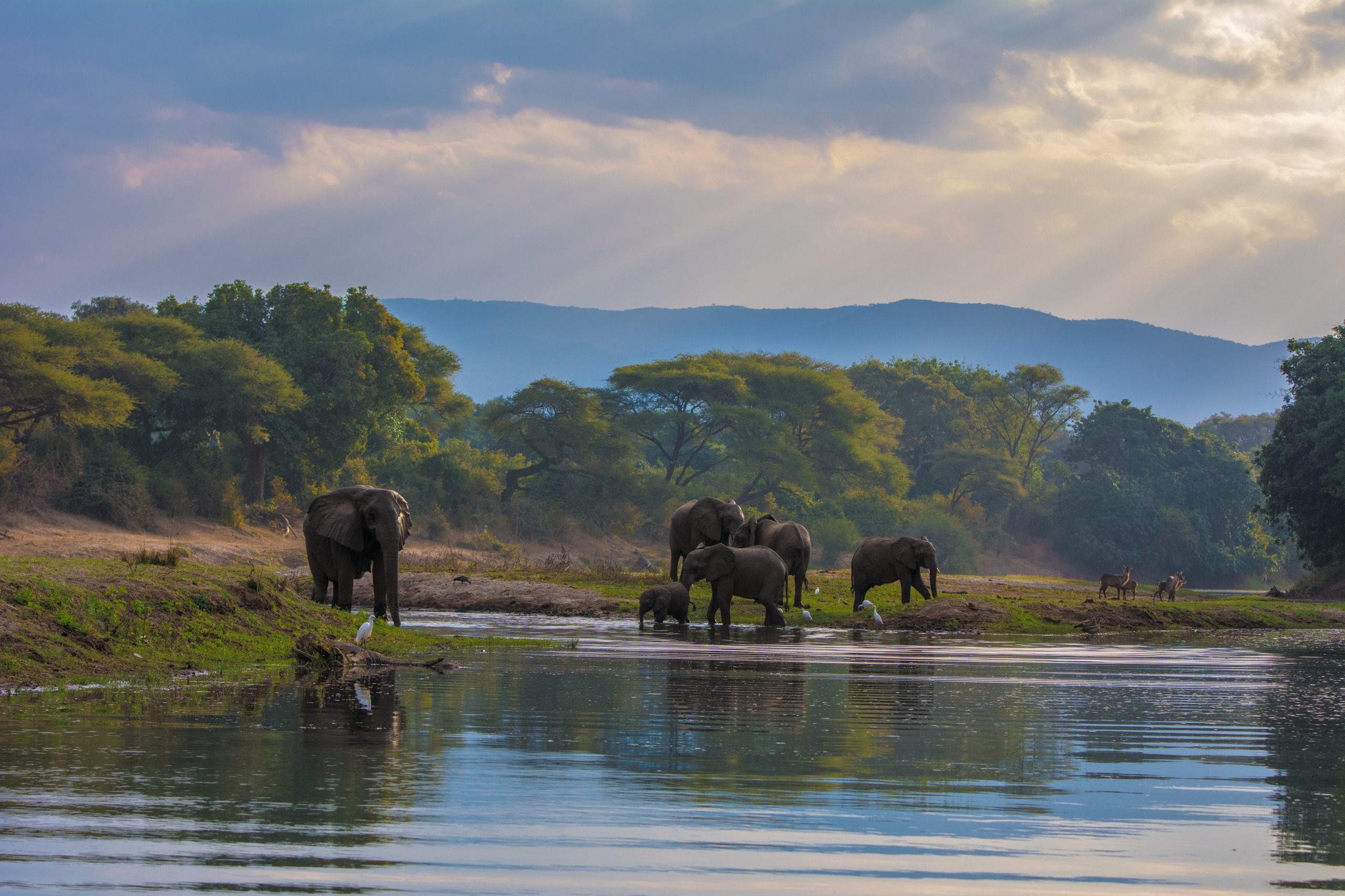
The region lends itself to a circuit built around several stops. Walvis Bay and Swakopmund, on the coast, offer an ocean contrast to the desert. Further north, Cape Cross is home to one of southern Africa's largest fur seal colonies, and the Brandberg massif preserves a rich collection of rock art. To extend the experience of wild spaces, Khaudum and Mahango Game Reserve, in the north-east, offer very different wildlife, dominated by elephants and wetland antelopes.
Frequently asked questions
Frequently asked questions
Most of the main roads are passable in a robust tour vehicle, but a 4x4 becomes essential for the final kilometres to Sossusvlei and Deadvlei, as well as for Sandwich Harbour. If you don't have a 4x4, shuttles depart from the 2x4 car park to Sossusvlei.
Plan a minimum of two nights at Sesriem to explore Sossusvlei, Deadvlei and the canyon. An additional stop in the Naukluft or at Walvis Bay allows you to cover the entire park over 4 to 5 days.
The park entrance opens at sunrise. Arriving early allows you to climb a dune in raking light, avoid the midday heat and encounter the most active wildlife.
No. Dune 45 borders the road between Sesriem and Sossusvlei and takes its name from the 45-kilometre mark. Big Daddy is located above Deadvlei, approximately 60 km further on, and reaches a greater height. Big Mama is the neighbouring dune.
Yes. Resident species (oryx, springboks, mountain zebras, jackals) are visible in any season. Waterfowl at Sandwich Harbour are more numerous during the austral summer.
To incorporate Namib-Naukluft into a complete itinerary, consult our trips to Namibia.
Interested in this visit?
We can include it in your personalised itinerary.