Cape Cross
Cape Cross
On the Skeleton Coast, 128 km from Swakopmund, Cape Cross brings together 100,000 fur seals and the cross left by navigator Diogo Cão in 1486.
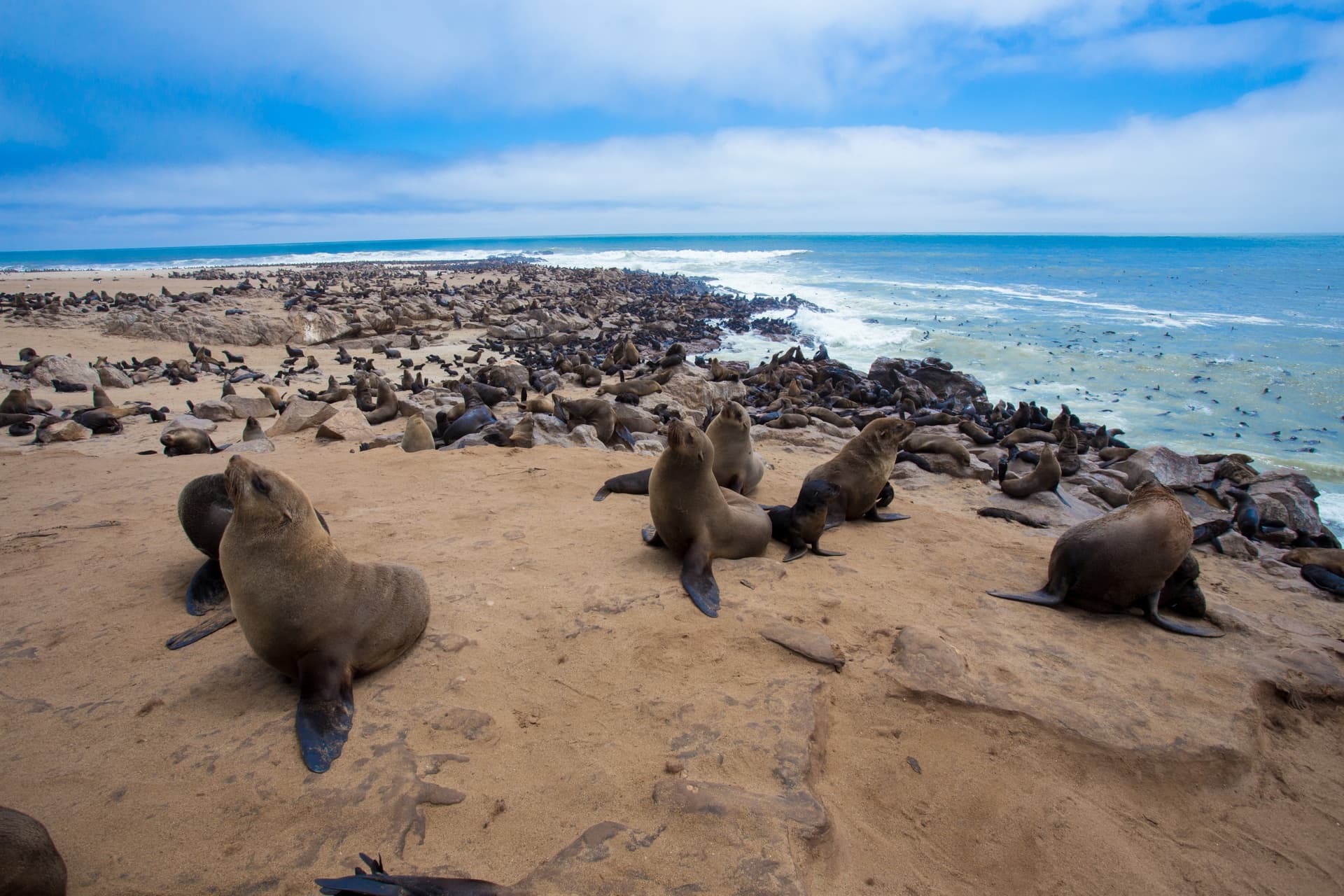
On the Skeleton Coast, 128 km north of Swakopmund, Cape Cross is home to the largest fur seal colony on the Cape coast of Namibia: approximately 100,000 individuals gathered across a few hundred metres of rocky shoreline. The site is also a major historical landmark, as it is where the first Europeans left their mark on this Atlantic coast in the 15th century.
Why visit Cape Cross
Cape Cross combines rare natural interest with singular historical significance. The seal colony is visible year-round from a wooden walkway that runs along the beach, just metres from the animals. It remains one of the few points along the Namibian coast where wildlife viewing is guaranteed without a 4x4 or specialist guide. The replica of the Portuguese padrão, standing facing the ocean, recalls that this wind-swept promontory was, in 1486, the known limit of the world for European navigators.
History of the site
Cape Cross was discovered in 1486 by Portuguese navigator Diogo Cão, who erected a stone cross—a padrão—to mark the southernmost point reached by Europeans in Africa at that date. The monument then fell into obscurity for nearly four centuries.
It was rediscovered in 1893 by the mission of Gottlieb Becker, a corvette captain, during the German South West Africa era. The original cross was then transferred to Berlin and replaced on site by a replica. A second replica, more faithful to the original Portuguese inscription, has since been added nearby. Both crosses can be visited today just steps from the seal colony.
What to see and do
The seal colony
The Cape fur seal (Arctocephalus pusillus) forms a permanent breeding colony here. Dominant males can reach 360 kg, compared to approximately 75 kg for females. During the breeding season, each male defends a harem of several dozen females, leading to spectacular battles on the beach.
A wooden walkway of about 200 metres allows you to move across the rocks without disturbing the animals. Prepare for:
- Wind-resistant clothing: the coast is swept by cold wind nearly year-round.
- Olfactory protection if sensitive: the colony's smell is very strong.
- A telephoto lens if photographing, although the proximity already allows much with a wide-angle.
The commemorative crosses
The two replicas of the padrão are located a few minutes' walk from the main car park. Explanatory panels present the history of Diogo Cão and the context of Portuguese exploration along the African coast.
When to visit
Cape Cross can be visited year-round, but certain periods are more favourable:
- November to January: pupping and breeding season. The colony is at its maximum, with very many young. This is also the most odorous and noisy period.
- May to September: southern winter, cooler temperatures, sustained winds, but comfortable conditions for walking and photography.
- Year-round: morning coastal fog is frequent; best light appears mid-morning and late afternoon.
Practical information
- Status: Cape Cross Seal Reserve, managed by Namibian wildlife authorities.
- Entry fees: payable per person and per vehicle, to be paid at entrance. Moderate rates, subject to change.
- Duration of visit: allow 1 to 1.5 hours on site, including crosses.
- Services: car park, toilets and small visitor centre. No catering on site; a lodge is located nearby.
- Accessibility: the main walkway is practicable for most visitors, including pushchairs.
How to get there
Cape Cross is reached by car from Swakopmund via the C34, a salt road parallel to the ocean. Allow approximately 1 hour 45 minutes to 2 hours for 128 km, at a cautious pace: the C34 is passable but slippery in wet conditions. A detour via Henties Bay (halfway) allows you to refuel and stock up on provisions, services rare beyond there.
No public transport serves the site. The visit is done in a rental vehicle, on a day trip from Swakopmund, or integrated into an itinerary towards the north of the country.
What to see nearby
- Henties Bay: coastal resort 70 km to the south, the nearest logistical hub.
- Skeleton Coast Park: the southern entrance of the national park is located at the Ugab River, north of Cape Cross.
- Brandberg Massif: highest peak in Namibia and rock art site, approximately 3 hours' drive inland.
- Nama Karoo and Mahango Game Reserve: to extend the itinerary south or north-east.
Frequently asked questions
Frequently asked questions
Preparing your trip
Cape Cross fits naturally into an itinerary combining Swakopmund, Damaraland and the north of the country. To build a bespoke trip including this stop, consult our trips to Namibia.
Interested in this visit?
We can include it in your personalised itinerary.