Nama Karoo
Nama Karoo
Nama Karoo, a semi-arid ecoregion in southern Namibia, is home to Fish River Canyon, discreet endemic wildlife and vast plateau landscapes stretching to the horizon.
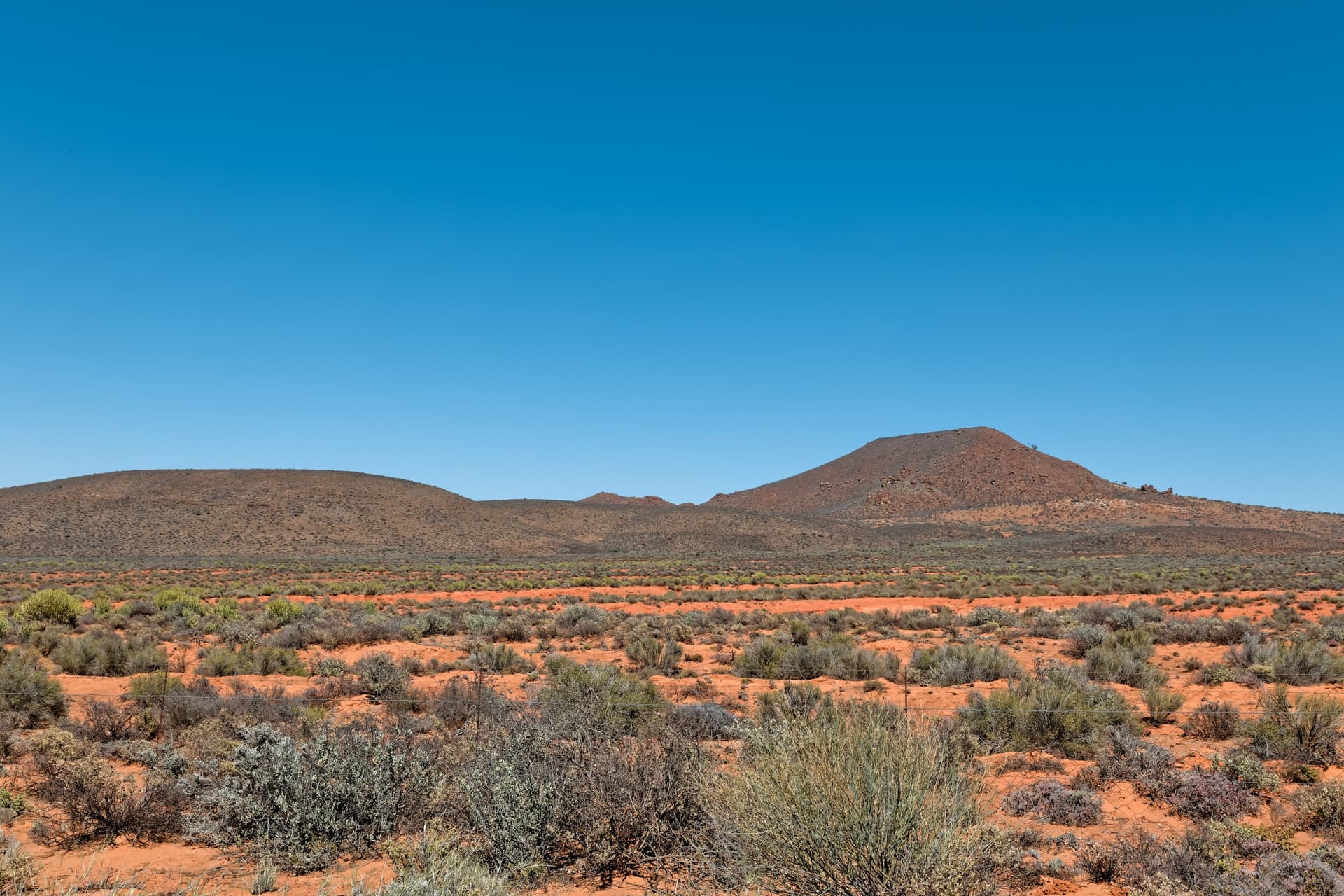
Nama Karoo is a vast semi-desert ecoregion spanning 351,100 km² between the high plateaus of three Cape provinces in South Africa and south-eastern Namibia. On the Namibian side, it forms an arid transition zone between the Namib Desert to the west, the xeric savanna of the Kalahari to the north-east and the Succulent Karoo further south-west. It is a landscape of open plateaus, dry grasslands, dwarf shrubs and marked temperature extremes, traversed by the Orange River basin and its tributary, the Fish River, which has carved out Africa's largest canyon.
Why Visit Nama Karoo
Nama Karoo appeals to travellers seeking remote desert landscapes and wildlife adapted to arid conditions. The Namibian portion, in the //Karas region, offers several distinct attractions:
- Fish River Canyon, stretching 160 km and plunging 550 m deep, Africa's largest canyon;
- distinctive flora featuring succulents, karoo acacias and endemic shrubs in good abundance;
- animal species adapted to arid climates, including several reptiles and birds found nowhere else on Earth;
- sparse human settlement and sweeping horizons, ideal for observing the night sky.
History of the Ecoregion
During the mid to late 19th century, European settlers in Nama Karoo witnessed massive migrations of herbivorous mammals. Animals followed the summer rains of the Karoo and the winter rains of central Kalahari and the Succulent Karoo. Species involved included wildebeest, white-fronted hartebeest, equus quagga (a zebra subspecies), elands and above all springboks, by far the most numerous.
The late 19th century marked a turning point: a cattle plague epidemic and the proliferation of fences designed to protect sheep pastures decimated the migrant herds. Farmers considered springboks pests and consumed their dried meat. The quagga (Equus quagga quagga), a zebra subspecies nearly endemic to the region, was hunted to extinction during the same period. Today, birds and seed-eaters continue to travel hundreds of kilometres to find water, where fences hold no sway.
What to See and Observe
Fish River Canyon
On the Namibian side, Fish River Canyon is the major point of interest in Nama Karoo. At 160 km long and 550 m deep, it offers spectacular vistas from viewpoints set on the eastern rim, particularly at Hobas and Hell's Bend. A multi-day hiking trail descends into the canyon during the dry season, reserved for experienced walkers.
Flora of Shrubs and Grasses
Vegetation is dominated by hemi-cryptophytic grasses and dwarf chamaephyte shrubs, particularly abundant in the driest zones. Shrubs chiefly belong to the genera Drosanthemum, Eriocephalus, Galenia, Pentzia, Pteronia and Ruschia. The most common perennial grasses are Aristida, Digitaria, Enneapogon and Stipagrostis. Near watercourses, you'll find karoo acacia (sweet thorn), Diospyros lycioides, tamarisk Tamarix usneoides, Searsia lancea and the mallow Grewia robusta.
Discreet Endemic Fauna
Wildlife density is lower than in Kalahari or Namibian savanna, but includes species found nowhere else:
- Endemic mammals: Visagie's golden mole (Chrysochloris visagiei) and Bushman's hare, listed as critically endangered on the IUCN Red List;
- Endemic reptiles: karoo dwarf chameleon and Boulenger's tortoise;
- Exclusive birds: tabby lark and Sclater's lark, found only in this ecoregion;
- Raptors and large birds: martial eagle, tawny eagle, kestrel, black-breasted snake-eagle, kori bustard and Ludwig's bustard.
The quagga, meanwhile, has been extinct in the wild since the 19th century.
When to Visit
Nama Karoo's climate is arid, with severe droughts and wide temperature swings: up to 25°C difference between day and night. Summer (December to March) often exceeds 30°C by day and concentrates most rainfall, modest (roughly 500 mm annually in north-eastern margins, less than 100 mm in the south-east). Winter is cooler and drier, with frequent night frosts.
- April to September: the most comfortable period for visiting Fish River Canyon and hiking. Mild days, clear skies, cold to very cold nights.
- October to November: temperatures rising rapidly, landscapes still dry.
- December to March: intense daytime heat, possible storms, canyon trails closed in summer for safety reasons.
Practical Information
- Bring plenty of water, complete sun protection and warm clothing for winter nights.
- Distances between villages are long: fill up with fuel whenever you can.
- Accommodation ranges from camping to more comfortable lodges around Fish River Canyon park, with a fairly broad tariff range depending on standard.
- Allow at least two to three days on site to enjoy the vistas and explore the surroundings.
- Network coverage is very limited: check before venturing off main roads.
How to Get There
The Namibian portion of Nama Karoo lies in the //Karas region, in the south of the country. From Windhoek, allow roughly 700 km via the B1 to Keetmanshoop, the region's main hub. From there, a paved road then a track lead to Fish River Canyon viewpoints in a few hours. The South African border at Noordoewer, on the Orange River, is another entry point for travellers coming from Cape Town. A private vehicle, ideally a 4x4 or a high-clearance vehicle, is recommended for exploring secondary tracks.
Nearby
Nama Karoo fits naturally into a wider itinerary across Namibian landscapes. Several sites complement the visit well:
- Cape Cross and its seal colony, on the Atlantic coast, for contrast with the interior aridity;
- the Brandberg massif, Namibia's highest point and rock art site;
- Khaudum park, further north-east, for wild Kalahari fauna;
- Mahango Game Reserve, in the Caprivi Strip, for wetland ecosystems of the north.
Frequently Asked Questions
Frequently asked questions
Travelling in Namibia
Nama Karoo naturally fits into a broader itinerary combining desert, wildlife and cultures of southern Africa. To plan your full itinerary, explore our tailor-made trips to Namibia.
Interested in this visit?
We can include it in your personalised itinerary.