Khaudum
Khaudum
Wild national park covering 3,842 km² in northeastern Namibia, accessible only by 4x4. Free-roaming wildlife, 320 bird species, raw Kalahari atmosphere.
Khaudum National Park covers 3,842 km² in northeastern Namibia, approximately 800 kilometers from Windhoek. This wild Kalahari reserve, accessible only by 4x4, is home to elephants, large predators and over 320 bird species in an unfenced savanna environment.
Why visit Khaudum
Khaudum stands apart from more frequented Namibian parks by its raw character and minimal infrastructure. The park is unfenced: wildlife moves freely between waterholes, sandy tracks and groves of endemic trees. Visitors rarely encounter other vehicles, making wildlife observation deeply immersive.
The surrounding region is inhabited by Gciriku and San communities, whose deep knowledge of the territory shapes local place names and the names given to wildlife.
Park history
The site was officially recognized as a reserve in 1989, after decades during which the region served as a wildlife buffer zone between pastoral lands and the Botswana border. National park status was granted in 2007, consolidating protection of the northeastern Kalahari ecosystem and its role as a migration corridor for elephants between Namibia and Botswana.
What to see and observe
Waterholes
Waterholes are the best vantage points for observation. Doringstraat, Dussi, Khaudum and Leeupan regularly attract large wildlife toward the end of the dry season. At Dussi, small elephant herds are frequently spotted; guides explain how to distinguish males from females by tusk shape. The alpha individual in the group sleeps only about two hours a night to provide protection against predators.
Predators
Lions, cheetahs, leopards and spotted hyenas hunt primarily at dusk. Daytime sightings are possible but require patience and an experienced guide.
Antelope and large herbivores
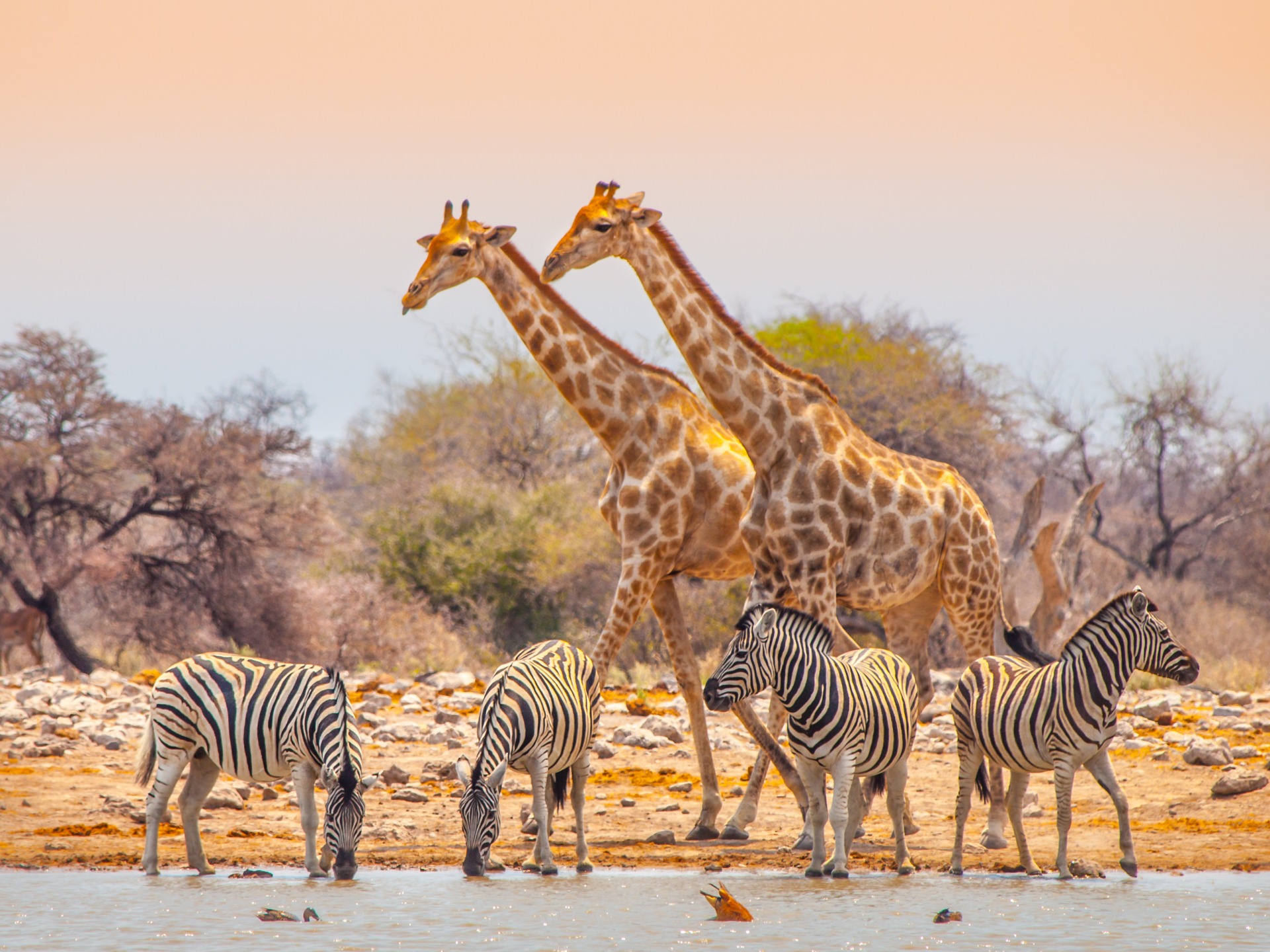
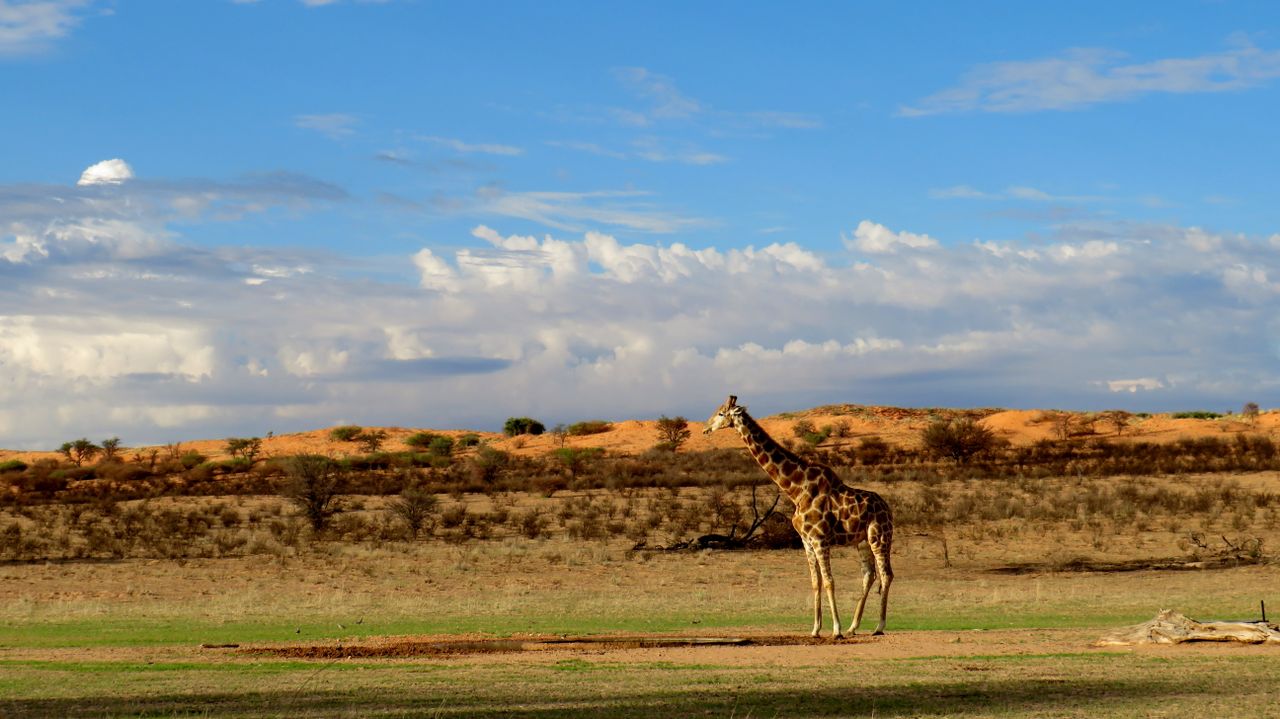
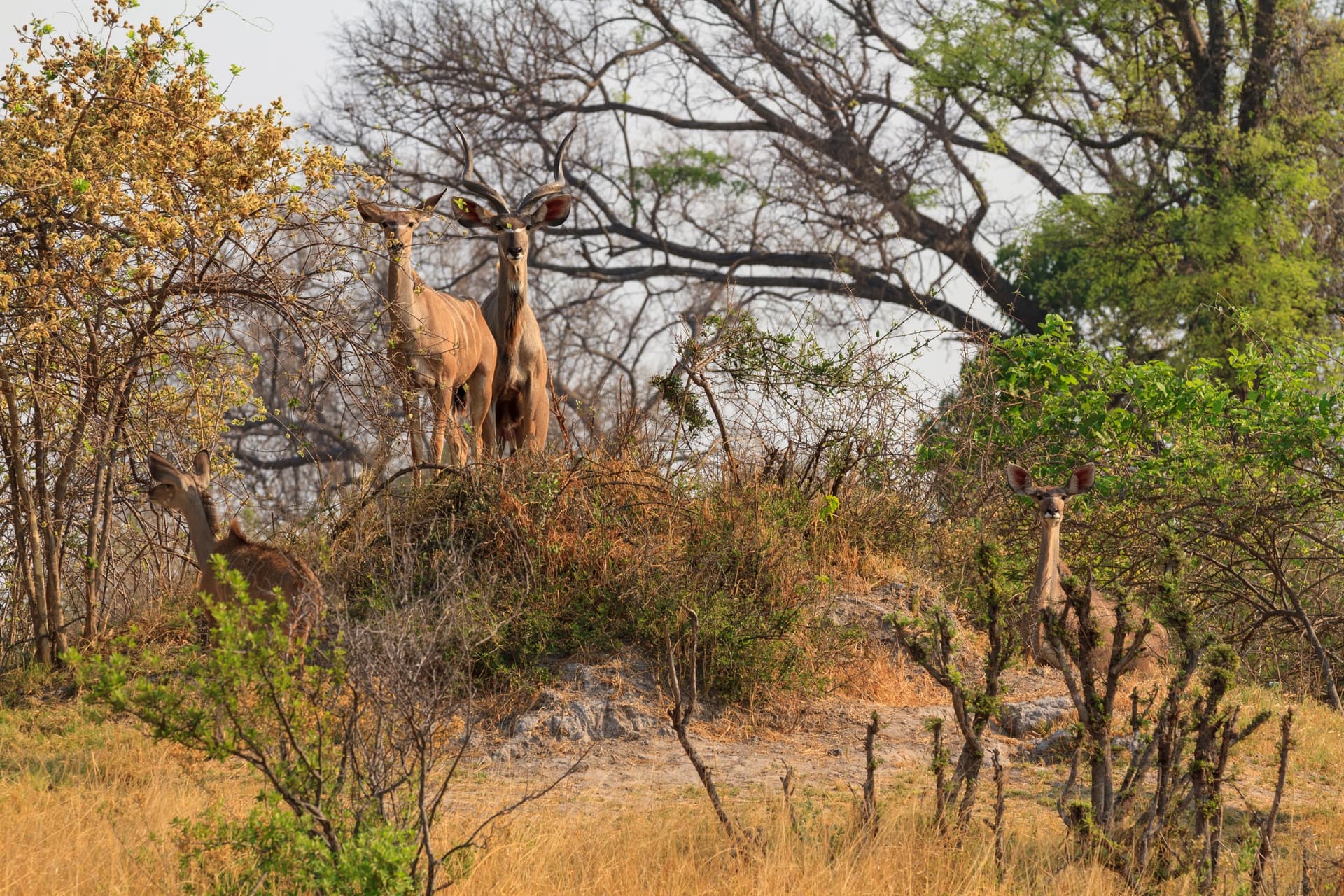
Near Omuramba pond, you can observe topi, antelope with an inclined profile resembling a cross between antelope and wildebeest. Giraffes often keep their distance from waterholes, lingering at the edge of tree groves.
Birdlife
The park is home to 320 bird species. Near waterholes congregate Southern ground hornbills — large birds with black plumage and vivid red patches on head and throat pouch — as well as open-billed storks. The Cuvier's falcon perches high to spot prey.
Local names
Afrikaans and local place names color the vocabulary of wildlife: Wildehond for wild dogs, Kameelperd for giraffes, Leeu for lions, Bastergemsbok for certain antelope. Routes cross through Tsoanafontein, Baikiaea, Dussi and Burkea.
Practical information
- Access is by prior reservation only. Places are limited.
- Camping areas are very basic: no drinking water on site, minimal infrastructure. Bring your own provisions, water and self-sufficient camping equipment.
- Pack insect repellent, particularly during the wet season.
- A local guide is highly recommended for reading tracks and wildlife observation.
When to visit
The best period runs from September to November, between the end of the dry season and the start of the rains. Waterholes concentrate wildlife during this time, tracks remain passable and temperatures are manageable. During the rainy season (December to March), some tracks become impassable.
How to get there
Khaudum is accessible only by 4x4 vehicle. The route requires sand-driving experience and ideally two vehicles in convoy, in accordance with park authority recommendations. From Windhoek, a regional flight reaches Grootfontein, the closest staging town, where you can rent an equipped 4x4. Allow several hours of driving from Grootfontein to the park entrance.
Nearby
Khaudum fits well as a stop on a broader itinerary through northern Namibia. Mahango Game Reserve, located further north in the Caprivi strip, complements this safari with its riverside landscapes and hippopotamuses. To the east, Chobe National Park in Botswana naturally extends the crossing. To the west, Damaraland offers striking geological contrast, as do Brandberg Massif and its rock art.
Frequently asked questions
Frequently asked questions
Plan your trip
To include Khaudum in a custom itinerary across Namibia, explore our Namibia journeys designed with English-speaking local guides.
Interested in this visit?
We can include it in your personalised itinerary.