What to Do in the Namib Desert?
Regarded as the world's oldest desert, the Namib Desert is an essential destination to explore during a trip to Namibia.
Regarded as the world's oldest desert, the Namib Desert is an essential destination to explore during a trip to Namibia. The desert that even gave its name to the country boasts landscapes of breathtaking beauty with striking contrasts between mountain ranges to the east and a sea of sand bordered to the west by the Atlantic Ocean. To make the most of your visit, discover the finest things to do and see during a stay in the Namib Desert.
1. Climb Elim Dune
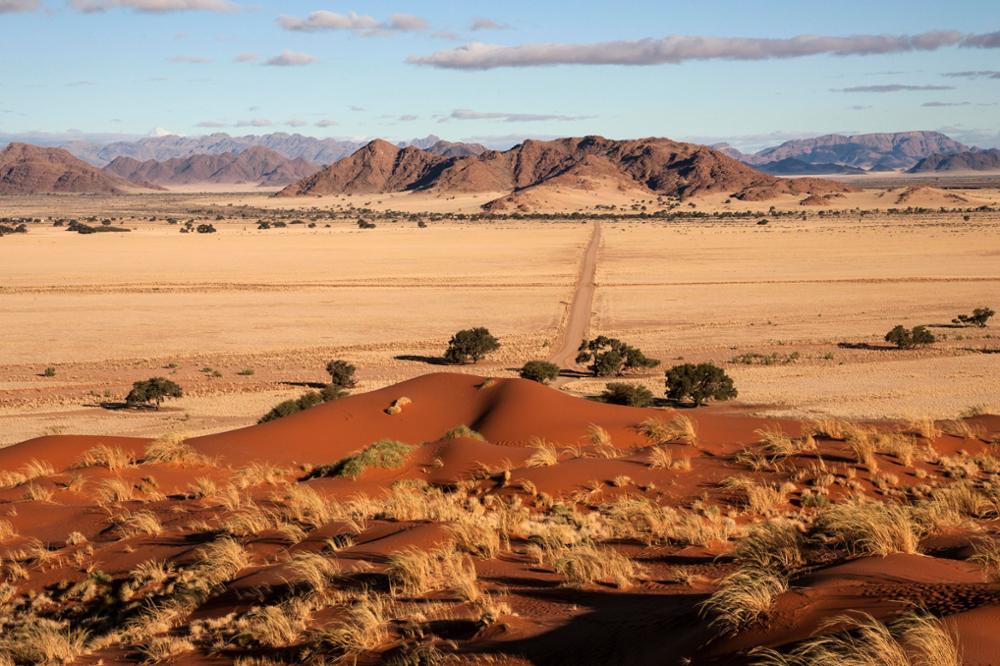
For a first encounter with the Namib Desert, we recommend climbing Elim Dune. Easily accessible, it is the first of a long series of dunes and offers an ideal introduction before you discover Sossusvlei. It's also a dune suitable for all since it rises only about a hundred metres high.
Our tip: to enjoy the most striking panorama, we recommend climbing Elim Dune at sunrise or sunset. You'll benefit from magnificent colour contrasts between the band of red dunes to the west and the bluish-tinted Naukluft mountains to the east.
2. Discover Sossusvlei, the Famous "Sea of Dunes"
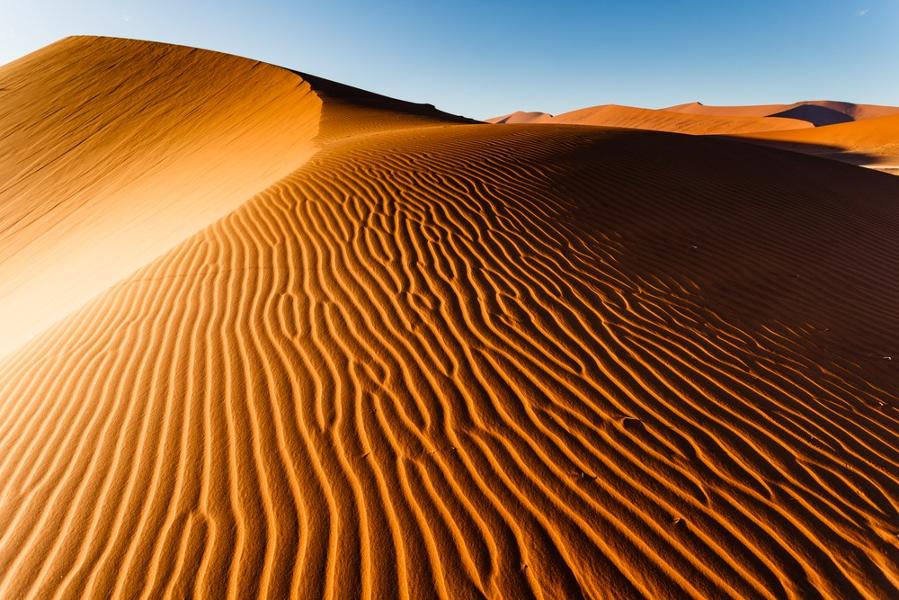
After climbing Elim Dune, you'll be ready to discover Sossusvlei, nicknamed the "sea of dunes". Located in the south of the Namib Desert, Sossusvlei is a salt desert fed by the Tsauchab River. What makes this desert region renowned, however, are its towering red sand dunes, which rank among the world's highest (some reaching 370 metres!). Among the most impressive and sought-after dunes by visitors are the famous Big Daddy, Dune 7, and Dune 45.
It's worth noting that this desert zone is home to several animal species that, despite the arid climate, have adapted to these extreme living conditions. The fortunate may spot oryx, jackals, ostriches, and various reptiles.
3. Explore Sesriem Canyon
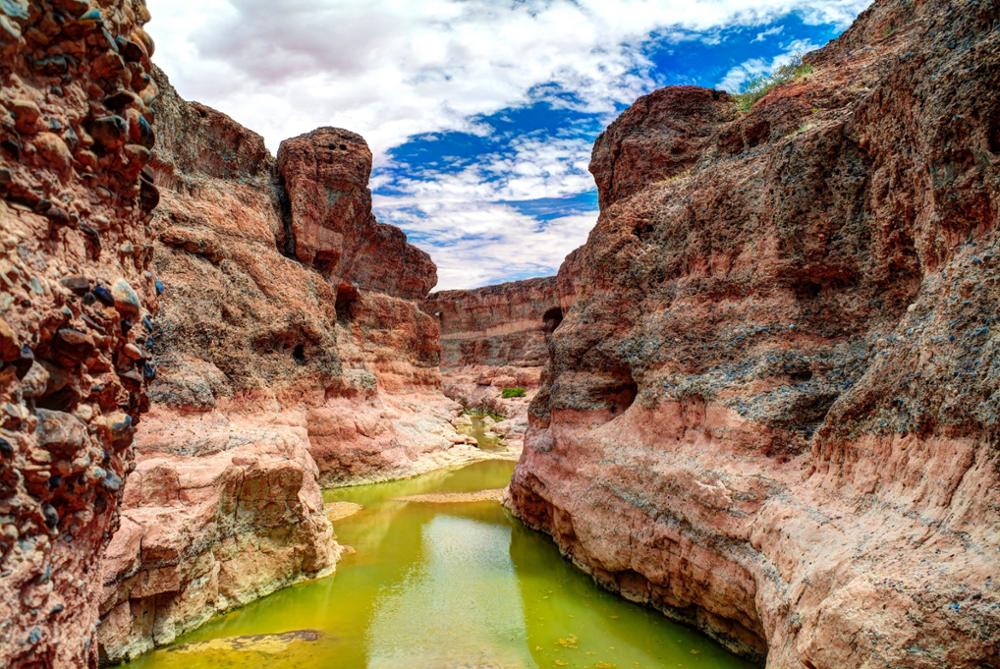
Another must-see site to discover during a stay in the Namib Desert: the Sesriem Canyon. Carved by the Tsauchab River over the past 2 million years, this impressive canyon plunges to approximately 30 metres in depth (sometimes reaching 50 metres). Its geological structure bears witness to rock formations dating back over 15 million years.
You can explore this canyon by following the fault line and descending into the gorge where gigantic acacias grow. You can conclude your adventure in the Tsauchab riverbed before making your way back to Sesriem across the plain. Allow approximately 2 hours for the walk and plan an early morning visit to avoid the intense midday heat.
4. Stroll Through the Mystical Deadvlei
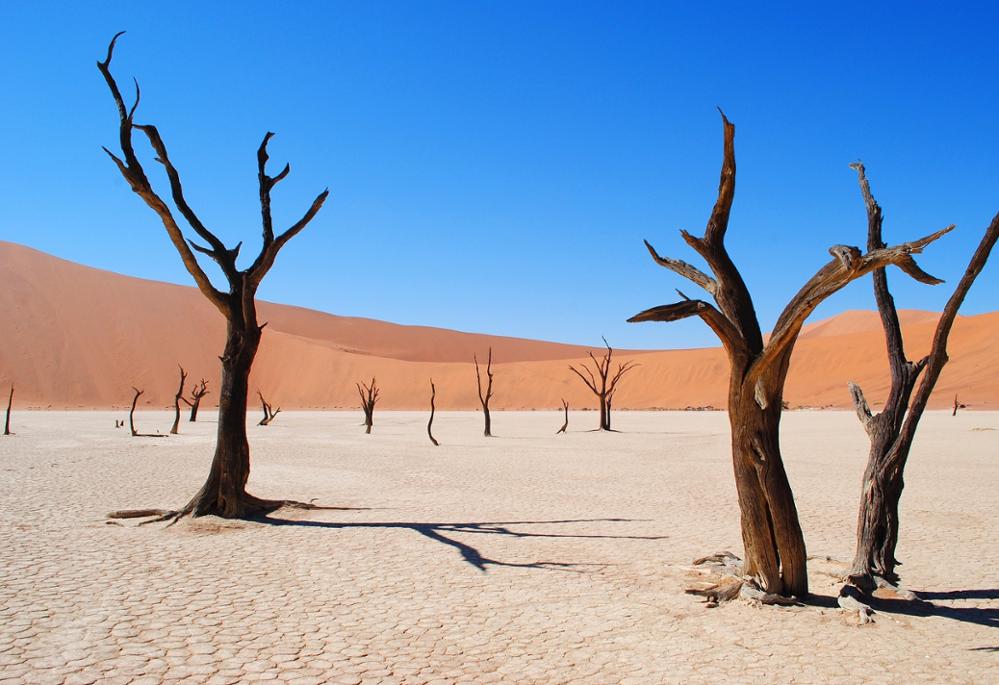
After exploring the dunes of Sossusvlei, you can continue your journey to Deadvlei. Translated as "dead marsh", this is a vast basin formed long ago during flooding that created a marsh where desert acacias were able to grow. This landscape, both striking and disconcerting, now consists of an immense expanse of white clay upon which stand these ancient, withered trees (most hundreds of years old) that appear frozen in time. You'll be captivated by this nature with its mystical and almost unreal appearance, as well as by the contrasts between the white ground, the red dunes surrounding it, and the blackened trees.
5. Hike Through the Naukluft Massif
A journey through the Namib Desert wouldn't be complete without visiting the impressive mountains of Namib Naukluft Zebra Park. And the best way to discover them is by hiking! Two options are available: the Olive Trail and the Waterkloof Trail. The Olive Trail spans about 11 km and takes 4 to 5 hours to complete. It's accessible for beginner hikers but can seem intimidating because one section runs along a rock face using chains. As for the Waterkloof Trail, it covers about 17 km and takes approximately 7 hours. It's better suited for experienced hikers.
Whichever trail you choose, you may encounter certain wildlife. Indeed, the Naukluft Massif is home to zebras, oryx and antelope, rock hyraxes, ostriches, and numerous bird species such as the black eagle, lanner falcon, and Monteiro's hornbill.
6. Observe Seals at Cape Cross
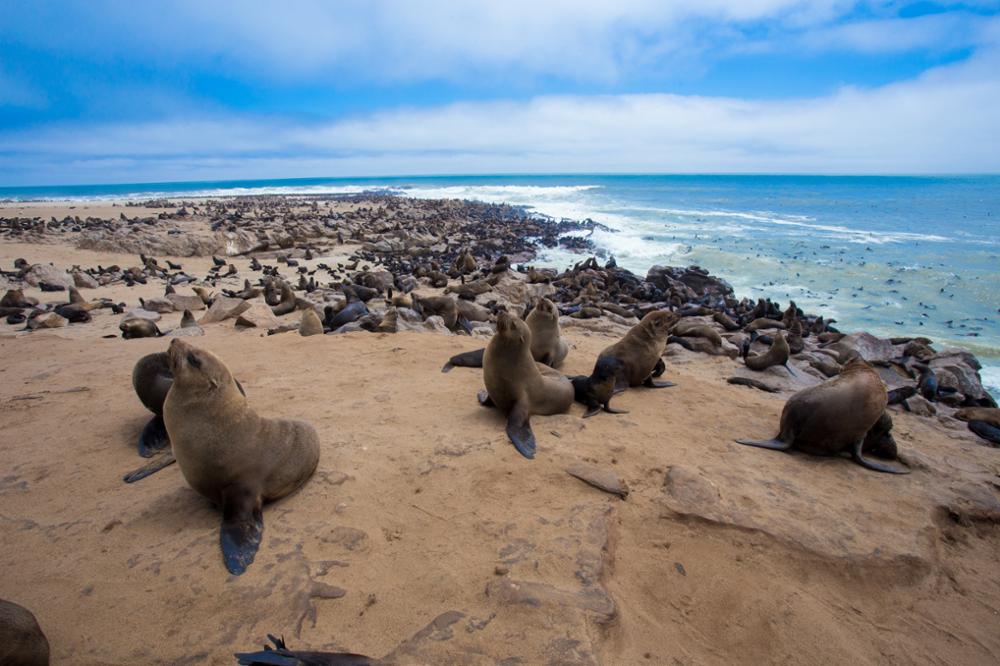
For all animal lovers, don't miss a visit to Cape Cross. This nature reserve is ideal for a wildlife safari as it's home to an impressive number of seals (currently numbering close to 100,000). This sanctuary is even renowned as the largest fur seal breeding colony in the world! To make the most of this extraordinary spectacle, we recommend visiting between November and December. During this period, seals gather for breeding season. And breeding season naturally leads to an abundance of newborns!
7. Venture to Skeleton Coast, the Coast of Skeletons
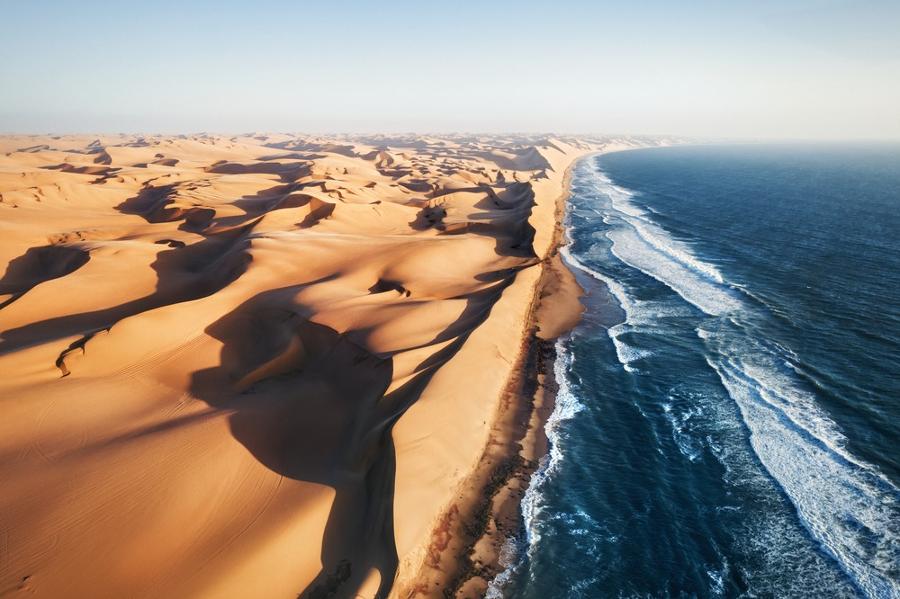
It's in the far north of the Namib Desert, on the Atlantic Coast, more precisely between Swakopmund and the Kunene River, that we invite you to venture forth and discover Skeleton Coast. Translated as "the coast of skeletons", this part of the desert owes its name to the skeletons of whales, seals, and other animals that litter the beach. There are also numerous shipwrecks that have run aground due to changing currents. Although the atmosphere may seem macabre, this site exudes a mysterious mood that will delight photographers!
Once again, despite relatively hostile living conditions, this region is home to abundant wildlife. Safari tours are organized here to observe gemsbuck oryx and springbok gazelle, lion and desert elephant, black rhinoceros, zebras, and even giraffes. More than 300 bird species are recorded, and it's also possible to spot whales and dolphins offshore, including a rare species, Heaviside's dolphin.
8. Fly Over the Namib Desert by Plane
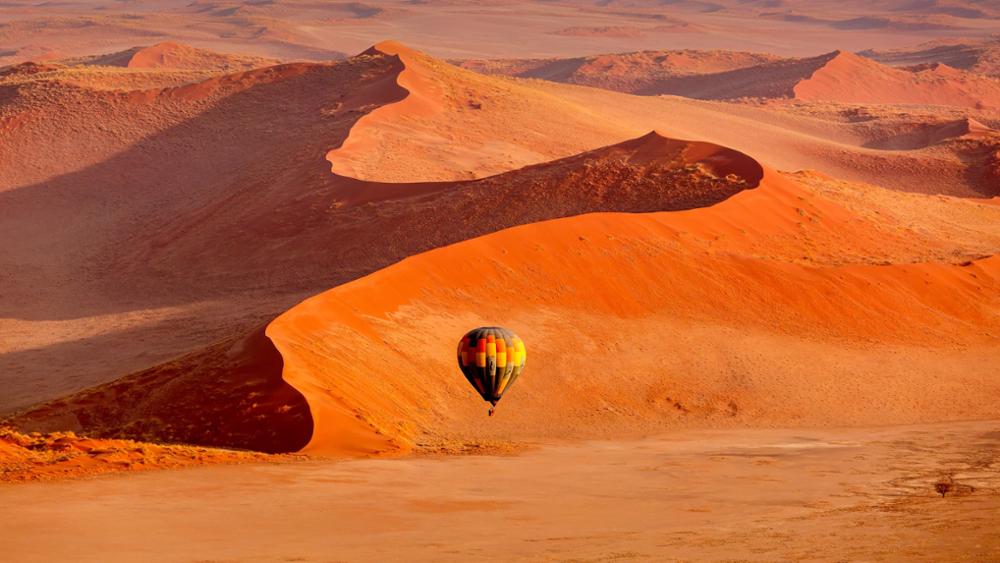
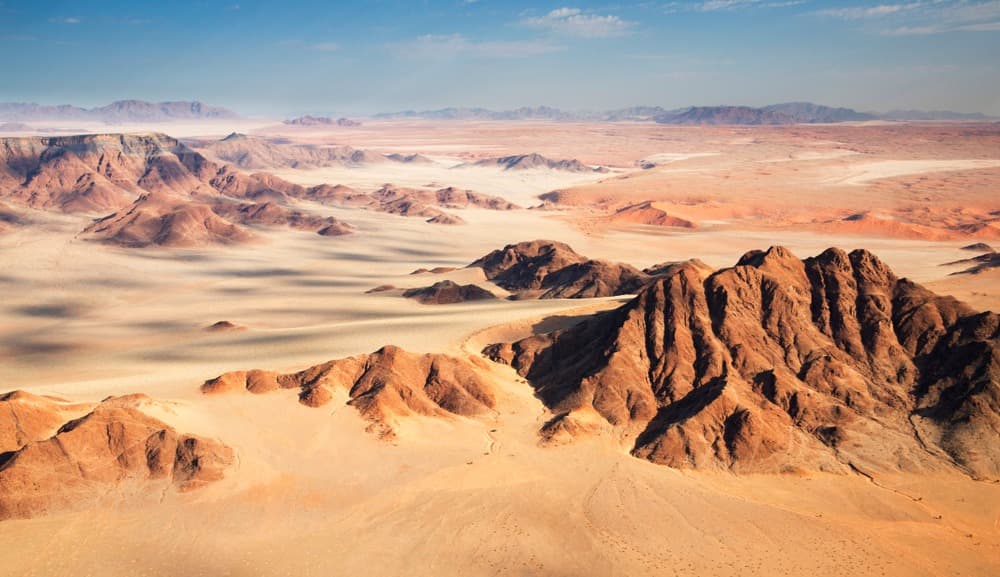
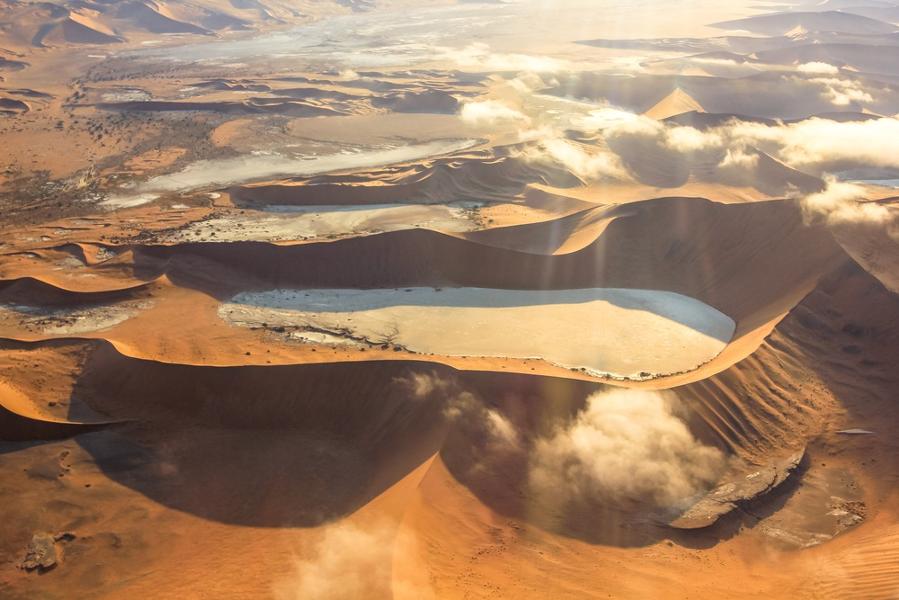
From the world's highest dunes to the Naukluft mountains and the coastline, what about gaining altitude to admire the fascinating landscapes of the Namib Desert from above? Whether it's a scenic flight or a hot air balloon ride, everything is possible thanks to our bespoke journeys! One thing is certain: a flight over the Namib Desert will provide you with unforgettable vistas that will stay with you for years to come…
Frequently asked questions
The best time to visit the Namib Desert is during the dry season, from May to October. Temperatures are more pleasant, nights are cool, and landscapes are more striking. Avoid the months of January to March when heat is extreme and rainfall can make some tracks impassable.
The Namib Desert is accessible from Windhoek, the Namibian capital, about 350 km away. Renting a 4x4 vehicle is highly recommended to reach Sossusvlei and the various sites within the Namib-Naukluft National Park. The track from the Sesriem gate to Sossusvlei is passable in about 2 hours.
Yes, climbing the dunes of Sossusvlei such as Big Daddy or Dune 45 is accessible to all visitors. It is strongly recommended to start at dawn to enjoy the sunrise light and avoid the day's heat. Bring sturdy footwear, plenty of water, and sunscreen.
Sossusvlei is a salt basin surrounded by towering red sand dunes, fed by the Tsauchab River. Deadvlei ('dead marsh') is a neighbouring white clay basin, famous for its dead and blackened acacia trees that contrast with the white ground and red dunes. The two sites are close and are typically visited together on the same day.
The Namib Desert is home to surprisingly rich fauna despite its aridity. You can observe gemsbuck oryx, zebras, ostriches, jackals, springbok gazelle, rock hyraxes, and numerous reptiles. On Skeleton Coast, lions, desert elephants, black rhinoceros, and giraffes are present, along with over 300 bird species. Offshore, whales and dolphins are also visible.
Yes, scenic flights in light aircraft and hot air balloon rides are organised from Sesriem to admire the Sossusvlei dunes, Naukluft mountains, and Atlantic coastline from the air. It's a spectacular experience to appreciate the desert's vastness. These activities should be booked in advance, especially during peak season (June-September).