Preparing Your Safari in Namibia
Namibia is an African country with breathtaking landscapes. Home to national parks and nature reserves, Namibian lands harbor the famous Big Five,
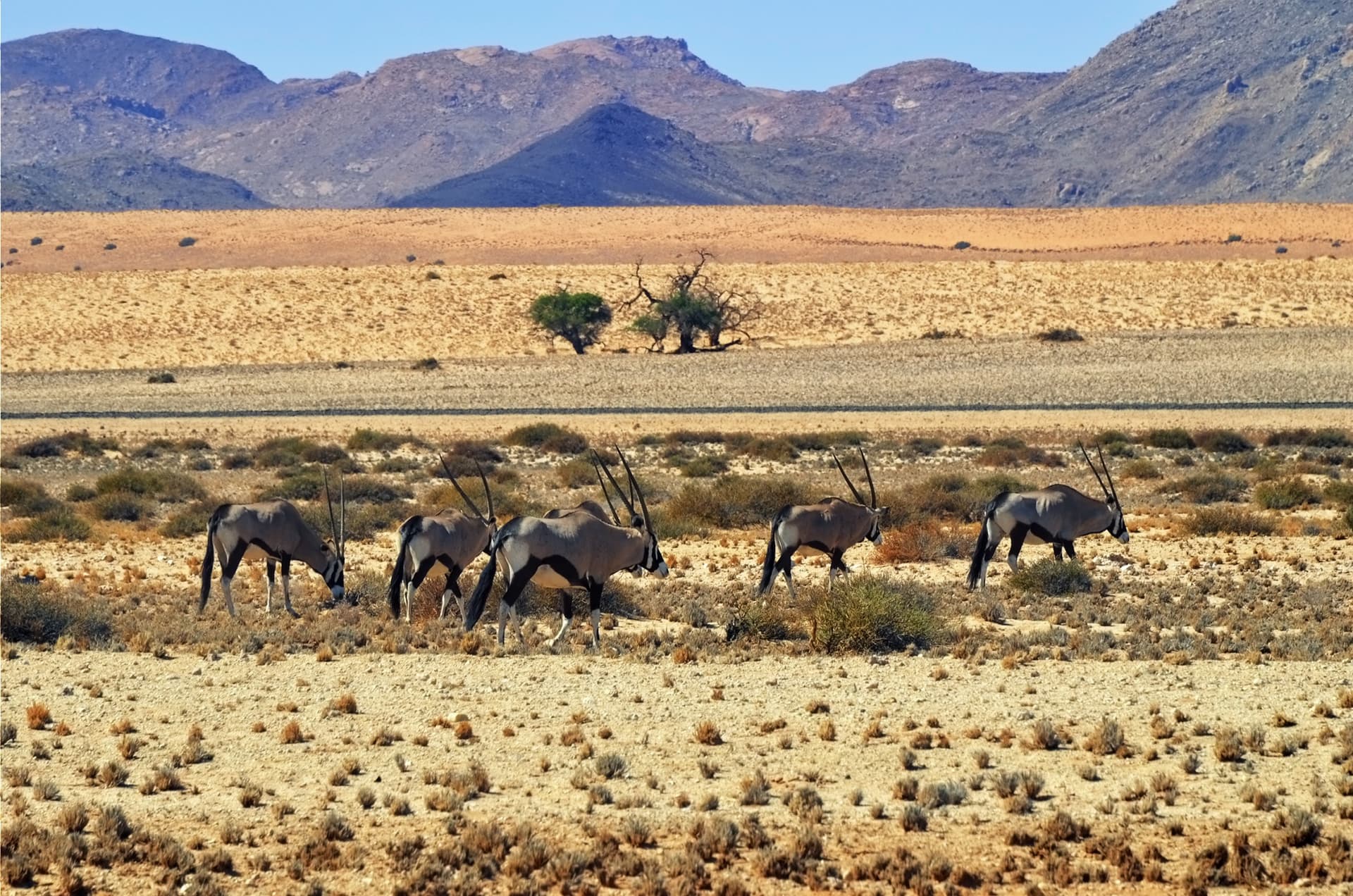
Namibia is an African country with extraordinary landscapes. Dotted with parks and nature reserves, Namibian lands are home to the celebrated Big Five, typical of the African savanna, including the iconic black rhinoceros. Before exploring the Etosha National Park, the Damaraland Desert or the Mahango Game Reserve in Bwabwata: here are a few tips to properly prepare your safari in Namibia.
Preparing Your Safari in Namibia: 4 Things to Know
1 – Understanding the Subtropical Climate
Located in the southern hemisphere, Namibia experiences three austral seasons (opposite to ours):
Hot and dry summer (October to December): temperatures during this period, considered the first part of summer, range between 30°C during the day and 20°C at night.
Humid summer (January to April): this second part of summer is actually the "rainy season."
Winter (May to September): while daytime temperatures are mild, nights can be quite cool. In the desert regions, the country experiences significant temperature fluctuations, with peaks reaching 40°C during the day and dropping to 0°C at night!
2 – Knowing the Best Times to Observe Wildlife
The first part of summer is most favorable for wildlife observation: vegetation is less dense during this period, making it easier to spot animals. To avoid extreme heat, the beginning of the austral winter is also a good option – particularly between May and July. Avoid the "rainy season," which makes many tracks impassable and forces parks to close.
3 – Knowing What to Pack
For your adventure, you'll only need a few essentials, including:
A valid passport, valid for 6 months beyond your return date for French, Belgian and Swiss citizens (it must have 3 blank pages, including 2 facing pages).
An up-to-date vaccination record, meaning: diphtheria, tetanus, whooping cough and poliomyelitis, hepatitis A and B, measles. Typhoid and rabies are also recommended.
Covering and neutral-colored clothing, as well as hiking shoes.
4 – Having a Budget in Mind
The cost of a safari in Namibia is €2,000 for approximately ten days. The budget then varies depending on your type of travel and organization:
self-drive tour (between €2,000 and €2,500);
group departure (€3,600);
private circuit with a guide (€5,000).
Choosing a Safari Type: 3 Ways to Explore Namibian Nature
1 – 4x4 Safari

The all-terrain vehicle is part of safari legend! What are the advantages of a 4x4? Both an enjoyable and practical experience. You will, however, need to follow safety guidelines given before departure, such as staying on marked trails or approaching or feeding animals. These routes can be self-guided or accompanied by a driver and/or a guide.
2 – Walking Safari
A walking safari is another way to discover the African bush. Slower and quieter, it allows you to hear sounds and noises that would otherwise go unnoticed. To blend in with nature, your clothing should be in dark colors. For your safety, an armed guide will accompany you throughout the trek.
3 – Night Safari
Little-known, the night safari is an unusual experience. At dusk, nocturnal animals emerge from their hiding places, revealing wildlife very different from daytime activity. The Namib Desert Lodge is renowned for its famous scorpion hunts, which glow in the darkness!
Safari in Namibia: 3 Must-See Sites
Many parks and nature reserves occupy the country. Among Namibia's most beautiful safaris, discover:
1 – Etosha National Park

Famous for its salt pan (visible from space!), Etosha National Park attracts numerous animals that come to lick minerals – and quench their thirst at the reserve's waterholes. An opportunity to see zebras, gazelles and oryx bathing alongside elephants! Etosha is also renowned for its emblematic black rhinoceros.
2 – Damaraland Desert
In the midst of its Far West-like landscapes lives wildlife adapted to extreme heat and drought. The Black-faced Impala (an endemic antelope) and the Damara dik-dik nestle in the heart of this desert zone, located in the northwestern part of the country.
3 – Bwabwata National Park

Also named "Mahango Game Reserve," Bwabwata National Park is situated between Botswana and Angola. With its forests, dry lands and wetlands, this protected area is home to very rich vegetation, which attracts numerous animal species. Over 99 mammal species and 5 amphibian species are recorded here!
Travel with Furaha Tour & Safaris in Namibia
To ensure the availability of activities at a site, it is essential to book – which is not always straightforward. Opting for a Furaha Tour & Safaris circuit will allow you to travel with peace of mind.
More than just an agency, Furaha Tour & Safaris is first and foremost a local company, staffed with experienced professionals attentive to your needs. Our 13-day itinerary guarantees a successful… and unforgettable safari!
Frequently asked questions
The best time to observe wildlife in Namibia is between October and December (hot and dry summer), when vegetation is less dense. The beginning of the austral winter, from May to July, is also recommended to enjoy milder temperatures. Avoid the rainy season (January to April), which makes many tracks impassable.
A safari in Namibia for approximately ten days starts at around €2,000. The budget varies depending on the package chosen: between €2,000 and €2,500 for a self-drive tour, €3,600 for a group departure, or €5,000 for a private circuit with a guide.
Before traveling to Namibia, it is recommended to be up to date on the following vaccinations: diphtheria, tetanus, whooping cough, poliomyelitis, hepatitis A and B, and measles. Vaccinations against typhoid and rabies are also advised. Consult your doctor or an international vaccination center before departure.
The 3 must-see sites for a safari in Namibia are: Etosha National Park, famous for its salt pan and black rhinoceros; Damaraland Desert, home to the Black-faced Impala and Damara dik-dik; and Bwabwata National Park (Mahango Game Reserve), on the border of Botswana and Angola, which is home to over 99 mammal species.
A walking safari in Namibia is a safe option provided you are accompanied by an armed guide, who escorts you throughout the trek. It is also recommended to wear dark-colored clothing to blend in with nature and to avoid any behavior that might attract or disturb wildlife.
