Windhoek
Windhoek
Windhoek, Namibia's capital perched at 1,650 meters altitude, combines German colonial heritage, authentic neighborhoods like Katutura, and a central location ideal for exploring Namibia.
Windhoek is the capital and largest city of Namibia, perched at approximately 1,650 meters altitude on the central plateau. The country's administrative, economic, and cultural hub, it blends German colonial architecture, modern neighborhoods, and bustling markets. Its mountainous setting, dry climate, and manageable scale make it an ideal base for exploring Namibia, while offering a surprisingly rich local gastronomic and artistic scene.
Practical Information at a Glance
- Access: Hosea Kutako international airport lies approximately 45 km east of the city center; shuttles and taxis connect it to the city.
- Currency: Namibian dollar (NAD), at par with the South African rand, accepted everywhere.
- Language: English (official language), Afrikaans, and German widely understood in the city.
- Recommended duration: 1 to 2 days are sufficient to explore the center and nearby neighborhoods.
- Safety: remain vigilant at night in quiet streets; the city center is generally safe during the day.
- Dress code: no specific dress restrictions in the city; cover up when visiting places of worship.
What to See
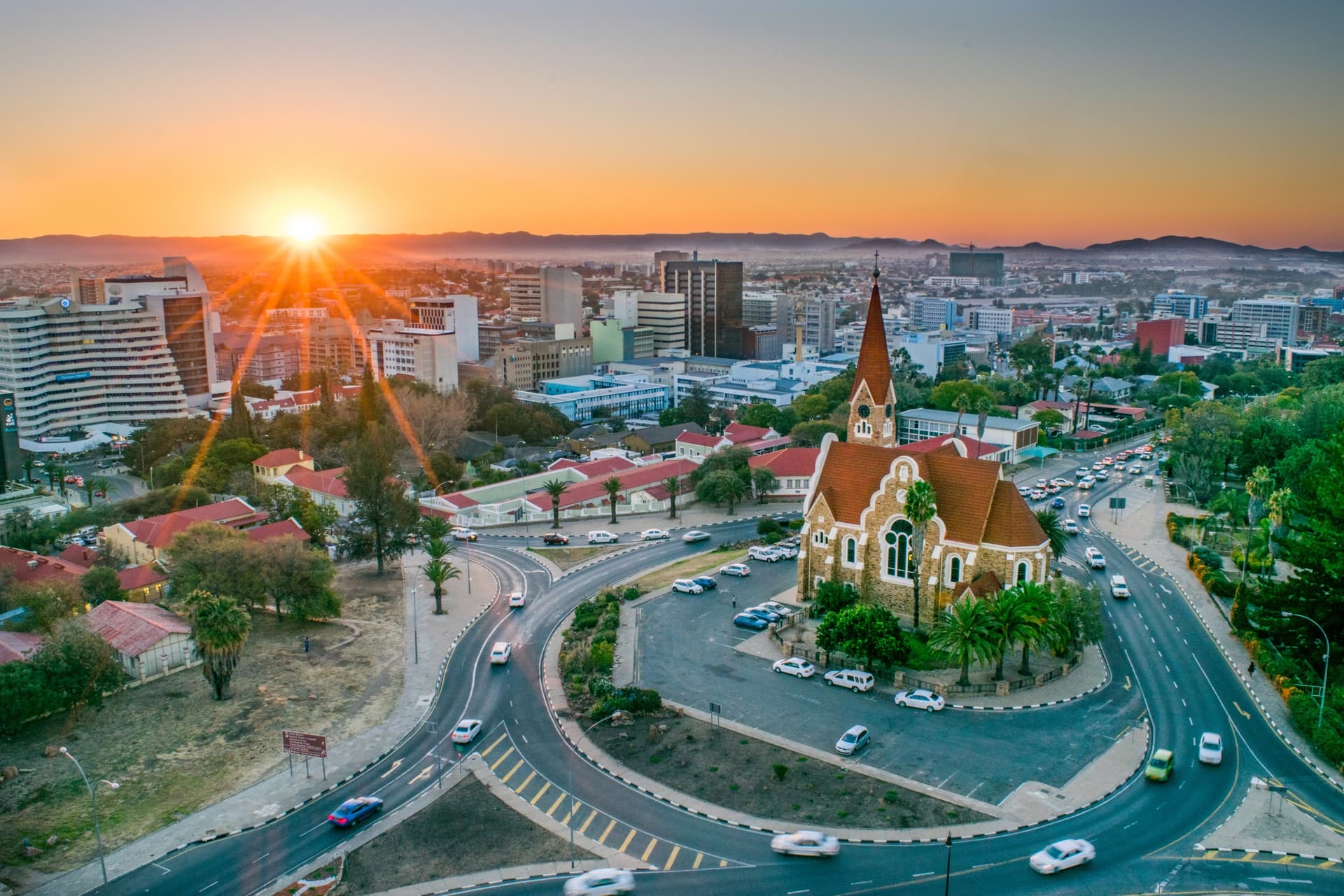
The historic center concentrates most points of interest. The Christ Church (Christuskirche), built in 1910 in pink sandstone, overlooks the city from a hillside. The Namibian Parliament and buildings from the German colonial era line Independence Avenue, the main thoroughfare. The Namibia Craft Centre artisan market brings together pottery, wooden sculptures, and jewelry crafted by local artisans.
History and Context
Founded in 1890 as a German colonial garrison under the name Windhuk, the city became the administrative center of German South-West Africa. After World War I, it passed under South African mandate until Namibian independence in 1990. This layered past explains the eclectic architecture: Wilhelmine buildings stand alongside modern structures and informal neighborhoods.
Highlights of Your Visit
Christuskirche
This Lutheran church in pink sandstone and white limestone, completed in 1910, is Windhoek's architectural symbol. Its style blends Neo-Gothic and Art Nouveau. The sober interior houses stained-glass windows gifted by Kaiser Wilhelm II. Entry is free outside of services.
Alte Feste (Old Fort)
Built between 1890 and 1892, this colonial fort is Windhoek's oldest standing building. It now houses the National Museum of Namibia, which traces the country's history from prehistory to independence, with a dedicated section on the liberation struggle.
Katutura
A neighborhood created during apartheid to consolidate the Black population, Katutura is today a vibrant, dense, and authentic district. The Soweto Market here offers grilled meats, vegetables, and crafts in an atmosphere stripped of tourist gloss.
Independence Avenue and City Center
The main thoroughfare concentrates banks, shops, and cafés. The Mughal Mahal and several restored Wilhelmine buildings testify to architectural diversity. The Post Street Mall, an adjacent pedestrian street, buzzes with street vendors and small shops.
Photography Tips
Morning light is ideal for photographing Christuskirche, whose pink façade captures warm sunrise hues. For Katutura, always ask permission before photographing people. Alte Feste photographs well in late afternoon, when raking light accentuates the white façade's relief.
Location and Access
Windhoek occupies Namibia's geographic center, approximately 700 km from the Atlantic coast and similar distances from the northern and southern borders. The city center is compact and partially walkable. Shared taxis (combis) serve outlying neighborhoods. Car rental is recommended for exploring the national parks.
Nearby locations accessible as day trips:
- Daan Viljoen National Park — nature reserve about twenty kilometers west, ideal for hiking or spotting local wildlife.
- Okahandja — town approximately 70 km north, renowned for its wooden sculpture markets and significance to the Herero community.
Nearby Areas
- Daan Viljoen National Park — accessible reserve from Windhoek to observe zebras, wildebeest, and kudu without leaving the capital region.
- Okahandja — wooden sculpture market renowned throughout the country, approximately an hour's drive north.
- Sossusvlei — emblematic red dunes of the Namib Desert, approximately 5 hours' drive southwest, a classic starting point from Windhoek.
- Etosha National Park — one of southern Africa's great wildlife parks, approximately 5 hours north of the capital.
Frequently asked questions
The dry season, from May to October, offers sunny weather and pleasant temperatures. The rainy season (November to April) brings short but intense showers; vegetation is greener and prices sometimes lower.
One to two days are sufficient to explore the historic center, visit Alte Feste, and discover Katutura. Windhoek primarily serves as a starting or ending point for a Namibian circuit.
The historic city center is compact and walkable during the day. For Katutura or outlying neighborhoods, a taxi or local guide is recommended, particularly for safety and orientation reasons.
No strict dress restrictions in the city. For entering Christuskirche or other places of worship, modest attire (shoulders and knees covered) is appropriate out of respect.
Yes. The capital is the country's logistical hub: car rentals, travel agencies, domestic flights, and main roads depart from Windhoek toward Etosha, Sossusvlei, the Skeleton Coast, and Damaraland.
The Namibia Craft Centre, in the city center, groups together artisan workshops and shops. Soweto Market in Katutura offers a more local experience, with sculptures, baskets, and textiles often at more accessible prices.
Photos
Want to discover this destination?
Our local advisors design your tailor-made trip.