Namib Desert
Namib Desert
The world's oldest desert spreads its ochre dunes between the Atlantic Ocean and the Naukluft Mountains. Sossusvlei, Deadvlei, Cape Cross: your complete guide to the Namib.
Stretching along Namibia's western coast, the Namib Desert spans 1,500 kilometers long by approximately 160 kilometers wide. Blessed with varied and stunning landscapes, it's the ideal destination to fully experience a safari in Africa.
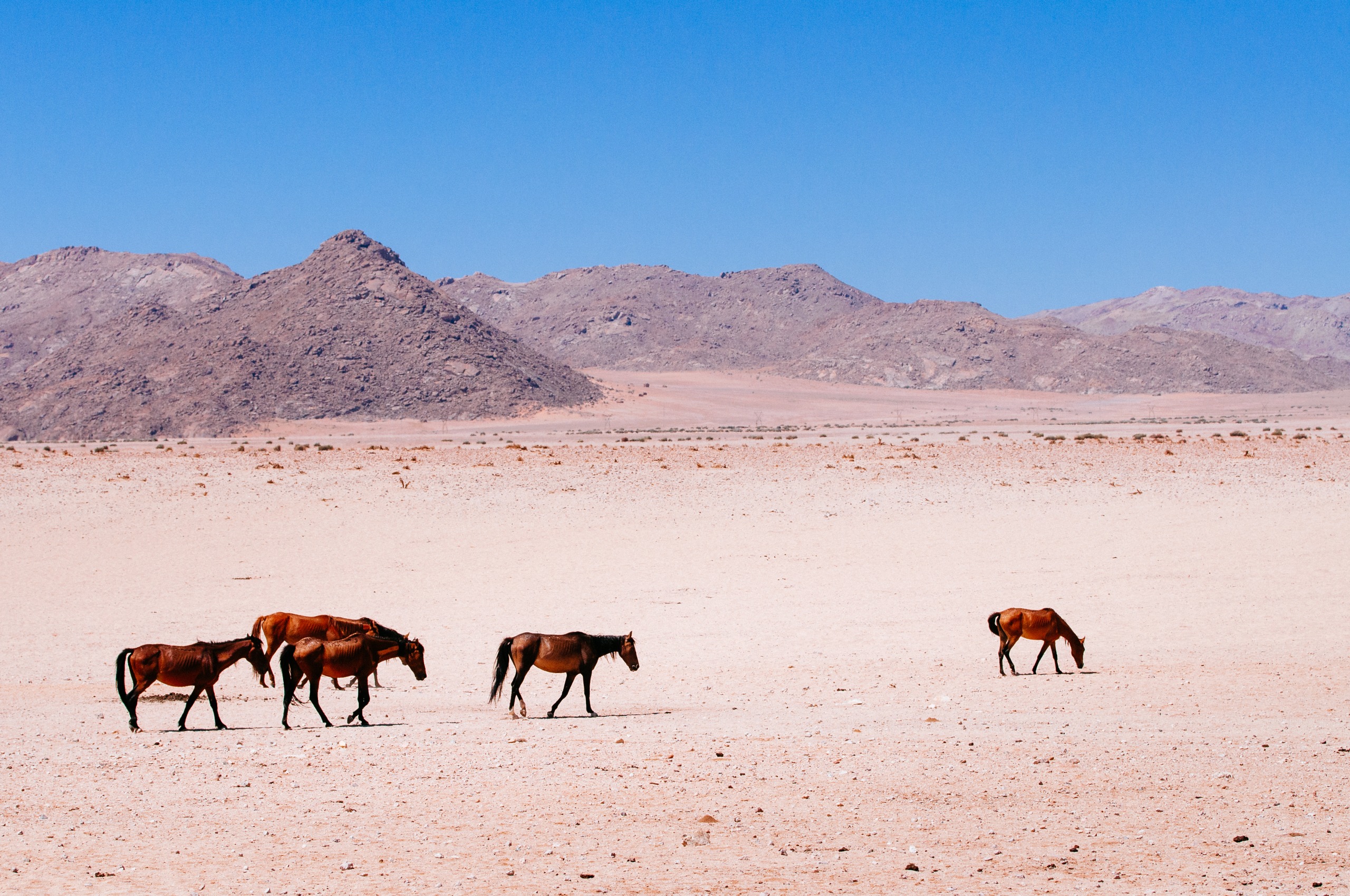
In the heart of its sea of sand, oryx gazelles, elephants, and desert lions lead a relatively peaceful existence.
To the west, the Atlantic Ocean meets the desert without any transition, creating a simply magnificent spectacle.
To the East extends the vast Naukluft plateau. Its rocky formations create escarpments and deep canyons with unique architecture. Nestled in the heart of the desert lies the extraordinary Namib-Naukluft Park, where sand dunes, rocky crevasses, and local vegetation converge.
Discovering the Namib Erg
The Namib Desert is arguably the oldest desert expanse on Earth. Located along Namibia's western coast in southern Africa, its landscape depicts a sea of sand bordered to the west by the Atlantic Ocean and mountain ranges to the east.
Along the western coast lies the magnificent seaside town of Swakopmund. Scattered throughout the desert's heart are countless treasures such as the towering "Big Daddy" dune, the Namib-Naukluft Park, the Valley of the Moon, and much more.
Safari in the Namib Desert introduces visitors to countless animal species including oryx gazelles, elephants, lions, numerous bird varieties, and even fur seals.
The meteorological conditions of this mysterious desert have remained virtually identical for millions of years. The entire region is bathed in a subtropical desert climate.
Namib-Naukluft Park
The Namib-Naukluft Park is a protected area established in August 1979. Covering an area of 49,800 km², it was Namibia's largest protected area at the time of its declaration. It is located on the country's Atlantic coast.
It is bordered by the Dorob Park to the north, the Diamond protected area to the south, and the NamibRand private nature reserve to the east. The Naukluft Mountains in the north are part of the park.
The park comprises four main regions: Namibe, Naukluft, Sesriem, and Sandwich Harbour. Part of the latter is included in the Diamond protected area. The Sesriem Gate serves as the park's main entrance. Thanks to the landscape's natural beauty, Sesriem Canyon, the Kuiseb River, and the Naukluft Mountains rank among the park's premier attractions.
Sesriem Canyon
As it traverses this region, the Tsauchab River has carved an incredible canyon thirty meters deep, stretching for over a kilometer in length. This gigantic crevasse is one of the Namib-Naukluft Park's main attractions.
Due to the region's climatic conditions, the Tsauchab River remains dry for much of the year. However, its level rises significantly during rainy seasons due to the soil type in this area, which absorbs water poorly. Because of this phenomenon, the Sesriem Canyon is among the key sites for observing the region's wildlife.
Sossusvlei
Located in the desert's southern section, Sossusvlei ranks among the Namib-Naukluft Park's most popular attractions. Its landscape depicts a sea of sand, salt, and clay stretching for kilometers, interspersed with red-colored dunes. This tableau earned it the local name of "march without return to death". This incredible expanse of dunes periodically serves as a riverbed for the Tsauchab River, which gives it a "second life" during these periods.
Some Sossusvlei dunes reach impressive heights. Among the tallest, Dune 7, "Big Daddy", and Dune 45 are the most favored by tourists. These sites offer extraordinary panoramic views across the entire surrounding region.
Despite such an arid climate, this vast desert region is home to significant wildlife diversity, including oryx, jackals, ostriches, and various reptiles.
Deadvlei
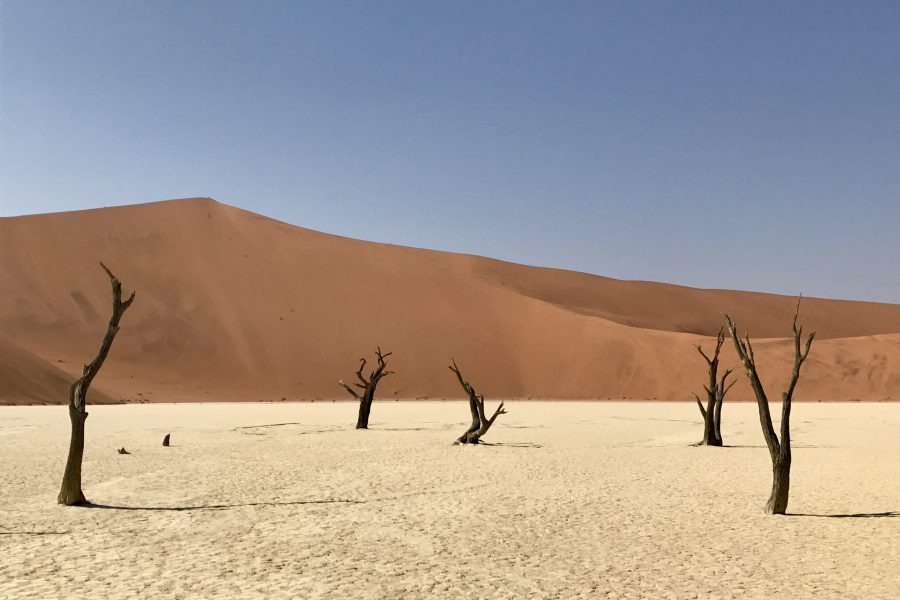
Located near Sossusvlei, close to the "Big Daddy" dune, Deadvlei resembles a large desert plain scattered with dead trees. During the rainy season, the Tsauchab River floods this part of the desert, allowing regional animals to quench their thirst. Outside this period, it dries up again, leaving behind a tableau that is both eerie and fascinating.
The completely desiccated trees and harsh climate earned it the local name of "deadly march". Deadvlei ranks among the must-see sites in the Namib Desert.
The Naukluft Mountains
The impressive Naukluft Mountains dominate the park's eastern sections. Their escarpments, plateaus, valleys, and plains delight avid hikers.
This region is home to significant animal diversity. Zebras, rock hyraxes, and antelopes thrive on the escarpments. Oryx gazelles, certain antelope species, and ostriches prefer the region's plains. Looking skyward, one might spot a steller's sea eagle, a lanner falcon, a Rüppell's parrot, a white-throated robin, a Monteiro's hornbill, and some 200 bird species soaring overhead.
Swakopmund
The Swakopmund seaside resort is located on the Namib Desert's western coastline. Founded in 1892, the town is filled with Germanic colonial-style buildings that stand out among modern structures. Swakopmund reflects the region's history and cultural identity through its beach, museum, water park, crystal gallery, and views of the desert's spectacular dunes.
Cape Cross
Cape Cross is an important historical landmark of the region. This is where Portuguese explorer Diego Cão landed in 1486. He planted a cross here to mark the southernmost region of Africa ever explored by his contemporaries. Since then, a replica has been erected to commemorate this chapter of the country's history.
A spectacular event typically occurs here at year's end, from November through December. During this period, hundreds of thousands of fur seals gather at this location for breeding season. This massive gathering makes Cape Cross a sanctuary for the world's largest fur seal breeding colony.
The Namib Desert still holds countless incredible sites waiting to be explored, such as the lunar landscape of the Valley of the Moon, the Welwitschia plain, Sandwich Harbour, the ghost town of Kolmanscop, and the inaccessible, mysterious Skeleton Coast.
Practical Information
Climate
A subtropical desert climate prevails over the Namib Desert. Daytime temperatures can quickly reach 32°C, dropping to as low as 9°C at night.
The rainy season begins around November and ends around March of the following year. During this period, rainfall reaches approximately 50 mm.
The best time of year to visit the Namib Desert is between September and December. During this period, temperatures are slightly cooled by occasional showers. Animals gather near the river, and fur seals begin congregating along Cape Cross.
From Abroad
To reach the Namib Desert, you must first book a flight to Windhoek, Namibia's capital. Upon arrival at Hosea Kutako International Airport, you'll need to take a taxi to reach the city's railway or bus station.
From the Capital
From Windhoek, Namibia's capital, you can take the train, bus, or plane to the Swakopmund seaside resort.
Windhoek's railway station is located on Bahnhof Street. The bus station is also on Bahnhof Street, in a separate building. Apart from their native language, locals communicate reasonably well in German and English. Private flights can be arranged from the capital to Swakopmund.
Once in Swakopmund, you'll find 4x4 vehicles available for rent for desert safaris.
Attractions in Namib Desert
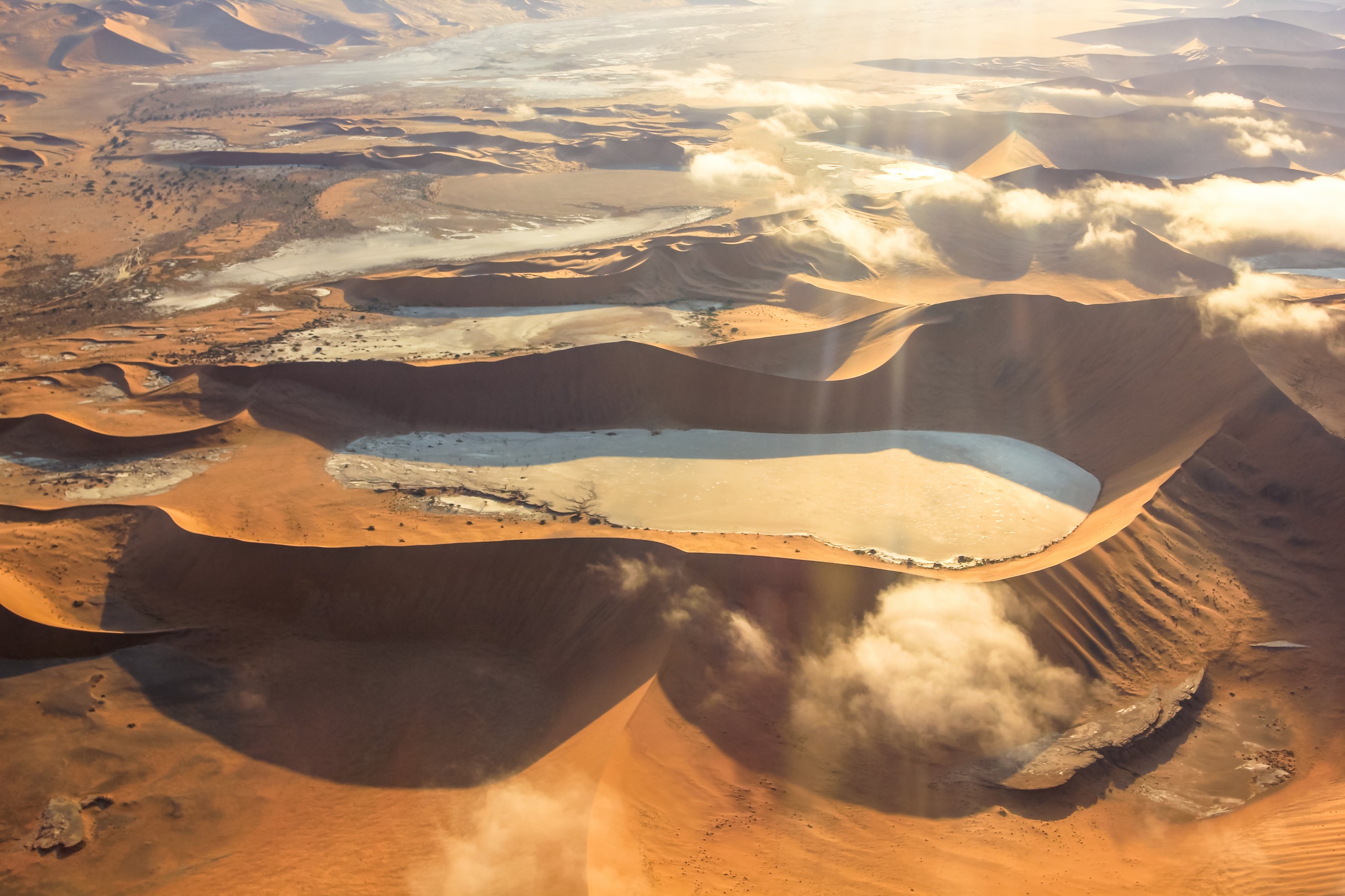
Le Parc National de Namib
Plus grand parc d'Afrique, le Namib-Naukluft réunit dunes de Sossusvlei, pan de Deadvlei, lagune de Sandwich Harbour et montagnes du Naukluft sur 49 760 km².
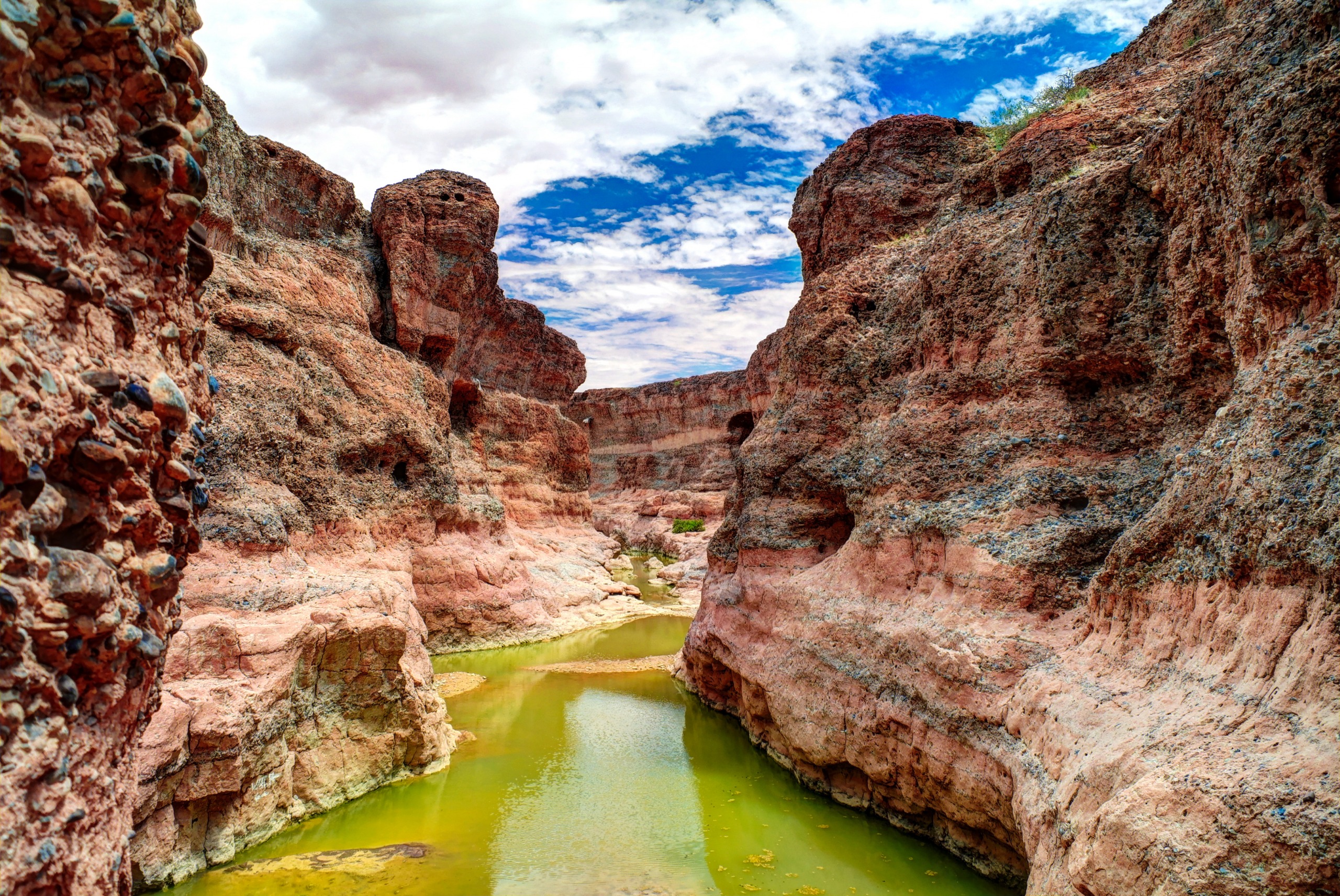
Canyon de Sesriem
Porte d'entrée du parc Namib-Naukluft, le canyon de Sesriem entaille le désert sur 4 km. Guide pratique : accès, faune, saisons et alentours.
Sossusvlei
Dunes géantes, cuvettes d'argile et faune endémique : guide complet de Sossusvlei, joyau du désert du Namib accessible depuis Sesriem.
Want to discover this destination?
Our local advisors design your tailor-made trip.