Victoria Falls, an unmissable natural wonder
Victoria Falls, an unmissable natural wonder
1,700 m wide, 108 m high: everything you need to know about Victoria Falls, seasonal activities and access from Namibia via Botswana.
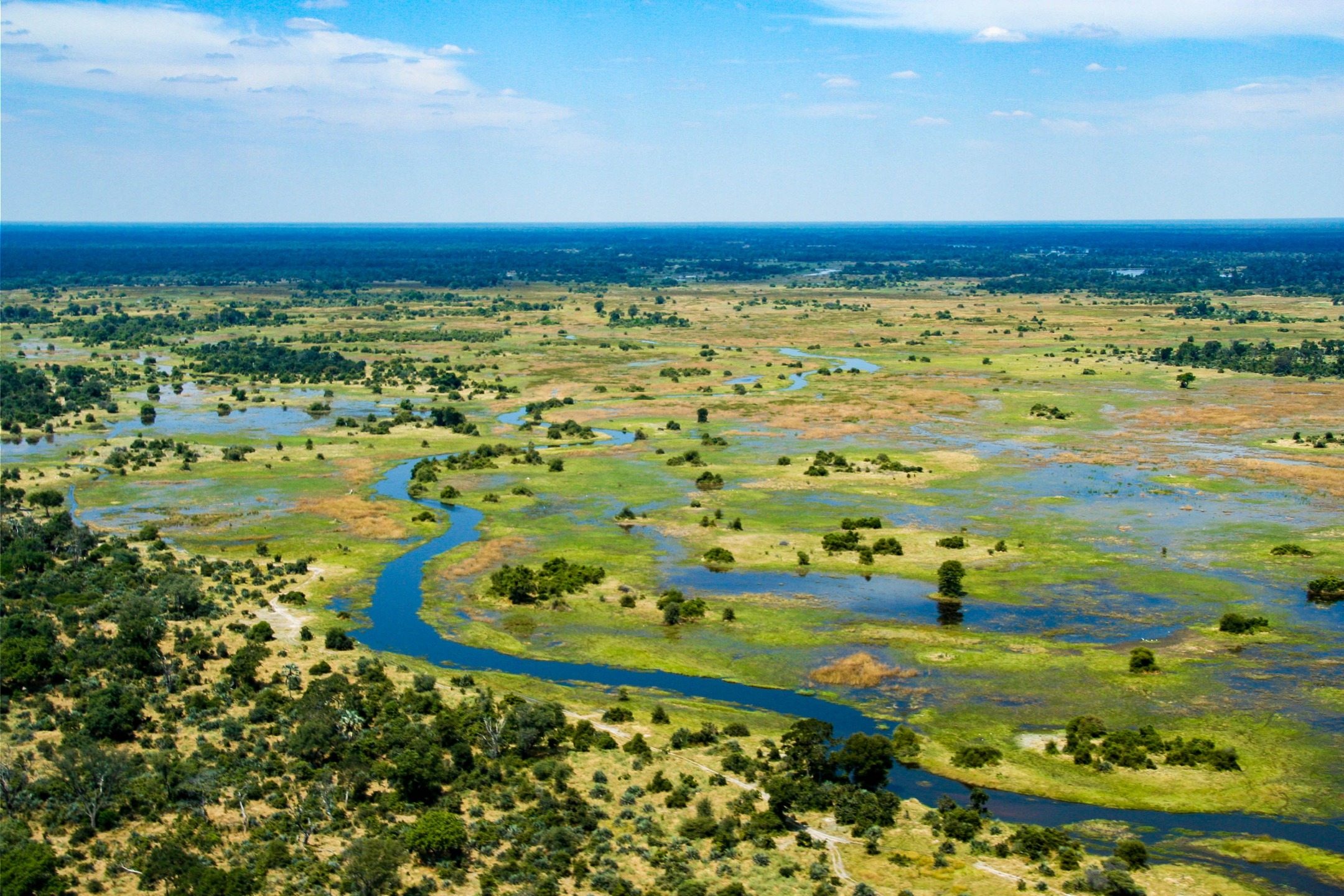
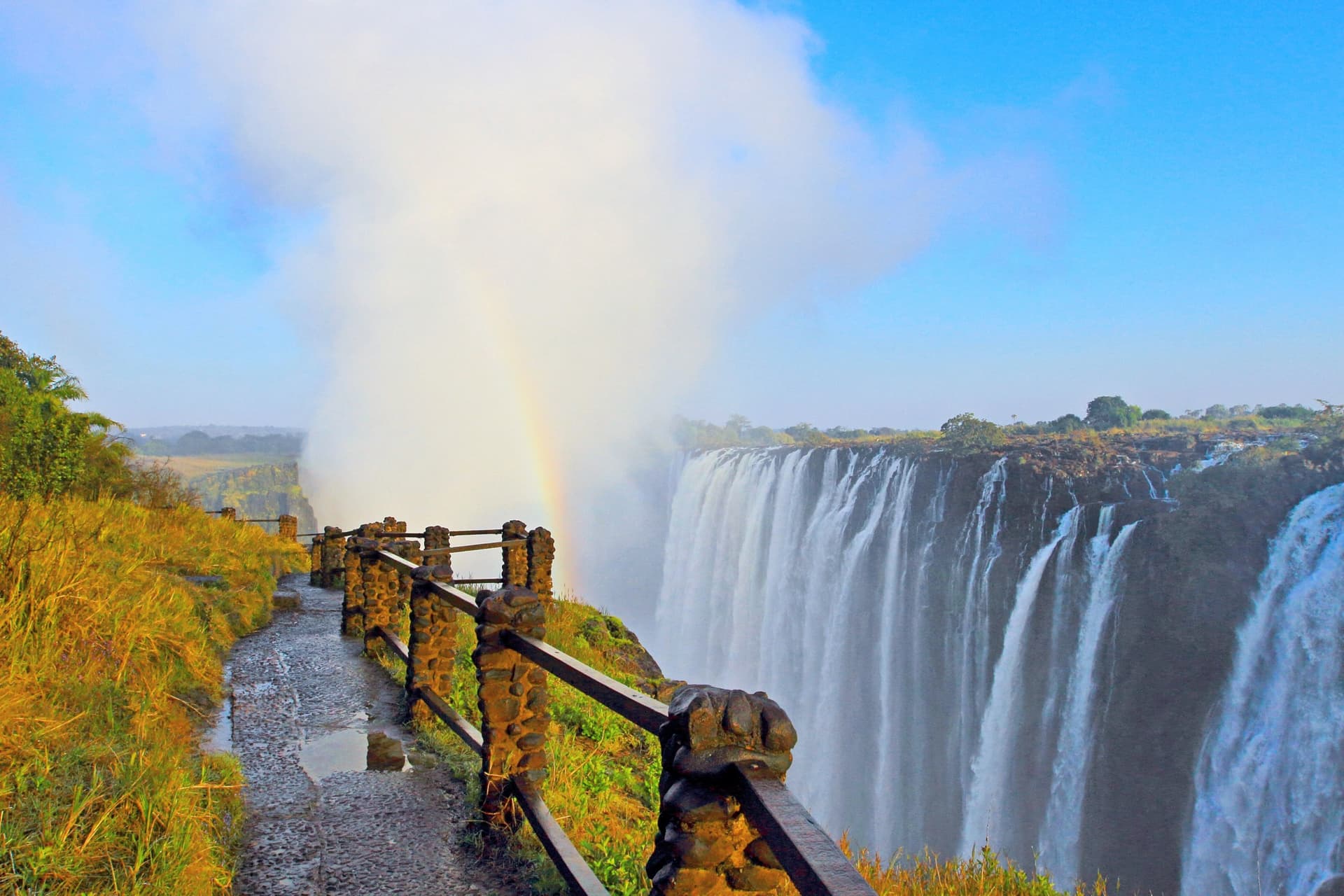
Victoria Falls stretches 1,700 m wide and reaches 108 m in height, on the border between Zambia and Zimbabwe. Known locally as Mosi-oa-Tunya — "the smoke that thunders" — they form one of the world's most powerful cataracts, comparable in scale to Niagara and Iguazu Falls. For travellers heading to Namibia, the site makes for a classic excursion via Botswana, typically combined with the Okavango Delta and Chobe National Park.
Why visit Victoria Falls
The site's geometry is singular: the Zambezi, wide and calm upstream, abruptly plunges into a narrow fissure before draining through a zigzag canyon. This configuration allows you to observe the falls head-on, from just a hundred metres away—something few cataracts of this scale offer. The roar, the permanent mist, and the sheer volume create a complete sensory experience.
The site has been inscribed on the UNESCO World Heritage List since 1989. Beyond the vista, it serves as a base for a range of activities structured around the river's seasonality: whitewater rafting, swimming in a pool perched at the falls' edge, canyon hiking to the Boiling Pot, sunset cruises.
History and name of the site
Local populations knew of the cascades long before Europeans arrived, calling them Mosi-oa-Tunya. In 1855, Scottish explorer David Livingstone became the first European to reach the site during his journey to the East African coast. He renamed the falls in honour of Queen Victoria. His statue stands today on the Zimbabwean side, near the Devil's Falls.
The arrival of merchants and travellers led to the founding of Old Drift, the first colonial settlement on the Zambian shore. Malaria took a heavy toll and the population was relocated to present-day Livingstone, which became the Zambian gateway to the site.
What to see and do
Victoria Falls National Park
Main access to viewpoints is via the park, which offers a marked trail dotted with overlooks. Allow 2 to 3 hours to walk the full circuit. Entry is paid. The trail runs along the cliff edge and lets you take in successive segments of the cataract, including the famous Main Falls and Devil's Falls on the Zimbabwean side.
Rafting on the Zambezi
The Zambezi downstream of the falls features Class 5 rapids, among the most challenging in the world. The optimal window runs from August to January, when water levels are low and departure can happen right at the foot of the falls. Outside this period, departure is further downstream and intensity decreases. The activity is physically demanding: capsizing is possible and good fitness is required.
Devil's Pool and Livingstone Island Tour
At the top of the falls on the Zambian side, a rocky pool called Devil's Pool allows swimming just metres from the edge. Access is only via the Livingstone Island Tour, a boat transfer to the island. Places are limited and advance booking is essential. Swimming is only possible during low-water periods, from August to December; the rest of the year, water levels make the activity dangerous.
Canyon hiking to the Boiling Pot
To reach the foot of the falls, a canyon hike to the Boiling Pot combines steep descent, ascent by a narrow stairway, short swims in rock pools and a rubber dinghy crossing. Accessible from late August to early December.
Cruise on the Zambezi
Upstream of the falls, the river widens and slows. Sunset cruises let you spot crocodiles, hippopotamus and elephants coming to drink at the banks.
Bridge and bungee jumping
The bridge connecting Zimbabwe to Zambia offers an unobstructed view of the canyon and river. Walking across is free and lets you watch bungee jumpers from the bridge deck.
When to go
Seasonality radically changes the experience:
- High water (February to May): maximum flow, very dense mist that can obscure the view from some viewpoints. Spectacular display but Devil's Pool and canyon hiking closed.
- Medium water (June to July): good compromise, clear views, still substantial flow.
- Low water (August to January): Devil's Pool, Livingstone Island and Boiling Pot hike accessible, rafting closest to the falls. Some sections of the Zambian-side cataract are nearly dry by October-November.
Practical information
- Recommended duration: 2 to 3 days on site to combine viewing, one water activity and a cruise.
- Cost: park entry is modest, guided activities (rafting, Devil's Pool, cruise) range from mid to high.
- Visa: a dual Zambia-Zimbabwe visa (KAZA UniVisa) is recommended to move freely between countries and access both shores.
- Equipment: lightweight waterproof jacket or poncho for viewpoints, closed-toe shoes, waterproof protection for cameras.
How to get there
Two entry points depending on your chosen country: Livingstone on the Zambian side, served by an international airport, and Victoria Falls on the Zimbabwean side, minutes from the site. From Namibia, the classic route goes up the Caprivi Strip then crosses Botswana via Kasane, 1.5 hours' drive from the falls. This road lets you naturally chain together several major stops in the region.
What to combine in the region
Victoria Falls fits into a larger circuit across Southern Africa. Chobe National Park, 1.5 hours' drive away, is home to the continent's largest elephant population and can be explored by land safari or river cruise. Further west, in Namibia, Mahango Game Reserve and Damaraland extend the nature experience. For mineral landscape enthusiasts, the Brandberg massif and Cape Cross round out a grand Namibia itinerary.
Frequently asked questions
Frequently asked questions
For maximum flow, aim for the end of the rainy season (March–May). For water activities like Devil's Pool or rafting closest to the falls, choose the low-water period of August to December. June–July offers a good balance between visibility and water volume.
Yes. To cross the Zambia-Zimbabwe border, a dual visa such as the KAZA UniVisa is recommended. It avoids repeated paperwork and allows back-and-forth crossings, useful for the Livingstone Island Tour on the Zambian side and viewpoints on the Zimbabwean side.
Access is only allowed during low water (August to December), with mandatory guides. Outside this window, flow levels make the area unsafe. Swimming remains exhilarating and is not suitable for those prone to vertigo.
Yes, it's a classic excursion at the end of a Namibia circuit: reach Kasane in Botswana via the Caprivi Strip, then the site in 1.5 hours' drive. The route lets you combine the Okavango Delta, Chobe Park and Victoria Falls.
Allow 2 to 3 hours for the national park trail. To enjoy an activity (rafting, Livingstone Island, cruise), plan for at least two nights on site.
To include Victoria Falls in a complete itinerary, check out our Namibia trips that combine vast Namibian landscapes, Botswana wildlife and a stop at the falls.
Interested in this visit?
We can include it in your personalised itinerary.