Sesriem Canyon
Sesriem Canyon
Gateway to the Namib-Naukluft National Park, Sesriem Canyon cuts through the desert for 4 km. Practical guide: access, wildlife, seasons and surroundings.
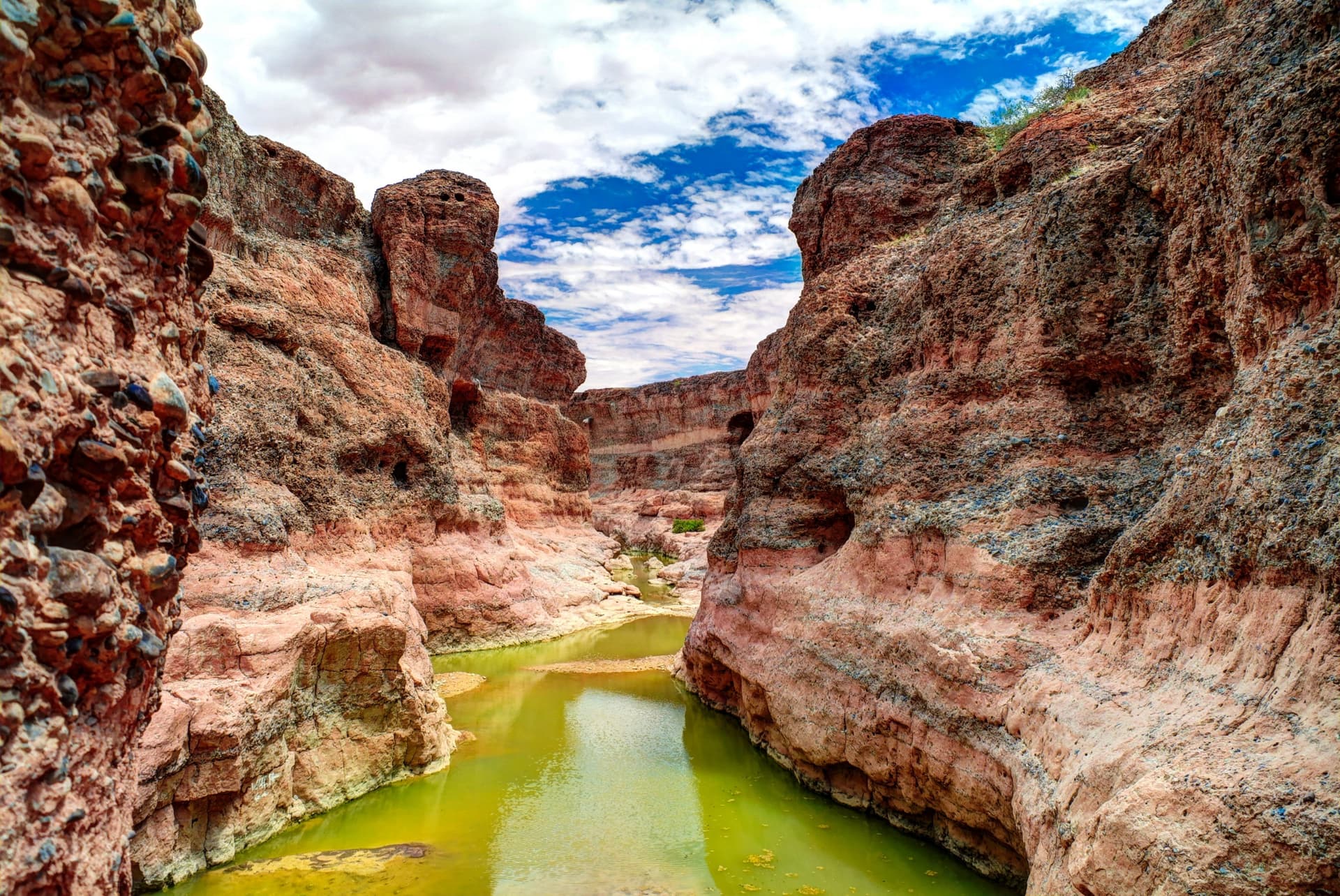
Southwest of Windhoek, at the southern end of the Naukluft Mountains, Sesriem Canyon cuts through the desert plateau for nearly 4 km in length and 30 m in depth. Carved by the Sesriem River over the past two million years into rock dating back more than 15 million years, this narrow gorge marks the gateway to Namib-Naukluft National Park and precedes, 4 km away, the dunes of Sossusvlei.
Why visit Sesriem Canyon
The site offers a rare contrast: a deep, cool rock fault in the midst of a desert over 43 million years old. The descent into the canyon is on foot, along a short and accessible trail, with sometimes stagnant water at the bottom after rainfall. Its position also makes it the logistical hub for any visit to Sossusvlei and Deadvlei: this is where you'll find the park entrance, the first accommodations, and the fuel station before venturing into the dunes.
History and geological formation
The name Sesriem comes from Dutch and means "six leather straps." It recalls the time when travelers had to tie six leather strips end to end to reach the water at the bottom of the canyon and water their oxen. The watercourse that carved the gorge has been dry since the 19th century: the advance of the Sossusvlei dunes cut off its water supply, and the river now flows only episodically, after heavy rains on the Naukluft.
The Namib-Naukluft National Park, which encompasses the site, was established in 1907 by the German colonial administration, between the Swakop and Kuiseb rivers. The desert itself has existed for more than 43 million years and took a form close to its current appearance roughly 2 million years ago, making it one of the oldest deserts in the world.
What to see and do
Descending into the canyon
A path allows you to descend to the bottom of the gorge and walk up the dried riverbed for a few hundred meters. The vertical rock walls protect you from the sun for part of the day. After an abundant rainy season (usually between January and March), pockets of water can linger at the bottom and create a microclimate. Bring sturdy closed-toe shoes: the ground is rocky and sometimes sandy.
Desert wildlife
Along the canyon's edges, wildlife adapted to arid conditions can be spotted at dawn or dusk:
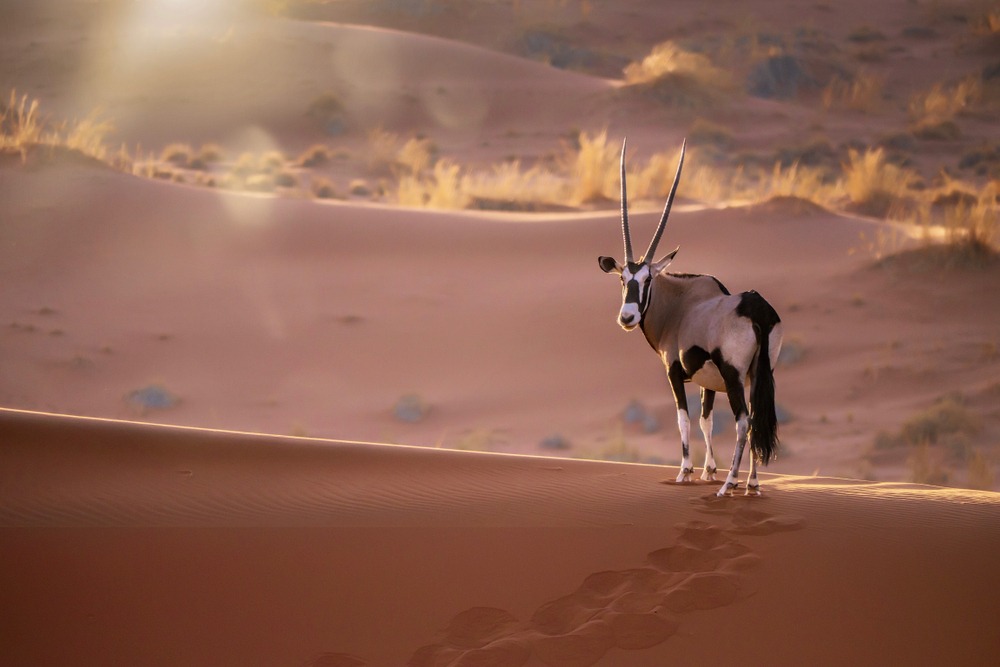
- gemsboks (oryx), emblems of the Namibian desert;
- striped jackals and brown hyenas, more elusive;
- geckos, lizards and sand snakes;
- desert birdlife around residual water sources.
Average precipitation does not exceed 106 mm per year. The humidity brought by Atlantic fog, especially between February and April, supplements the water supply and supports this ecosystem.
Practical information
- Entrance: ticket to Namib-Naukluft National Park, valid for Sesriem, Sossusvlei and Deadvlei.
- Parking: managed parking near the canyon entrance, close to Sossus Dune Lodge.
- Equipment: sturdy hiking shoes, water (at least 1.5 L per person), hat, sunscreen.
- Duration of visit: allow 1 to 1.5 hours for the descent and ascent of the canyon.
- Accommodation: the Sesriem hamlet has several lodges and campsites as well as a fuel station, the last resupply point before Sossusvlei.
When to visit
The canyon can be visited year-round, but conditions vary significantly by season:
- May to September (dry season): clear skies, mild days, cold nights. Most comfortable period for walking and photography.
- October to April (warm season): high daytime temperatures, sometimes above 35°C. Prioritize visits early in the morning.
- January to March: rare rain episodes that can partially fill the canyon. Check track conditions before departing.
Regardless of season, early morning remains the most pleasant time, both for light on the rock walls and to avoid heat.
How to get there
Sesriem is primarily reached by road from two entry points:
- From Windhoek: approximately 5 to 6 hours driving via C26 then C14 and C19 (around 320 km).
- From Walvis Bay: approximately 4 to 5 hours via C14, passing through Solitaire.
Most of the journey uses gravel tracks. A vehicle with good ground clearance is sufficient to reach Sesriem; a 4x4 becomes essential beyond that, for the final kilometers to Sossusvlei and Deadvlei.
Nearby attractions
Sesriem serves as a base for exploring the major sites of central Namib:
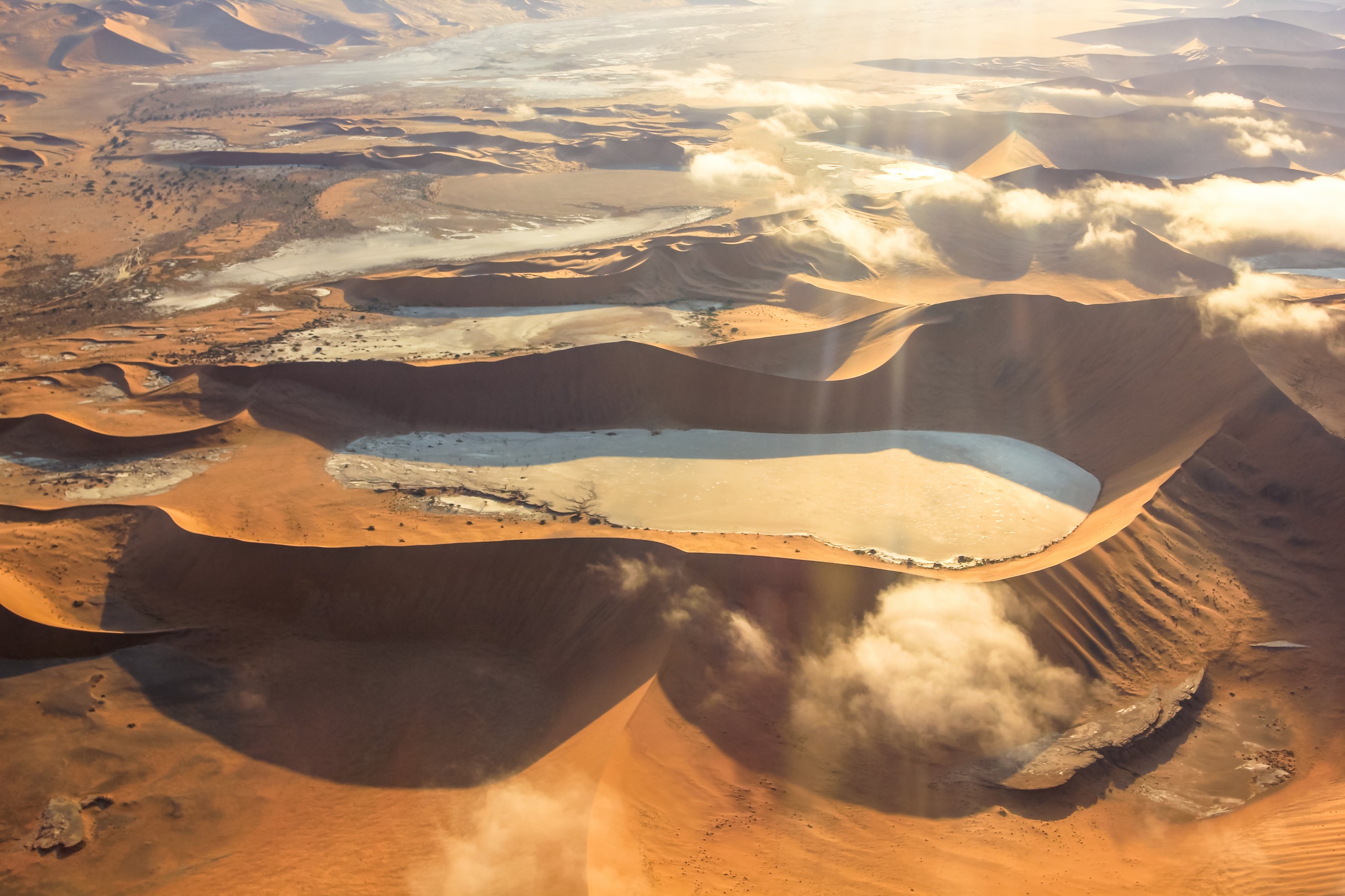
- Sossusvlei: a clay pan surrounded by orange dunes reaching nearly 400 m high, among the tallest in the world.
- Dune 45: iconic dune along the road, named so because it sits at the 45th kilometer from Sesriem. It's best climbed early in the morning.
- Big Daddy: dune neighboring Deadvlei, rising to around 325 m, not to be confused with Dune 45. Its neighbor, Big Mama, borders the other side of the pan.
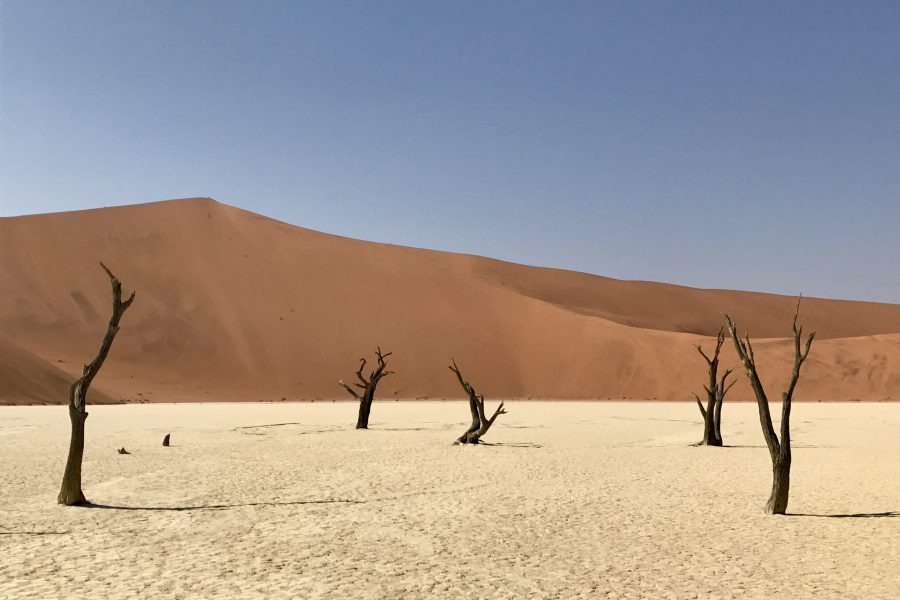
- Deadvlei: an ancient dried lake scattered with dead acacia trunks, famous for the contrast between the white clay floor, ochre dunes and blue sky. Access is via a sandy track: it's recommended to deflate tires and drive a 4x4 at between 20 and 30 km/h, without sudden braking.
- Brandberg Massif: further north, the country's highest peak and a rock art site.
Frequently asked questions
No. The descent into the canyon is short and presents no particular technical difficulty. Sturdy shoes and some water are sufficient. The ground can be slippery after rain.
The watercourse has been dry since the 19th century. Pockets of water may linger at the bottom after heavy rains, usually between January and March, but they are unpredictable from year to year.
Not necessarily. The gravel tracks leading to Sesriem are passable with a regular vehicle with good ground clearance. However, a 4x4 is required to access Sossusvlei and Deadvlei from the 2x4 parking lot.
For the canyon alone, allow 1 to 2 hours. If you combine it with Sossusvlei, Deadvlei and Dune 45, plan at least two nights on site to enjoy the morning light and sunset.
They are two distinct dunes. Dune 45 borders the road, 45 km from Sesriem, and rises to about 170 m. Big Daddy stands at the edge of Deadvlei, at approximately 325 m in height, and requires a longer walk through the sand to climb.
Plan your trip
Sesriem Canyon is almost always visited as part of a wider itinerary including the Namib Desert, Swakopmund and Etosha. To build a coherent route and choose the right season, consult our comprehensive guide on traveling in Namibia.
Interested in this visit?
We can include it in your personalised itinerary.