Swakopmund, a Coastal Town in Namibia
Swakopmund, a Coastal Town in Namibia
Between the Namib dunes and the Atlantic, Swakopmund blends German colonial architecture, desert sports, and coastal excursions. Your complete guide to planning your stay.
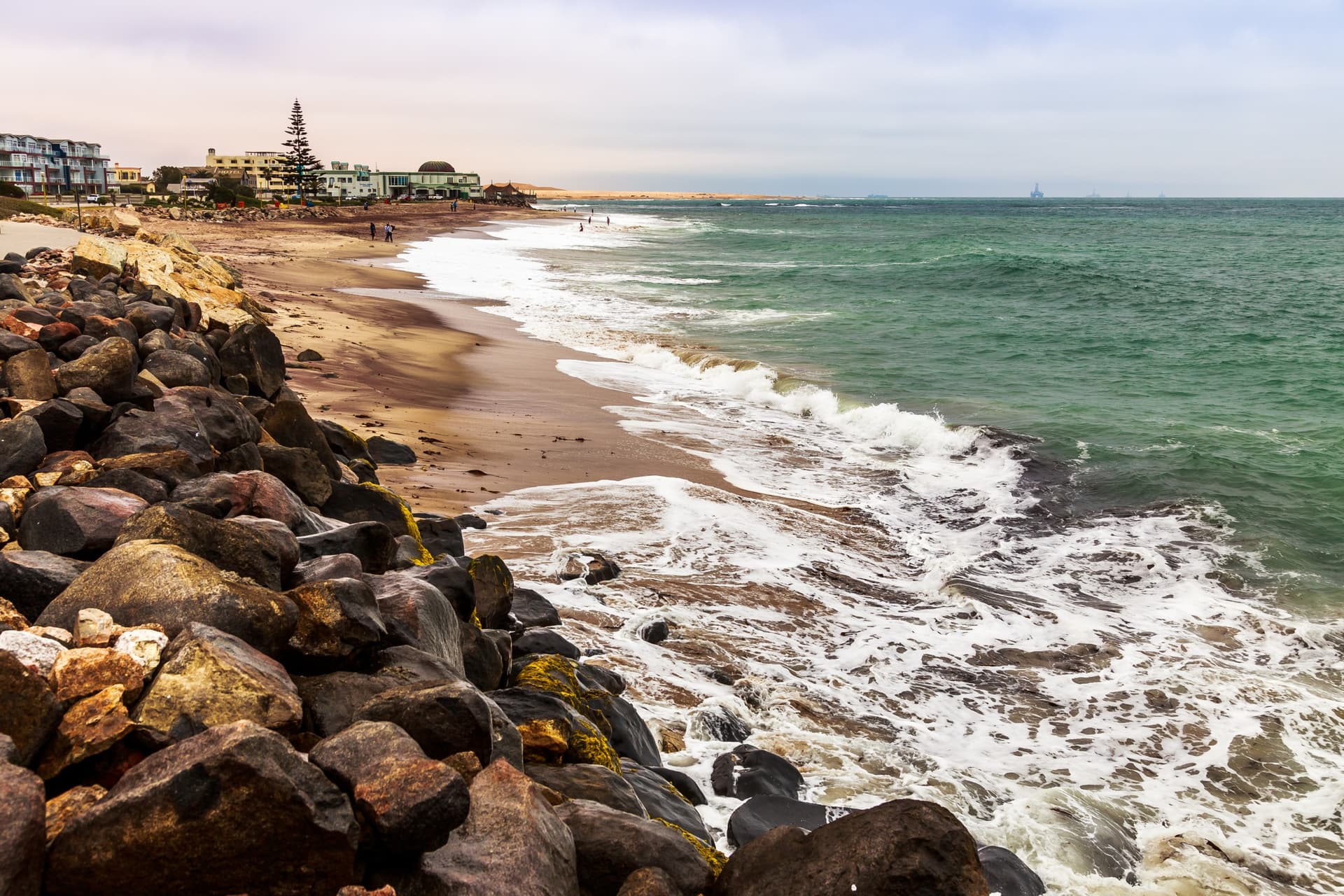
The seaside resort town of Swakopmund is a popular destination offering a wide range of activities. Situated on the Atlantic coast, 352 km west of Windhoek, this 196 km² city is the administrative capital of the Erongo district. It is Namibia's fourth largest population center, with more than 44,700 residents. It is an essential stop for travelers moving between the dunes of the Namib Desert, the Skeleton Coast, and the country's northern regions. German colonists founded the city in 1892 as the main port of southwestern Africa, roughly fifty kilometers north of Walvis Bay port. Swakopmund stands out for its German influences, evident in its German street names, German colonial architecture, and the language spoken by some residents.
The History of Swakopmund
Following the construction of early infrastructure by the first German colonists, economic activities began to flourish. In 1896, the settlement became a district of German South-West Africa. Industrial fishing was booming, and the city experienced rapid development. By 1910, Swakopmund had over 2,790 residents and ranked among the six colonial towns granted municipal status. Starting in 1923, the government invested in new infrastructure for this first seaside resort of southwestern Africa. The port zone was renovated to create a waterfront with promenades, pavilions, and restaurants. With the discovery of uranium 70 km from Swakopmund and subsequent mining operations, the city experienced considerable economic growth.
Architecture: A Major Attraction
Begin your stay in Swakopmund with a stroll to observe the local architecture, distinguished by its German character. The city's most iconic buildings include the Hohenzollern building, the Prinzessin Rupprecht Heim located on Lazarett Street, the Lutheran church built in 1911 on Post Street, the Woermann Haus featuring the Damara tower that houses a public library, the railway station constructed in 1901 now home to the Swakopmund Hotel, the Arnold Shad Parade, and the old metal jetty. If you make your way to Sam Nujoma Avenue, you can admire the buildings along Kaiser Wilhelm Strasse.
Other Must-See Sites
After exploring the architecture, be sure to visit some of Swakopmund's essential attractions.
Among them, the National Marine Aquarium invites you to discover its crystal gallery with spectacular sand dunes south of the Swakop River, near Langstrand. For golf enthusiasts, courses are available outside the town. Near these unique desert golf courses in the world, you'll find a farm offering camel rides. Here stands the Martin Luther steam locomotive from 1896, abandoned in this location. Numerous excursions are also possible from Swakopmund. You can venture to Moonlandscape, the Valley of the Welwitschias, or Cape Cross, which is home to a significant seal colony.
Climate
Swakopmund enjoys a mild desert climate. Throughout the year, temperatures remain mild and cool. Due to the strong cold ocean current flowing along the coast, there is minimal precipitation.
Attractions in Swakopmund, a Coastal Town in Namibia
Want to discover this destination?
Our local advisors design your tailor-made trip.