Etosha National Park
Etosha National Park
In northern Namibie, Etosha National Park protects a vast salt pan and one of the highest concentrations of wildlife in southern Africa during the dry season.
Etosha National Park protects one of southern Africa's most singular ecosystems: a vast salt pan surrounded by savannas, mopane forests and watering holes where dense wildlife converges during the dry season. Located in northern Namibie, straddling the Oshikoto and Kunene regions, it extends approximately 400 km north of Windhoek and 125 km from the Angolan border. One-third of the park is open to the public, crisscrossed by a network of tracks accessible by private vehicle or with a guide.
Why visit Etosha
Etosha stands out for its geography: a salt depression nearly 130 km long and 50 km wide, a remnant of an ancient dried-up lake that fills only briefly during the rainy season. This peculiarity shapes all animal life in the park. During the dry season, wildlife concentrates around permanent watering holes positioned along the tracks, offering some of southern Africa's most reliable viewing conditions.
The park is home to 114 mammal species and over 340 bird species, including four of the five flagship safari species of southern Africa. It is also one of the last refuges of the black rhinoceros, observable in several sectors.
History of the park
The Etosha pan is first documented by European explorers Charles John Andersson and Francis Galton in May 1851, accompanied by Ovambo traders. The region subsequently became a commercial passage point between the territory's east and west, and wildlife came under increasing pressure from big-game hunting by foreign hunters.
German occupation of South-West Africa became official in 1896, but effective protection of the site came late. Etosha gained national park status in 1967, and its current boundaries were only defined in 1970. The South African Border War (1970s-80s) severely affected large wildlife, whose populations were gradually restored through reintroduction programmes and water-point management.
What to see and do at Etosha
The Etosha pan
The pan itself is a white and mineral horizon, flat as far as the eye can see. Several viewpoints allow you to grasp its extent. When rains partially fill it, it attracts large numbers of lesser and greater flamingos.
Wildlife of the plains and watering holes
Emblematic species you may hope to encounter include:
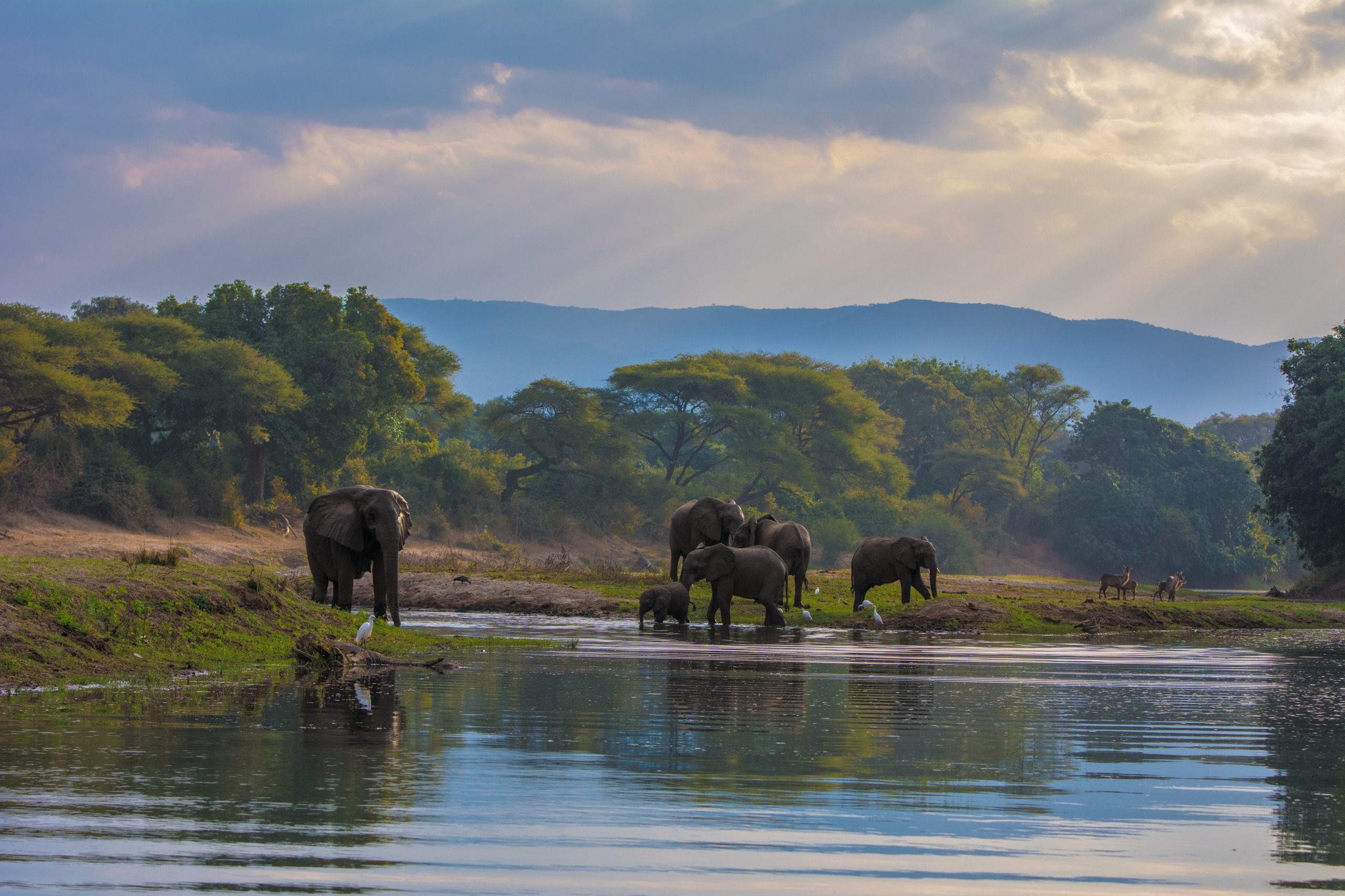
- African savanna elephants, sometimes in large herds around watering holes
- Black rhinoceros and, more rarely, white rhinoceros
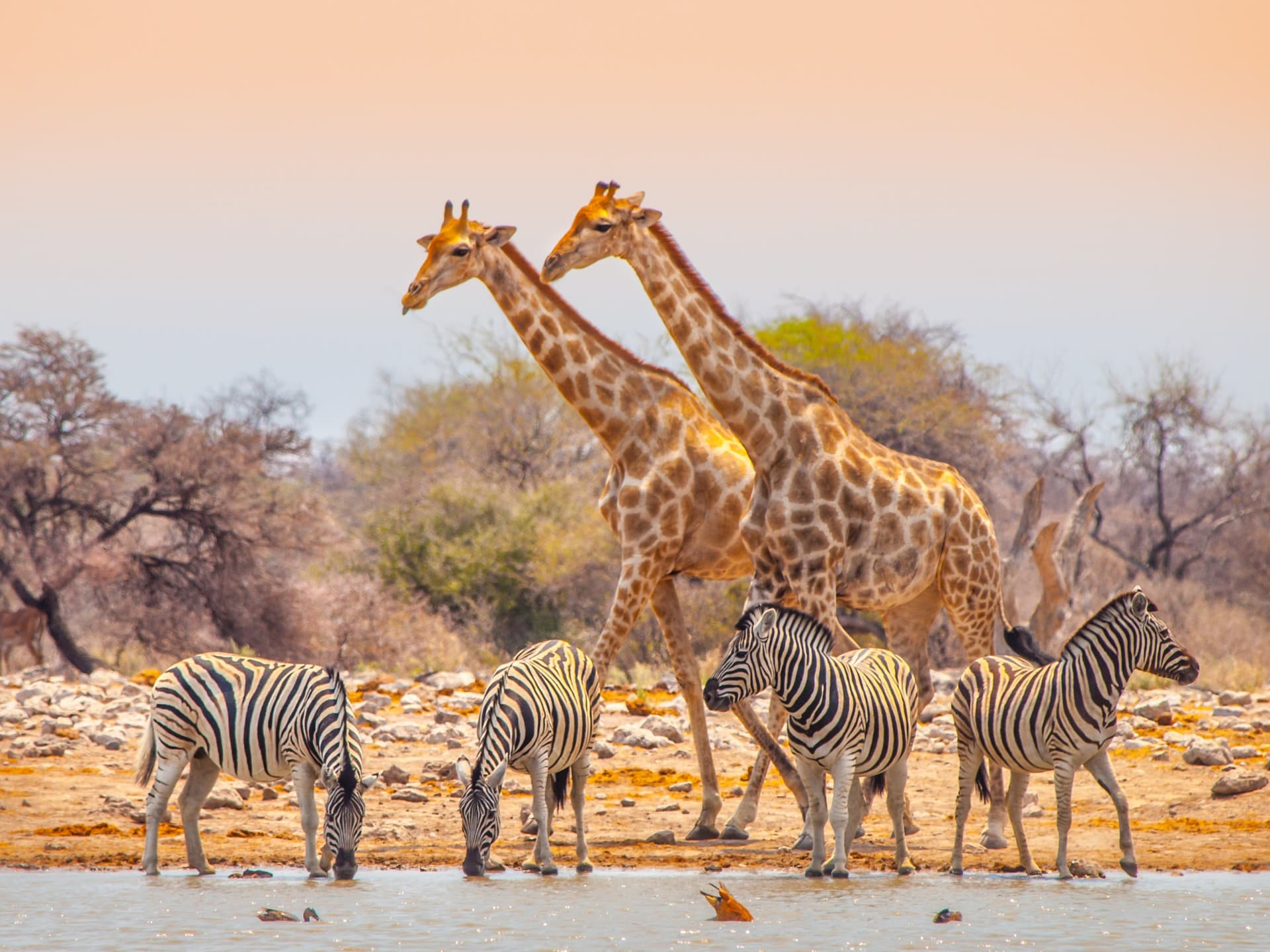
- Burchell's zebras and mountain zebras
- Giraffes, blue wildebeest, greater kudus, elands, oryx gazelles, springboks
- Warthogs, jackals, mongooses
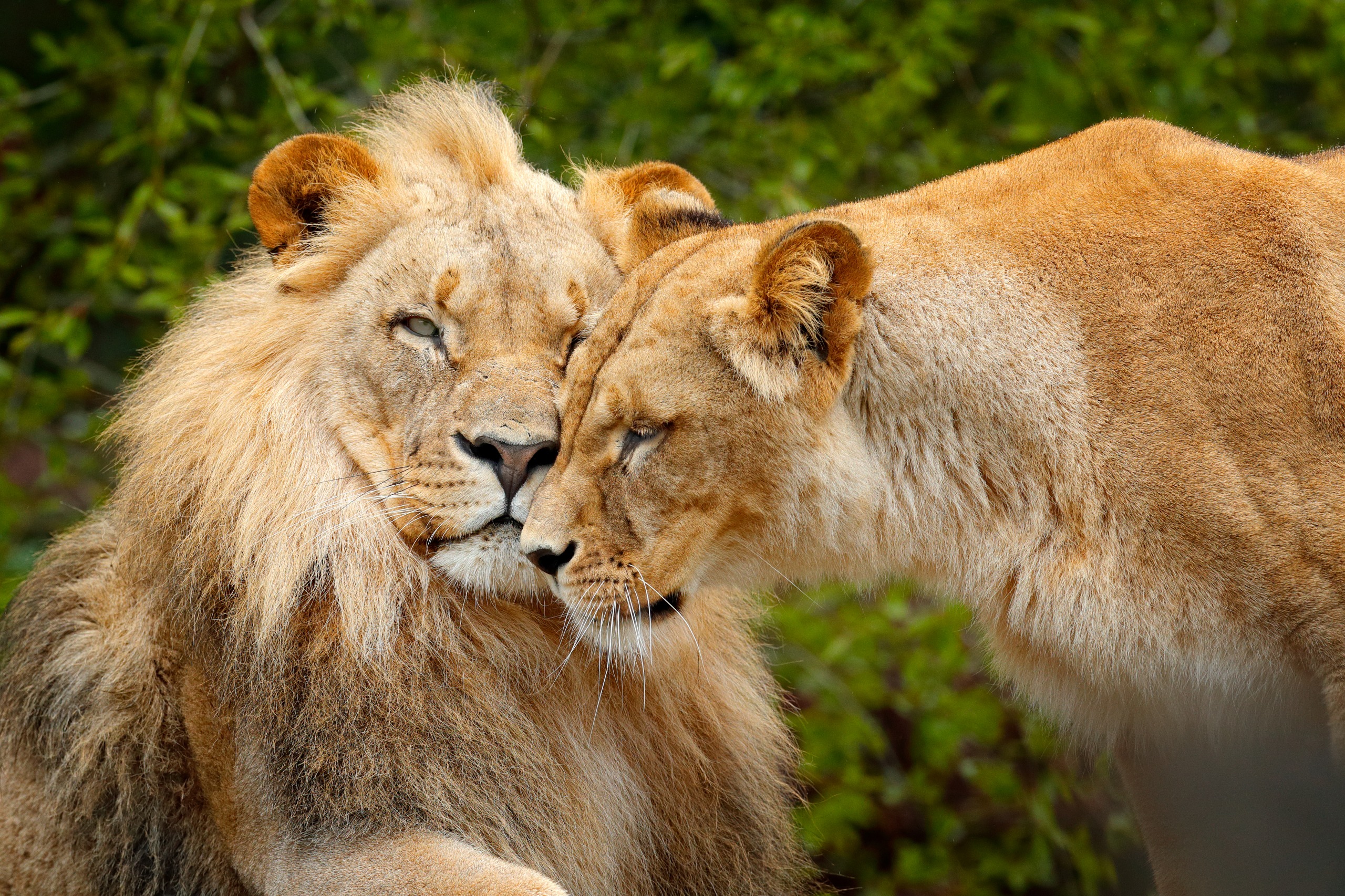
- Predators: lions, leopards, cheetahs, spotted hyenas
Birdlife
Etosha ranks among Namibie's premier birdwatching destinations. Notable species include the African fish eagle, martial eagle, Monteiro's hornbill, African scimitar-bill, Rüppell's parrot, kori bustards, ostriches and, during the wet season, flamingos on the pan.
Vegetation
134 plant species have been recorded in the park. The pan's margins, being saline, support few plants: mainly halophytes consumed by springboks and wildebeest. Mopane is the park's most common tree. In the northeast, the sandveld gives way to acacias, Terminalia and tamboti, giving this zone a more wooded appearance than the rest of the park.
When to visit Etosha
The dry season, from May to October, offers the best viewing conditions: vegetation becomes sparse, permanent watering holes become wildlife magnets, and tracks are easily passable. June to September are particularly favored, with sunny days and cool nights.
The wet season, from November to April, transforms the landscape: grass grows, the pan fills partially, migratory birds and flamingos are present, but animals disperse and are harder to spot. It is, however, the best period for landscape photography and for births among antelope species.
How to get to Etosha
The park has several entry gates:
- Anderson Gate to the south, the most used, accessible from Windhoek (approximately 400 km, or 5 hours' drive) via Okahandja and Otjiwarongo
- Von Lindequist Gate to the east, convenient when coming from Tsumeb or heading towards Kavango
- Galton Gate to the west, opening onto the park's less-frequented sector and connecting Damaraland
Access is by vehicle, ideally a 4x4 though a robust sedan suffices during the dry season. Several airstrips serve the park's surroundings for fly-in safari travellers.
Practical information
Allow a minimum of two to three days on site to explore the main sectors; four days allow you to traverse the park from the south gate to the west gate without rushing. Accommodation ranges from official camps managed inside the park (Okaukuejo, Halali, Namutoni, Olifantsrus, Dolomite) and private lodges located just outside the gates. The internal camps provide access to illuminated watering holes at night, particularly interesting for observing rhinoceros and elephants after dark.
Pack water, fuel and provisions: distances between camps are considerable. Self-drive tours are permitted during daylight only; night-time outings must be accompanied by camp guides.
Combining Etosha with other destinations
Etosha fits naturally into a northern Namibie circuit. To the west, Damaraland extends the experience with its desert landscapes and desert elephants. Further to the northeast, Mahango Game Reserve and Chobe National Park on the Botswanan side complete a safari itinerary. To the south, Sesriem Canyon and Fish River Canyon offer dramatic mineral contrasts.
Frequently asked questions
Frequently asked questions
The dry season, from May to October, concentrates wildlife around watering holes and facilitates viewing. June to September offer the most stable conditions.
Two to three days minimum for the main sectors; four days allow you to traverse the park from east to west while exploring different biotopes.
Yes, self-drive tours are permitted on open-to-public tracks. A 4x4 is recommended but not essential during the dry season. Night outings are only possible with guides from the internal camps.
Elephants, black rhinoceros, lions, leopards, cheetahs, giraffes, zebras, wildebeest, oryx, springboks, spotted hyenas and over 340 bird species depending on the season.
Approximately 400 km to the south gate (Anderson Gate), or five hours' drive via Okahandja and Otjiwarongo.
Planning your trip
Etosha fits into most Namibie itineraries, whether self-guided or with a driver-guide. To build an itinerary tailored to your duration and interests, consult our suggestions for travel in Namibie.
Interested in this visit?
We can include it in your personalised itinerary.