South and Fish River Canyon
Karas plains, world's second largest canyon, ghost town of Kolmanskop and Wilhelmine architecture of Lüderitz battered by the Benguela Current.
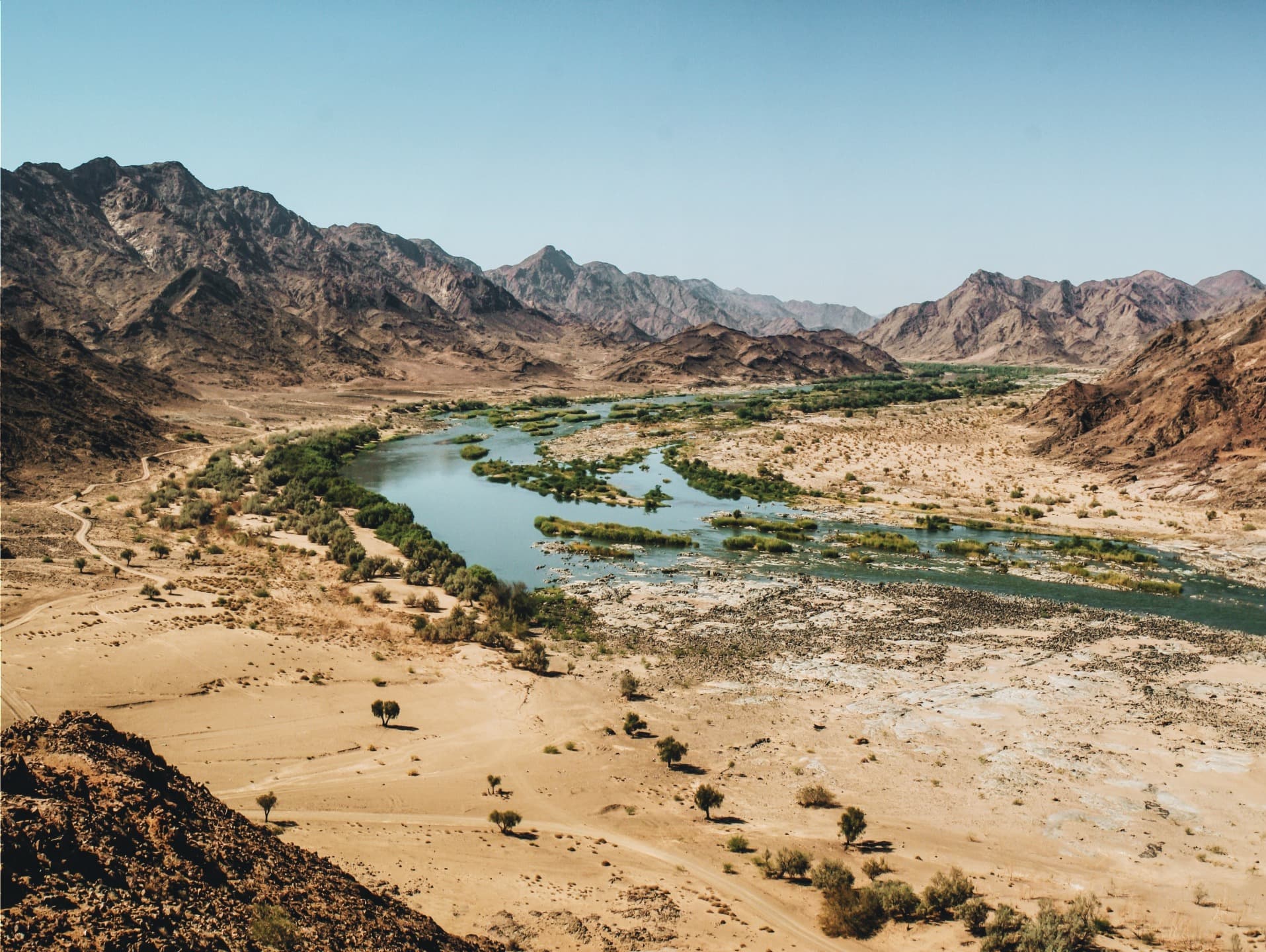
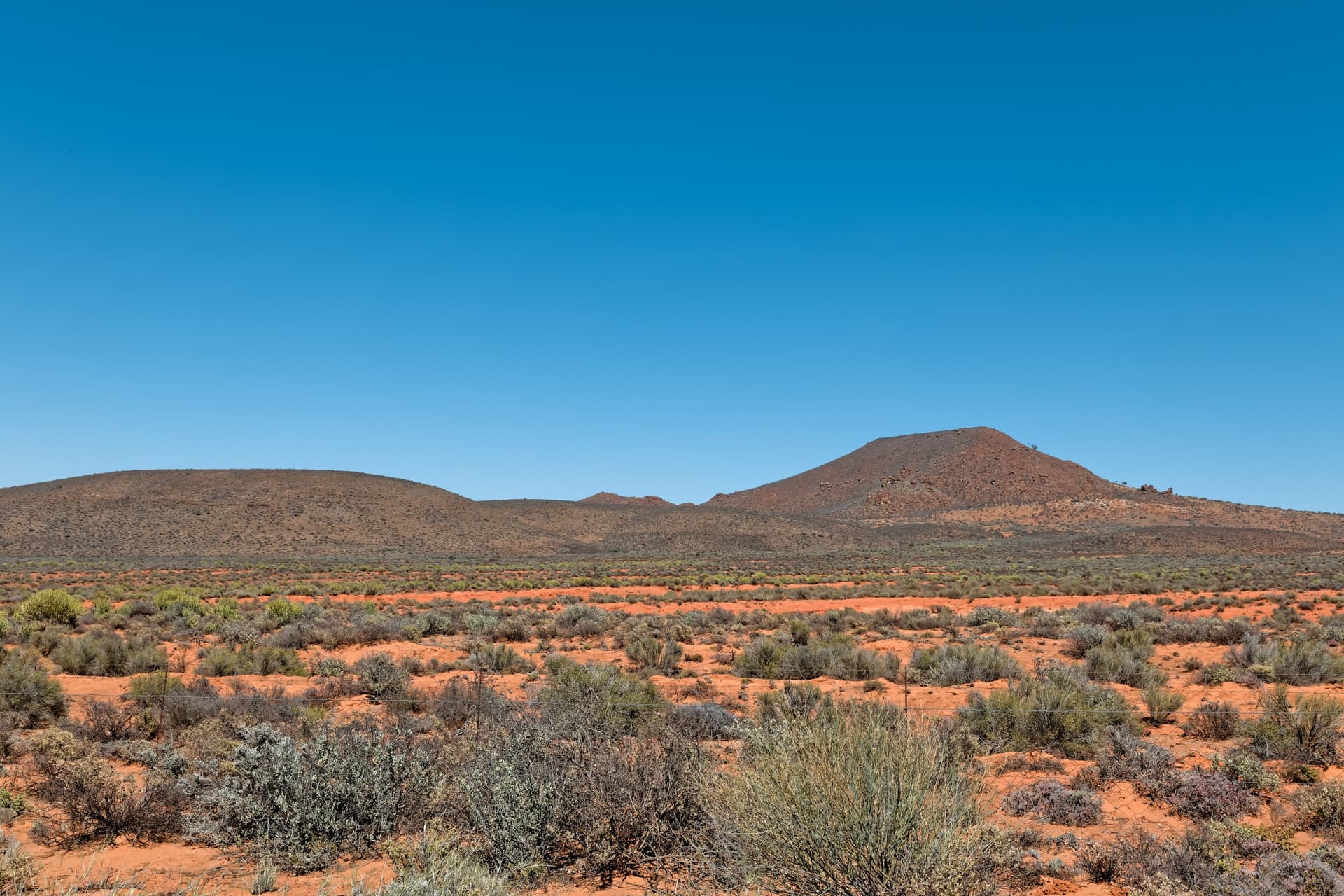
Southern Namibia begins for us when the B1 bitumen leaves Mariental and the horizon opens onto the Karas plains. This region, stretching from Keetmanshoop to the Orange River marking the South African border, covers nearly 160,000 km² with very sparse human settlement. Distances between fuel stations are vast—sometimes 200 km—and our drivers always set out with two water jerrycans in the trunk.
The dominant landscape consists of semi-desert rocky plains dotted with kokerbooms, these tree aloes (Aloidendron dichotomum) that the San once used to craft quivers. The Quivertree Forest, 14 km northeast of Keetmanshoop, concentrates more than 250 specimens on a dolerite outcrop. Nearby, the Giant's Playground aligns basalt blocks stacked by erosion, a geological playground dating back 170 million years.
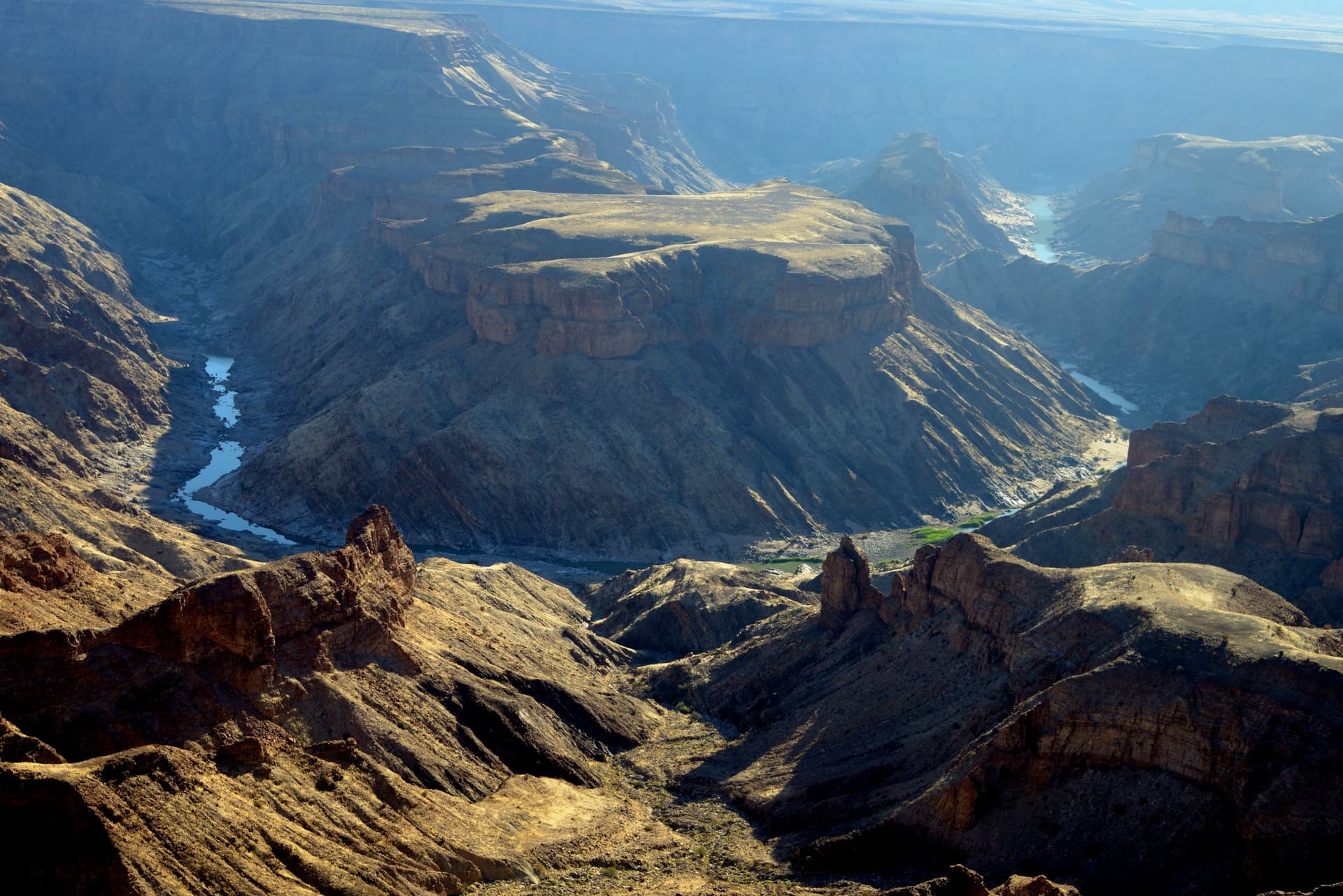
Fish River Canyon stands as the major geographical event. Carved by the Fish River (Visrivier), it stretches 160 km long, up to 27 km wide and 550 metres deep between Hobas and Ai-Ais. The hiking trail along the canyon floor—85 km across four to five days of camping—opens only from 1 May to 15 September: during the Southern Hemisphere summer, temperatures exceed 45°C within the canyon and flash floods can trap hikers. Permits are limited to 30 people per day and require a medical certificate no more than 40 days old.
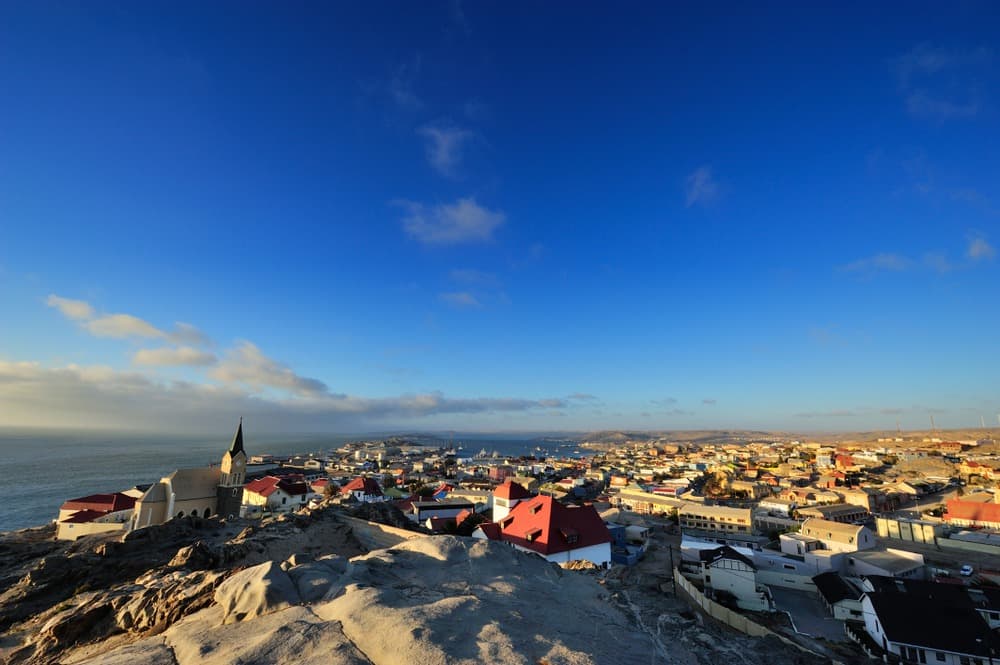
To the west, the road to Lüderitz crosses the Sperrgebiet, the former restricted zone of German diamond miners, still under controlled access. The town itself, founded in 1883 by Bremen merchant Adolf Lüderitz, preserves improbable Wilhelmine architecture facing the cold Benguela Current: the Felsenkirche perched on its rock, the Jugendstil Goerke Haus, and half-timbered facades battered by the south-westerly wind that blows 300 days a year. Ten kilometres away, Kolmanskop, a ghost town abandoned in 1956 after surface diamond deposits ran dry, allows sand to reclaim its bourgeois villas, casino and hospital.
The south's population is mixed: Nama descendants settled around Berseba and Bethanie, Afrikaner communities herding karakul sheep (Persian wool), Baster mixed families around Rehoboth further north. The economy rests on three pillars: extensive sheep farming, lobster and hake fishing in Lüderitz, and tourism. At table, we often serve grilled gemsbok (oryx), potjiekos simmered three hours over coals, and oysters from Lüderitz Bay, farmed in the 12–14°C waters of the Benguela.
The south remains the least-visited portion of our Namibian circuits, which is precisely its appeal. Lodges are scattered, tracks empty, and you can drive an hour without meeting another vehicle between Aus and Helmeringhausen. For those keen on the wild horses of Garub—descendants of the 1915 German cavalry mounts—observation happens at the developed watering point near Aus, where around a hundred individuals still survive.
To discover
Fish River Canyon rim at Hobas. The main viewpoint opens onto a 270° meander 500 metres above the riverbed. We visit in late afternoon when raking light brings out the strata of quartzite and gneiss dating back 1.8 billion years.
Kolmanskop, sand-buried town. Guided visits mornings between 9am and 11am, when light enters chambers filled with dunes. Namib Desert sand has engulfed parquet floors, bathtubs and wallpaper since abandonment in 1956.
Wild horses of Aus. From the observation shelter at Garub, 20 km west of Aus, you observe descendants of German military horses. Population stabilized around 100 individuals adapted to survive on less than 100 mm of annual water.
Hot springs at Ai-Ais. At the canyon's southern foot, sulphurous waters surge at 65°C before being cooled in pools. Our standard stop after a day of rough tracks to ease backs jolted by corrugations.
Kokerbooms forest at Keetmanshoop. At sunrise, the golden-yellow trunks of aloes stand out against black dolerite. We often combine with the nearby Giant's Playground for a two-hour morning photo walk.
When to go
We recommend the south between May and September, corresponding to the Southern Hemisphere winter and the only opening window for the Fish River Canyon hiking trail. Days register 20 to 25°C, nights drop to 2–5°C, even below freezing in June-July on the Karas plateaus. The sky stays clear, air dry, and photographic visibility excellent. In Lüderitz however, the south-westerly wind averaging 30–40 km/h significantly chills perception: bring a fleece even in September.
We avoid December to February. Temperatures reach 38 to 45°C in the canyon and around Keetmanshoop, late-afternoon storms can trigger flash floods on the Fish and Konkiep rivers, and several secondary tracks become impassable. March-April and October-November constitute acceptable shoulder seasons, warmer (28–35°C by day) but less crowded, sometimes with very windy days in Lüderitz.
Practical advice
Allow five to six days minimum for the south, departing from Windhoek. The Windhoek-Fish River Canyon distance approaches 800 km, roughly two days' driving with a stop at Mariental or Keetmanshoop. The classic itinerary then chains canyon, Aus, Lüderitz and Kolmanskop, with return via the C13 along the Sperrgebiet or the drive up towards the Namib. We operate in air-conditioned 4x4s; the main B1 and B4 roads are tarred, but lodge access is via gravel sometimes corrugated.
The south logically combines with the Namib Desert to the north-west (Sossusvlei sits a day's drive from Aus via Helmeringhausen), making a 10–12 day circuit covering the country's southern half. Combining with Etosha or Damaraland requires at least 16 days due to distances. Lodge comfort ranges from spartan tent camps to perched lodges like Canyon Lodge or Klein-Aus Vista, all with hot water and dining. This region suits contemplative travellers, serious hikers for the canyon trail, and colonial history and geology enthusiasts. Families with young children will find less wildlife activity than at Etosha: we suggest it more from ages 10–12 onwards.