Skeleton Coast
500 km of cold Atlantic coastline between Swakopmund and Cape Fria, marked by shipwrecks, seal colonies and the persistent mist of the Benguela Current.
The Skeleton Coast stretches for roughly 500 km, from just south of Swakopmund to Cape Fria on the Angolan border. Our team describes it to travellers as a long ribbon where cold Atlantic waters meet the desert: the Benguela Current, rising from Antarctic waters, chills the air and generates dense mist, the cassimbo, which clings to the shoreline for several hours each day. The result: stable temperatures between 15 and 20°C year-round in Swakopmund, while 100 km inland, the thermometer can exceed 35°C in the afternoon.
The name comes from shipwrecks beached on these shores and whale bones bleached white by salt, relics of the whaling era. The most famous wrecks—the Eduard Bohlen run aground near Conception Bay, the Dunedin Star further north, or the Zeila visible from the C34 road at Henties Bay—speak to a coastline notorious for hostile navigation: reefs, mist, treacherous currents and a complete absence of natural harbours across hundreds of kilometres. The San people called this region "the land that God made in anger".
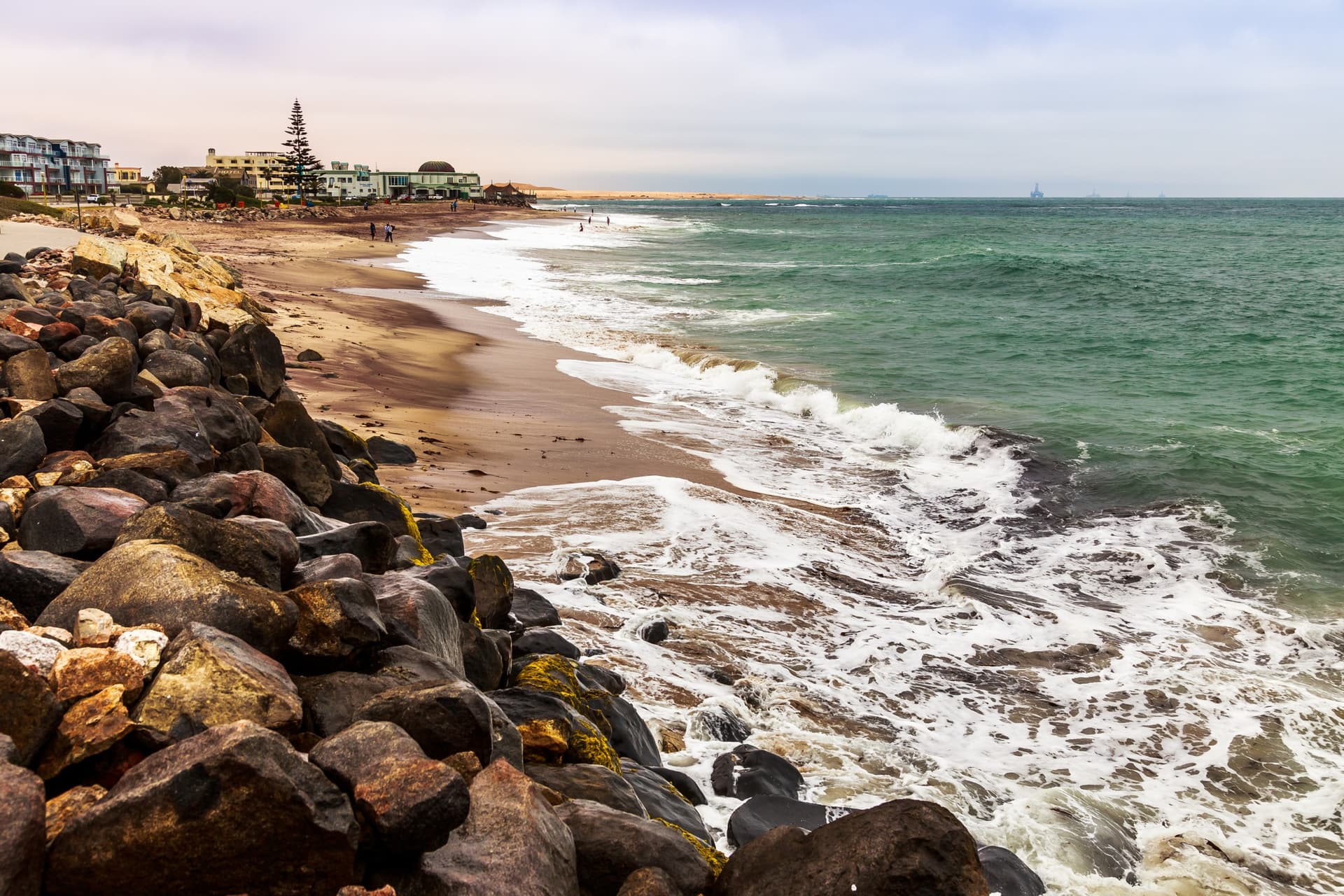
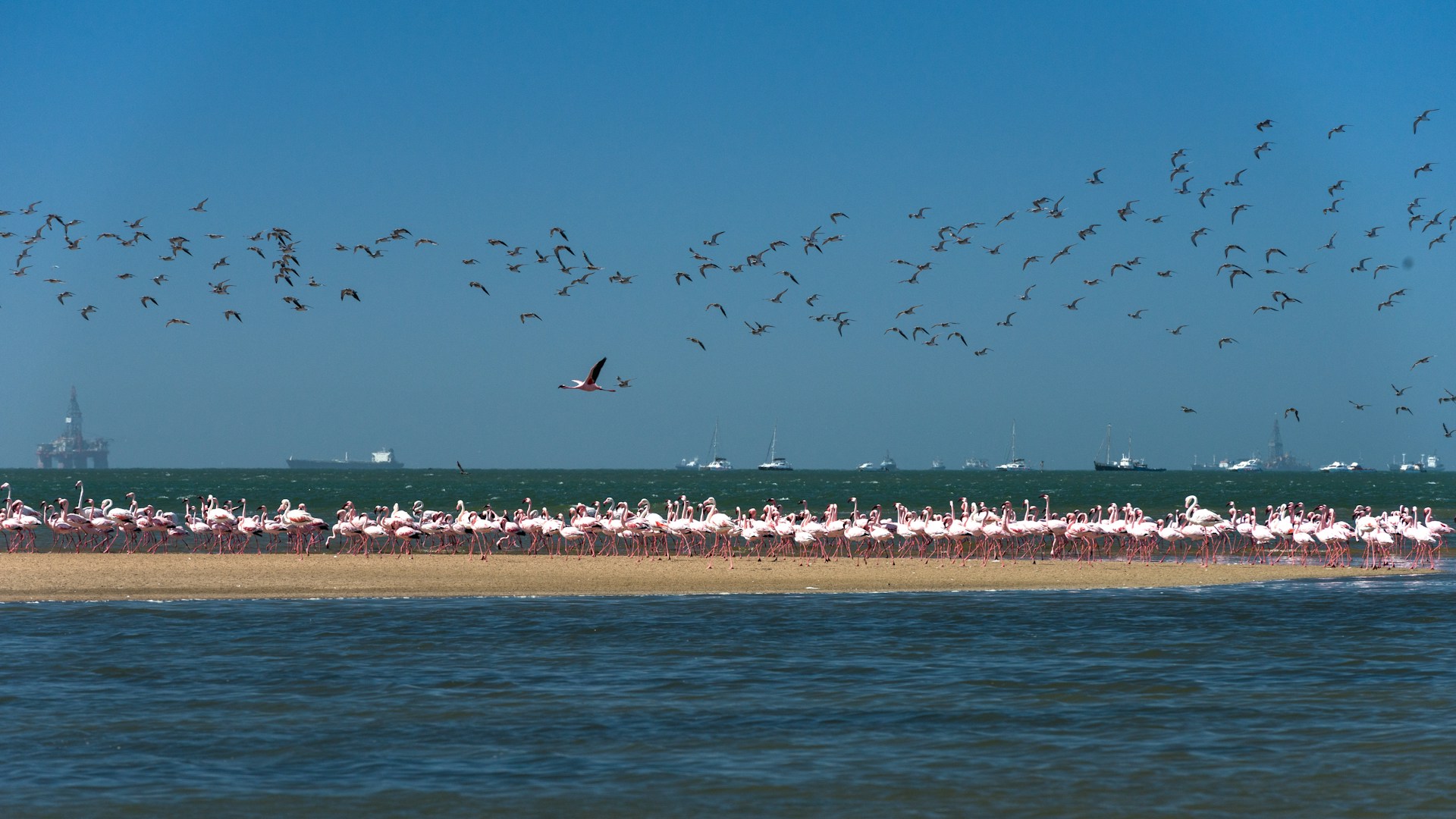
Swakopmund serves as the southern gateway. Founded in 1892 by German colonists, the town retains its gabled facades, its Woermannhaus, its Wilhelmine-style railway station turned hotel, and bakeries still selling Schwarzwälder Kirschtorte and Brötchen. We systematically stop there for fuel and provisions before heading north, where petrol stations are few and far between. Walvis Bay, 30 km to the south, is home to the country's only deep-water port. Its lagoon welcomes up to 50,000 greater and lesser flamingos between October and April, and the Cape fur seal colony at Pelican Point exceeds 50,000 individuals.
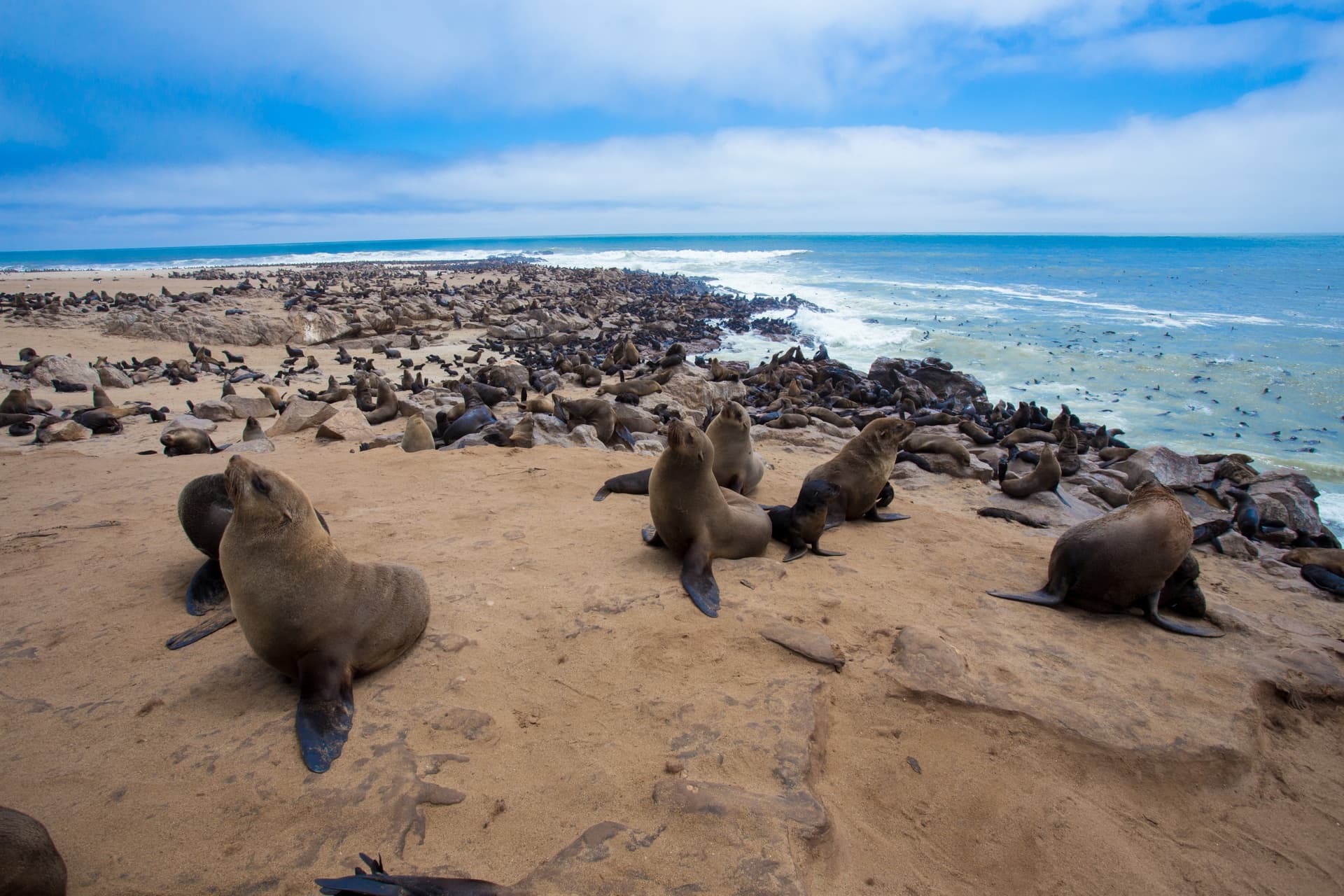
North of Swakopmund, the C34 hugs the shoreline across compacted salt flats. Cape Cross marks the first major waypoint: a colony of 80,000 to 100,000 seals that breed here from November to December, in an odour we always warn our travellers not to underestimate. The padrão erected by Portuguese navigator Diogo Cão in 1486 recalls that Europeans reached this coast before the Americas. Further on, Henties Bay remains a sport fishing village, and Terrace Bay, 280 km north, is the last freely accessible infrastructure. Beyond lies the Skeleton Coast National Park's northern section, where access is limited to a handful of concession camps such as Shipwreck Lodge or Hoanib Skeleton Coast Camp, reachable only by charter flight from Windhoek or Swakopmund.
The immediate hinterland is not uninhabited. The Topnaar, a Nama subgroup, have lived for centuries in the lower Kuiseb and draw part of their subsistence from !nara, these spiny melons endemic to the coastal dunes. Further north, in the valleys of the Hoanib, Hoarusib and Khumib, desert elephants and a handful of lions adapted to this hyper-arid environment move between the coast and the interior ranges. Spotting a lion on the beach scavenging a seal carcass remains rare, but our guides in the northern concessions observe several each year.
Economically, the coast lives on industrial fishing in Walvis Bay, tourism in Swakopmund, and residual diamond mining. For the traveller, the Skeleton Coast is not a destination for warmth or swimming: it is a mineral, windswept crossing where silence and landscape scale take precedence over activity density. We recommend it to those who have already travelled in desert regions and seek something other than a classic safari.
To discover
Cape Cross seal colony. 80,000 to 100,000 Cape fur seals spread across a few hundred metres of beach, observable from designated walkways. Noise and odour saturate the air for kilometres around.
Shipwrecks accessible by 4x4. The Zeila, run aground in 2008 14 km south of Henties Bay, remains visible from the C34 at low tide. Further north, the South West Seal and Suiderkus can be reached by accompanied all-terrain vehicle.
Cessna flight over Swakopmund. A roughly 2.5-hour flight over dunes plunging into the ocean at Sandwich Harbour, buried shipwrecks and lichen fields. We arrange departure from Swakopmund airfield in the morning, before the mist lifts.
Walvis Bay lagoon and Pelican Point. Kayak or boat excursion among curious seals that climb aboard vessels, and observation of flamingos filtering the pink silt of the lagoon between October and April.
Northern concession and Hoanib Valley. Access by charter flight only, from a permanent camp. Tracking desert elephants and brown hyenas on foot through dry riverbeds lined with acacias.
When to go
The Skeleton Coast escapes Namibia's standard calendar. The cold Benguela Current maintains coastal temperatures between 15 and 20°C year-round in Swakopmund and Walvis Bay, with minimal seasonal variation. Morning mist is present approximately 250 days a year and typically clears between 11am and 2pm. The best months for visibility, boat trips and flights are April to September: clearer skies in the afternoon, moderate south-westerly winds, no rainfall. December to February can experience episodes of hot, sandy east wind, the berg wind, which pushes local temperatures to 30°C for 2 to 3 days, followed by a sharp return of the mist.
For flamingos in Walvis Bay lagoon, the optimal period runs from October to April, when populations peak. Cape Cross seals are visible year-round, with peak births and activity from November to mid-December. We avoid scheduling transfers on salt tracks after heavy rains in the hinterland, which remains rare but can occur between January and March: the surface becomes sticky and impassable.
Practical advice
Allow a minimum of 3 days for the freely accessible section: one night in Swakopmund, one day to Cape Cross and back, and ideally one night at Terrace Bay to reach the central park section. For the northern concession, plan for at least 3 nights in a fly-in camp, otherwise the ratio of travel time to time on the ground becomes unfavourable. The region logically combines with Damaraland to the east, reachable in one day's drive via Uis or Khorixas, and with the Namib Desert to the south via Walvis Bay then Sesriem. Many of our travellers chain the Namib, Skeleton Coast and Damaraland together over 8 to 10 days.
The main entry point remains Windhoek international airport, 4.5 hours' drive from Swakopmund, or domestic flights to Walvis Bay airfield. Accommodation ranges from standard city lodges in Swakopmund to basic tent camps at Terrace Bay, to high-end camps on northern concessions. The region suits contemplative travellers, photographers, lovers of mineral landscapes and maritime heritage. It is less suitable for young children due to long distances between points of interest and windy conditions. Always pack a fleece and windbreaker, even in the southern summer.