Moremi National Park
Moremi National Park
In the heart of the Okavango Delta, Moremi Reserve blends lagoons, mopane forests and floodplains. Lions, wild dogs and elephants coexist in one of southern Africa's best-preserved ecosystems.
Moremi Wildlife Reserve occupies the eastern portion of the Okavango Delta in Botswana. Established in 1963 at the initiative of the Batawana community, it was the first reserve in southern Africa to be protected by a local population. A mosaic of lagoons, mopane forests, floodplains and dry islands, it is home to one of the continent's densest concentrations of wild fauna.
Quick facts
Entrance: Fee required (official Botswana park fees, payable at entry or through your agency).
Access: 4×4 vehicle mandatory from Maun (South Gate) or from Kasane (North Gate / Khwai). No paved roads inside.
Recommended duration: 3 to 5 days minimum to cover key zones.
Best time: Dry season (May to October) for wildlife concentration around water sources.
Rules: Exiting vehicles prohibited except in designated camps; speed limit enforced inside the park.
Accessibility: Very limited due to sandy tracks and remote bush camps.
What to see
Moremi is one of the few places where lions, leopards, cheetahs, elephants, buffalo, hippos and crocodiles coexist within the same area. The reserve is renowned for its wild dog packs, an endangered species. Birds are omnipresent: over 500 species recorded, including the African fish eagle and the saddle-billed stork.
Chief's Island: Large central island, the reserve's heart, accessible by light aircraft or mokoro (traditional canoe).
Xakanaxa Lagoon: Iconic lagoon, gathering point for hippopotamuses and crocodiles.
Third Bridge: Wooden bridge spanning a channel, surrounded by dense forest; a hotspot for leopard sightings.
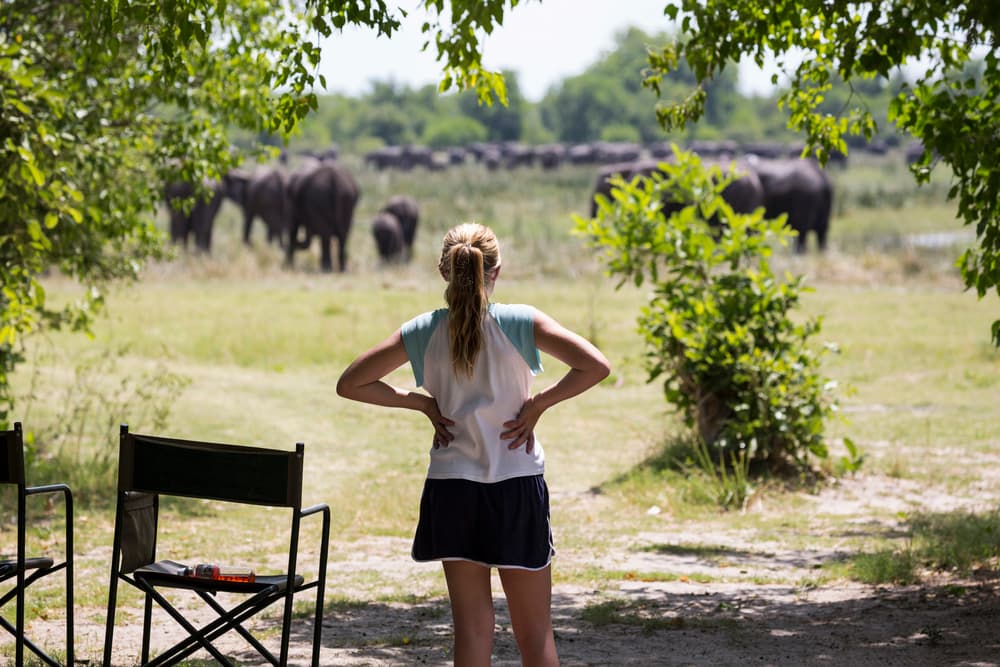
Khwai Plains: At the northern boundary, opening onto floodplain grasslands ideal for observing elephants and wild dogs.
History and context
The reserve is named after Moremi Tsheko, a Batawana chief from the early twentieth century. It was his wife, regent Moremi III, who initiated the protection of these lands in 1963, in response to mounting pressure from commercial hunting. Progressive expansion of the reserve has brought it to approximately 5,000 km², now integrated into the broader network of community management zones in the delta.
Highlights of a visit
Mokoro safari
The traditional canoe allows you to glide silently through the delta's channels. You approach hippopotamuses, aquatic birds and elephants crossing the waterways—a distance impossible to achieve by vehicle.
Night game drive
Some camps offer outings after sunset. Predators—lions, leopards, civets—are then in full activity. Moremi's nocturnal wildlife density is exceptional.
Wild dog observation
Moremi is one of Africa's finest sites for observing wild dogs in packs. Early dawn outings, particularly around Khwai, offer the best chances of seeing them hunt.
Light aircraft or microlight flight
From Maun, scenic flights over the delta allow you to grasp the vast maze of channels. Some Chief's Island lodges are accessible only by air.
Photography tips
The golden light of early morning hours after sunrise is ideal for photographing large mammals. Lagoons like Xakanaxa offer remarkable reflections in late afternoon. Bring a telephoto lens (400 mm minimum): safety distances from predators are substantial. In a mokoro, stabilize your camera on your knees—there's no engine vibration, but the canoe's movements are unpredictable.
Location and access
Moremi lies approximately 100 km northeast of Maun, the main city in northwestern Botswana. Maun has an international airport with connections to Johannesburg and Gaborone. From Maun, South Gate is accessible by 4×4 on sandy tracks. North Gate (Khwai) is reachable from Kasane or Maun via a longer route. Most travelers combine Moremi with the Okavango Delta and Chobe parks.
Nearby attractions
Okavango Delta — The delta of which Moremi is part; concessions to the west offer mokoro and floating camp experiences.
Chobe National Park — To the east, renowned for its vast elephant herds and safaris on the Chobe River.
Maun — Logistics hub, with safari agencies, charter flights and transit accommodations.
Nxai Pan — Neighboring park to the southeast, famous for zebra herds in rainy season and baobabs.
Frequently asked questions
Frequently asked questions
The dry season, from May to October, is most favorable. Animals concentrate around permanent water sources and low vegetation facilitates sightings. During the rainy season (November to April), the delta fills up and some tracks become impassable, but birdlife is at its peak.
Yes, without exception. Sandy tracks and ford crossings render any ordinary vehicle unusable. Most travelers go through a lodge or agency that provides adapted transport.
Yes, public campsites managed by the Department of Wildlife and National Parks (DWNP) exist at South Gate, Third Bridge and Xakanaxa. Reservations are mandatory and are made through the official Botswana system. Private upscale lodges are also present on Chief's Island and at Khwai.
Some private lodges set a minimum age (often 12 years) for game drives due to safety rules around large predators. Check conditions at each establishment before booking.
This is the classic Botswana itinerary. Many travelers spend two to three nights in private delta concessions (mokoro, floating camp) then proceed to Moremi for land-based game drives, before continuing to Chobe.
Yes, photography is free for personal use. No specific restrictions apply to individual visitors. However, commercial or cinematographic photography requires specific authorizations from Botswana authorities.
Want to discover this destination?
Our local advisors design your tailor-made trip.