The Cape Peninsula
The Cape Peninsula
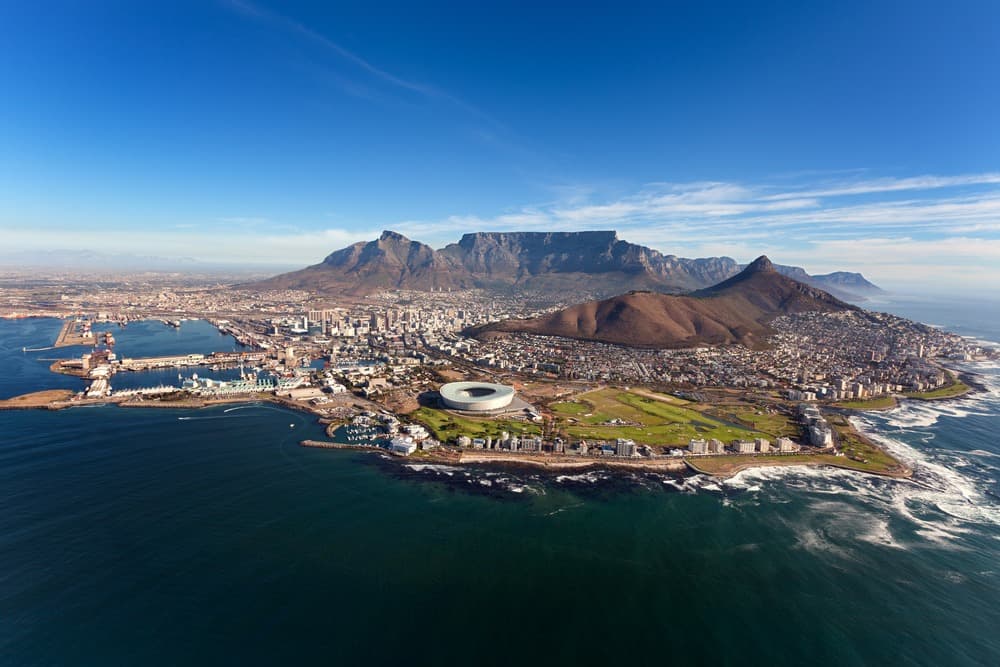
From Table Mountain to the Cape of Good Hope, passing by the Boulders penguins: the Cape Peninsula concentrates South Africa's most stunning landscapes.
Located at the southwestern tip of the African continent, the Cape Peninsula is an essential destination when visiting South Africa. A journey to this renowned tourist hotspot can be combined with a visit to Cape Point and the Cape of Good Hope situated to the south.
Flora of the Cape Peninsula
As you venture across the Cape Peninsula, you'll discover exceptionally lush biodiversity. Its vegetation consists primarily of various types of Fynbos. The vanishing sandstone fynbos essentially constitutes the principal type of this vegetation, while the granite fynbos of the peninsula, the peninsula's shale, and the critically endangered Afromontane forest are rare across the mountain ranges. A few pockets of Cape Flats Sand fynbos are present on the sandy lowlands of the Cape Flats area. The peninsula's flora belongs to the protected areas of the Cape Floral Region. These are classified as a UNESCO World Heritage Site with over 2,200 plant species confined to the Table Mountain range.
Many species endemic to the region are found here. Such is the case with several types of proteas. The more humid ravines host patches of indigenous forest, much of which was exploited by early European settlers. Original forests such as Rondebosch, Klaassenbosch, and Kirstenbosch border the slopes of Devil's Peak, Table Mountain, and Back Table. There are also pine plantations from the 1900s. Currently, non-urban zones of the peninsula are dominated by invasive exotic plants, including black acacia, Port Jackson willow, and blackwood.
Fauna of the Cape Peninsula
During a stay on the Cape Peninsula, you'll encounter, among other mammals, the dassie or rock hyrax. It's worth noting that the population of these animals declined between 2000 and 2004 for unknown reasons, which led to a decline in the Verreaux's Eagle population. Indeed, dassies constitute an important prey species for Verreaux's Eagle in the region.
Along Table Mountain, you may encounter porcupines, tortoises, snakes, mongooses, and lizards. A visit to this site offers the opportunity to see a rare endemic amphibian species, namely the Table Mountain ghost frog. As you venture toward the mountain cliffs, numerous raptors are visible. You may encounter, for example, the jackal buzzard, the African goshawk, the booted eagle, the peregrine falcon, and more.
Exploring the Cape Peninsula
If you wish to discover the attractions of the Cape Peninsula, you're invited to embark on a journey around this stretch of land. This excursion can be completed in a single day. You might begin your adventure at the Kirstenbosch National Botanical Gardens. This is one of the most fascinating gardens in the world, with its picturesque views and abundant plant species. You'll be invited to continue to Muizenberg Beach, which allows you to escape onto long stretches of white sand and swim in warm waters. Still along the Cape Peninsula route, Boulders Beach is a must-see, featuring impressive African penguins. You can continue your adventure in the Cape Point Nature Reserve, which showcases mountainous terrain and rather secluded beaches. Many rewarding activities are offered there, including a funicular ride to the Cape Point lighthouse and tasting local specialties at a restaurant. Subsequently, you'll have the opportunity to discover an old fishing village that offers a pleasant stroll through the harbor and artisanal markets. Every evening, the sunset along the coastline provides an unforgettable spectacle, especially in the area between Camps Bay and Clifton.
Want to discover this destination?
Our local advisors design your tailor-made trip.