Kongola
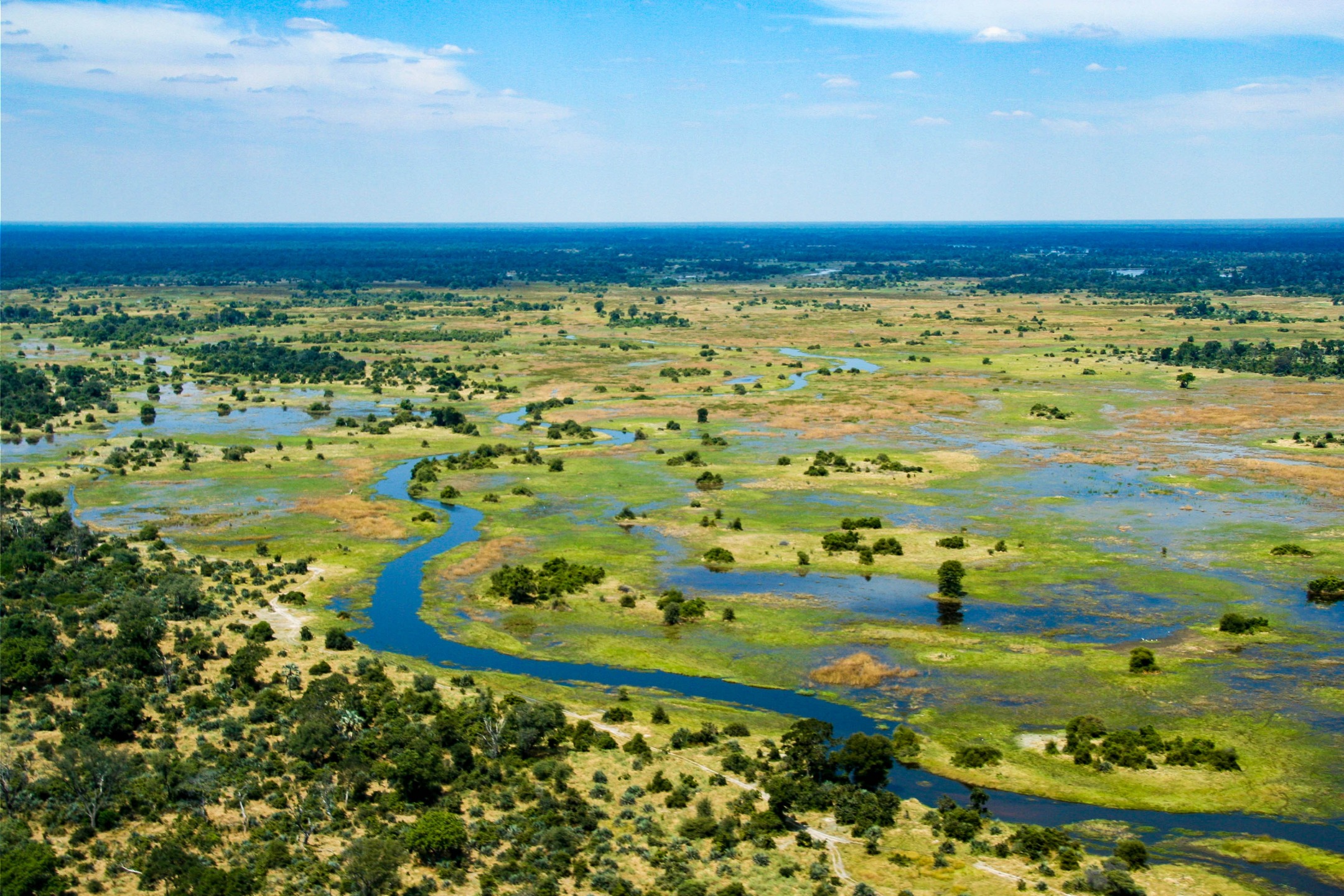
Kongola, a Namibian town on the Kwando River, is the ideal base for exploring Bwabwata National Park. Elephants, hippos, birdlife and tigerfish angling make this stop an unmissable destination in the Caprivi Strip.
Kongola is a small town in the Zambezi region, in northeastern Namibia. Located on the southern bank of the Kwando River, it serves as the gateway to Bwabwata National Park and a logistical hub for exploring the Caprivi Strip. Its position at the confluence of several waterways makes it an ideal location for wildlife watching and fishing.
Practical Information at a Glance
- Access: Kongola sits on the B8, the main road connecting Rundu to Katima Mulilo — accessible by 4×4 or standard vehicle depending on the season.
- What to pack: Light clothing, sun protection and insect repellent are essential.
- Recommended duration: One or two nights, depending on activities in Bwabwata National Park.
- Season: Dry season (May–October) is recommended for wildlife viewing and passable tracks.
What to See
Kongola itself is a modest village. The main appeal lies in its immediate surroundings: the Kwando River, bordered by dense riparian forests, and the entrance to Bwabwata National Park. Elephants, buffalo, hippos and crocodiles regularly frequent the edges of the village. Sunsets over the Kwando, from riverfront lodges, are particularly striking.
History and Context
The Caprivi Strip — now the Zambezi region — was annexed to German South-West Africa in 1890 by the Heligoland-Zanzibar Treaty. This narrow corridor was designed to give Germany access to the Zambezi. Kongola, a simple trading post, long remained isolated from the rest of Namibia. Since independence in 1990, the region has opened up to nature tourism.
Highlights of Your Visit
Bwabwata National Park
The park extends on either side of the B8 around Kongola. It is home to abundant wildlife: elephants, lions, leopards, wild dogs and a wide variety of antelope. Vehicle safaris and guided walking tours are possible from local lodges.
Cruises and Fishing on the Kwando
The Kwando River offers boat excursions to observe hippos and crocodiles up close. Tigerfish angling attracts enthusiasts from around the world between July and September.
Birdwatching
The wetland area around Kongola is exceptional for ornithology. Goliath herons, giant kingfishers, African fish eagles and numerous weaver species populate the riverbanks.
Photography Tips
Golden light in late afternoon over the Kwando is ideal for photographing riverside wildlife. From a boat, low angles allow you to frame hippos and birds just above the water. Avoid flash near nocturnal animals during night safaris.
Location and Access
Kongola is located approximately 200 km east of Rundu and about 100 km west of Katima Mulilo, on the B8. The nearest airport is Katima Mulilo. A personal vehicle or rental car is necessary; no regular public transport serves the village. Lodges often offer transfers from Katima Mulilo.
Nearby Attractions
- Bwabwata National Park — reserve crossed by the B8, abundant wildlife and guided safaris.
- Katima Mulilo — regional capital of the Zambezi, lively market and access to Ngonye Falls.
- Popa Falls — spectacular rapids on the Okavango, west on the B8.
- Mudumu National Park — neighboring park to the east, excellent for elephants and boat safaris.
Frequently asked questions
The dry season, from May to October, is the most favorable. Vegetation is less dense, animals concentrate around water points and tracks are passable.
The B8 is paved to Kongola; a standard vehicle is sufficient in the dry season. During the rainy season, a 4×4 is recommended for secondary park tracks.
Yes, Kongola is the natural base for exploring Bwabwata. Most lodges organize safaris within the park directly from the village.
The region is a malaria zone. Prophylactic treatment, effective insect repellent and long-sleeved clothing in the evening are strongly recommended. Consult a doctor before departure.
Yes, several lodges offer fishing trips on the Kwando, particularly for tigerfish. A Namibian fishing permit is required; lodges can usually facilitate obtaining one.
Want to discover this destination?
Our local advisors design your tailor-made trip.