Okonjima Nature Reserve
Okonjima Nature Reserve
Private reserve dedicated to big cat conservation, Okonjima is home to AfriCat Foundation and offers cheetah and leopard tracking deep in the Namibian bush, between Windhoek and Etosha.
Okonjima Nature Reserve is a private reserve located between Windhoek and Etosha in central-northern Namibia. It is home to AfriCat Foundation, a rehabilitation centre dedicated to big cats — cheetahs and leopards primarily — rescued from conflict with livestock farmers. The reserve combines scientific tracking, active conservation, and intimate safari in dense, rarely visited bushland.
Practical information at a glance
- Access: on the B1 between Windhoek and Otjiwarongo, with signposted turning west
- Vehicle: standard car sufficient to the entrance; internal tracks by 4x4 or lodge vehicle
- Recommended stay: minimum one night to participate in tracking activities at sunrise and sunset
- Reservation: mandatory — access reserved for guests of Okonjima lodges (Bush Camp, Plains Camp, Villa)
- Dress code: neutral colours (khaki, beige, olive) recommended for field activities
What to see
The reserve spans approximately 22,000 hectares of Namibian bush — acacias, euphorbias, and granite outcrops. The cheetahs and leopards tracked by AfriCat wear radio collars, allowing vehicle approaches to within a few metres. Other species — oryx, kudu, warthogs, caracals — roam freely across the property.
History and context
AfriCat Foundation was founded in 1993 by Wayne and Lise Hanssen, owners of Okonjima ranch. Facing recurring conflict between farmers and big cats, they established a rescue and research centre. Since then, over 1,000 cheetahs and leopards have been cared for. The foundation funds its programmes through lodge ecotourism, a model that has become a reference point in Namibia.
Highlights of your visit
Leopard tracking at dusk
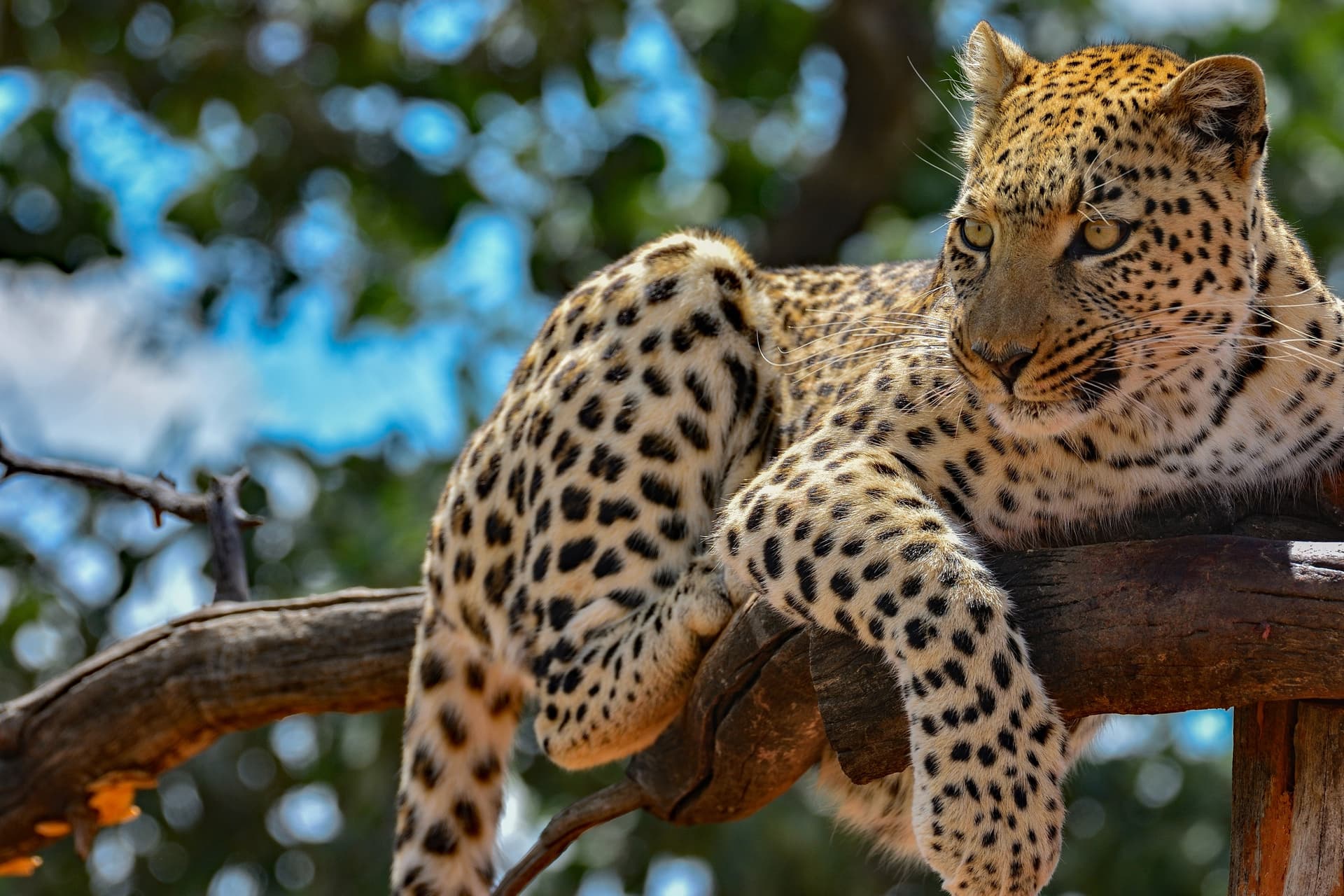
Guides locate leopards by telemetry before each outing. The approach in an open vehicle, bathed in golden evening light, offers prolonged and minimally disruptive observations. This is the reserve's signature activity, available exclusively to guests.
Cheetah tracking at dawn
Rehabilitated or semi-wild cheetahs are located early in the morning. Some individuals, accustomed to vehicles, allow very close approaches. The conservation context is explained by guides throughout the outing.
AfriCat Foundation Learning Centre
An interpretive centre presents the history of each animal cared for, rehabilitation methods, and research data on Namibian big cats. Open to guests, it adds scientific depth to your visit.
Guided bush walk
Accompanied walks allow observation of smaller wildlife — reptiles, birds, insects — and reading of tracks in the sand. Slow pace, naturalist approach.
Photography tips
Sunrise and sunset outings offer the best light for photographing big cats. Prioritise a telephoto lens (200 mm minimum): guides will get you close, but distance remains variable. Avoid flash — prohibited and unnecessary in natural light at these hours. The red laterite tracks create striking textures in backlighting.
Location and access
Okonjima lies approximately 70 km south of Otjiwarongo on the B1. From Windhoek, allow roughly two and a half hours' drive. The reserve is a logical stopover en route to Etosha National Park. No public transport serves the site — a rental vehicle is essential. Accommodation on-site (three lodges of varying standards) is the only way to access activities.
Nearby attractions
- Etosha National Park — approximately two hours to the north, one of southern Africa's great wildlife parks, centred on an immense salt pan.
- Otjiwarongo — nearest service town, supply point before or after the reserve.
- Waterberg Plateau Park — red sandstone plateau to the east, refuge for rare species including white rhinoceros and roan antelope.
Frequently asked questions
Yes. Okonjima lodges have limited capacity and high season periods (June to October) fill several months ahead. Direct reservation with Okonjima or through a specialist agency is recommended.
No. Access to big cat tracking activities is reserved for lodge guests. There are no day visits open to the general public.
The dry season (May to October) facilitates sightings: less dense vegetation, animals concentrated around water sources. The rainy season (November to April) makes some tracks challenging but the reserve remains open.
Big cat tracking outings are generally not recommended for very young children (under 6 years depending on the lodge). Check age conditions when booking.
Very well. The reserve sits naturally between Windhoek and Etosha on the B1. One night is sufficient to participate in the two main activities (morning and evening) without significantly lengthening your route.
Yes, photography is encouraged. Guides position the vehicle to optimise angles. Flash use is prohibited to avoid disturbing the animals.
Interested in this visit?
We can include it in your personalised itinerary.